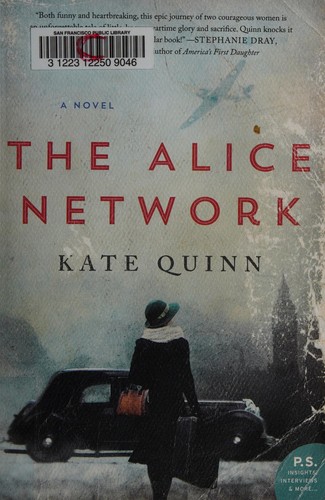
The Alice Network by Kate Quinn is a 2017 historical fiction book about female spies in wartime, trauma and survival, revenge and justice. The Alice Network was a real historical spy network run by Louise de Bettignies in occupied France during WWI — Quinn uses it as a lens for examining how female espionage was exploited and then forgotten.
Summary
The Alice Network alternates between two timelines and two women. In 1947, American college student Charlie St. Clair is traveling through postwar Europe to find her missing cousin Rose, who disappeared somewhere in France during the German occupation. Charlie ends up on the doorstep of Eve Gardiner, a former British spy with damaged hands, a drinking problem, and a deep reluctance to revisit her past. What follows is a road trip through occupied memories and literal geography, as Eve's wartime story — how she worked as a spy inside a German-run French restaurant network during World War One — unfolds in parallel chapters set in 1915.
The book is at its best when it's about what espionage actually does to people. Eve's story involves sexual coercion, surveillance, betrayal, and the slow torture of playing a role while watching people you care about die. Quinn doesn't glamorize it. The Alice Network — a real historical network of female spies in occupied France — is used as both historical scaffold and moral argument: these women were used and discarded, and the men who commanded them moved on while the women lived with what had been asked of them.
The dual-timeline structure is Quinn's signature, and she handles it with practiced efficiency. The 1915 chapters carry more weight — Eve's voice is sharper, the stakes feel higher, and the villain (a real historical figure) is genuinely threatening. The 1947 sections are warmer and more conventionally satisfying but occasionally feel like the lesser of the two narratives. Quinn writes propulsive, detail-rich prose; the historical research is evident without being obtrusive.
This is popular historical fiction at a high level of execution — plot-driven, emotionally engaging, and built on genuine research. Readers who want literary ambiguity and formal experimentation won't find it here. Those who want a gripping dual-timeline novel about women in wartime, told with clarity and momentum and a satisfying ending, will get exactly what they came for.
Talk to The Alice Network like its author wrote you back.
Get the ideas that fit your life — not generic summaries.
- Chat with the book
- Audiobook-style main ideas
- Adapts to your life and goals
- Helps you take action
Key takeaways
- 1.
The Alice Network was a real historical spy network run by Louise de Bettignies in occupied France during WWI — Quinn uses it as a lens for examining how female espionage was exploited and then forgotten.
- 2.
Eve's damaged hands are the novel's central physical metaphor — what war extracts from the body, and how survivors carry the evidence of what was done to them.
- 3.
The dual-timeline structure allows Quinn to let each woman's story comment on the other — Charlie's search in 1947 gains meaning from what we know about Eve's losses in 1915.
- 4.
The villain Rene Bordelon is unusually effective — genuinely threatening rather than cartoonish, and more disturbing for being charming and cultured rather than visibly monstrous.
- 5.
The novel makes an argument about recognition: women who did dangerous wartime work were systematically overlooked and unpensioned. That historical grievance is the engine under the plot.
- 6.
Charlie's pregnancy subplot grounds the 1947 narrative in the specific social constraints women faced in postwar America — the shame, the limited choices, the silence expected of them.
- 7.
Quinn shows friendship between women as survival strategy — not sentimental, but practical and fierce. Eve and Charlie's relationship earns its emotional weight.
- 8.
The ending is deliberately satisfying in a way that serious literary fiction usually resists. Quinn makes a case, through execution, that popular fiction can be honest about darkness and still deliver resolution.
Discussion questions
Use these on your own, with a book club, or as chat starters in Superbook. Book club version, ready to copy or print →
- 1.
Eve was asked to use her body and her emotional vulnerability as instruments of espionage. Does the novel hold her commanders accountable for that, or does it let them off the hook?
- 2.
The villain Rene is portrayed as cultured and sophisticated rather than visibly evil. How does Quinn use that characterization, and does it make the novel's moral more or less clear?
- 3.
The 1915 and 1947 timelines have different tones — the WWI chapters feel harder and more literary, the 1947 chapters warmer and more plot-driven. Did the imbalance bother you?
- 4.
Charlie is pregnant and unmarried in 1947, which would have carried enormous social stigma. How does Quinn handle her situation — does it feel historically accurate or modernized?
- 5.
Eve spent decades after the war in isolation, drinking, and unable to move on. The novel ultimately offers her closure. Is that earned? Is it realistic?
- 6.
The Alice Network was a real espionage network whose members were largely uncelebrated. Does fictional treatment like this help or obscure the historical record?
- 7.
Quinn includes a historical note at the end. Did reading it change how you thought about the fictional characters?
- 8.
The novel has a large cast of supporting characters in both timelines. Which secondary characters felt most fully realized to you?
- 9.
How does The Alice Network compare to other dual-timeline historical fiction you've read — The Nightingale, for instance, or Kristin Hannah's work generally?
- 10.
Eve's hands are physically damaged by torture. The novel uses that damage throughout as a reminder of what she endured. Was that device effective, or did it feel heavy-handed?
- 11.
The road trip structure of the 1947 sections — Charlie and Eve driving across France — gives the plot a specific energy. How did it shape your experience of the 1947 narrative?
- 12.
The book ends on a note of justice and reconciliation. Does that ending feel honest to what the rest of the novel has shown, or does it feel like the story softening itself?
Themes
Frequently asked questions
-
Is The Alice Network based on a true story?
Partially. The Alice Network was a real WWI female spy network operating in occupied France. Many details, including the network's leader and the general shape of their activities, are historically grounded. The specific characters Eve and Charlie are fictional composites. Quinn's author's note distinguishes clearly between fact and invention.
-
Is The Alice Network hard to read?
Not technically — it's propulsive and accessible. Some scenes involving torture, sexual coercion, and wartime violence are upsetting, but Quinn handles them without gratuitousness. Most readers find it difficult to put down rather than difficult to get through.
-
Do I need to read it in order with Quinn's other books?
No. The Alice Network is standalone. Quinn's other dual-timeline WWII novels (The Huntress, The Rose Code) are also standalone and can be read in any order.
-
Who shouldn't read The Alice Network?
Readers who dislike popular fiction conventions — the emotionally satisfying ending, the clear villain, the romantic subplots — will find it formulaic. It's not trying to be literary fiction; it's trying to be excellent popular historical fiction, and succeeds on those terms.
-
Is there a film adaptation?
As of publication, no feature film adaptation exists, though the rights have been optioned. The Alice Network remains a novel-only experience.
Similar books
Bel Canto
Ann Patchett
All Quiet on the Western Front
Erich Maria Remarque
The Diary of a Young Girl
Anne Frank
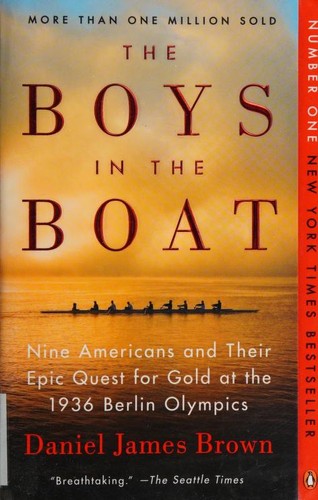
The Boys in the Boat: Nine Americans and Their Epic Quest for Gold at the 1936 Berlin Olympics
Daniel James Brown
