HBR's 10 Must Reads on Giving Feedback by Harvard Business Review is a 2019 business book about feedback, leadership, communication. Feedback reflects the giver's perceptions and wiring more than it describes objective reality. This is the core of the 'feedback fallacy' argument.
Summary
HBR's 10 Must Reads on Giving Feedback is an anthology collecting some of the most cited Harvard Business Review articles on feedback, including pieces by Marcus Buckingham and Ashley Goodall, Douglas Stone and Sheila Heen, and others. The collection reflects a genuine tension in the field: on one side, advocates for honest, direct performance feedback; on the other, researchers who argue that most feedback is more about the giver's perception than the receiver's actual behavior.
The standout piece is Buckingham and Goodall's "The Feedback Fallacy," which argues that feedback is unreliable because we can only describe our own reactions, not objective truth. Their alternative is "feed-forward" — telling people what you noticed when they were at their best — rather than cataloging deficits. Stone and Heen's contribution draws on their book Thanks for the Feedback, exploring why smart people reject useful criticism and how givers can structure feedback to get past defensiveness.
Other articles address more tactical questions: how to deliver negative feedback without damaging the relationship, how to make performance reviews actually useful, how to coach rather than critique. The organizational perspective shows up in pieces examining how cultures of feedback develop — or fail to — and why managers who avoid hard conversations often do more long-term damage than those who address problems early.
As with any anthology, the collection is uneven. Some articles feel dated or redundant alongside stronger pieces. But the Buckingham-Goodall piece alone makes the collection worth reading for anyone managing people, because it challenges assumptions that most feedback training takes for granted. Readers should approach this as a set of perspectives in dialogue rather than a unified framework — the articles disagree with each other in productive ways.
Talk to HBR's 10 Must Reads on Giving Feedback like its author wrote you back.
Get the ideas that fit your life — not generic summaries.
- Chat with the book
- Audiobook-style main ideas
- Adapts to your life and goals
- Helps you take action
Key takeaways
- 1.
Feedback reflects the giver's perceptions and wiring more than it describes objective reality. This is the core of the 'feedback fallacy' argument.
- 2.
Feed-forward focuses on strengths and conditions where someone performs at their best, rather than on deficits to be corrected.
- 3.
Receivers of feedback have more control over what they do with it than givers typically assume. Giving better doesn't guarantee receiving better.
- 4.
Most people reject feedback not because they're defensive, but because they are making different judgments about what matters, what is true, or what is fair.
- 5.
Negative feedback delivered well requires separating coaching from evaluation. When both happen at once, the evaluation drowns out the coaching.
- 6.
Performance review systems often measure the rater's biases more reliably than the employee's performance. Calibration processes can reduce but not eliminate this.
- 7.
A culture of candor requires psychological safety first. In its absence, even well-structured feedback programs produce theater rather than honest exchange.
- 8.
Specific, behavioral observations ('when you did X in that meeting') land differently than general character assessments ('you tend to dominate conversations').
Discussion questions
Use these on your own, with a book club, or as chat starters in Superbook. Book club version, ready to copy or print →
- 1.
Buckingham and Goodall argue that most feedback tells us about the giver rather than the receiver. Does that match your experience of receiving feedback?
- 2.
Think of feedback you've received that actually changed your behavior. What made it land when so much other feedback didn't?
- 3.
Where in your organization is feedback stuck as theater — the form is there but honest exchange isn't happening? What is preventing it?
- 4.
The collection distinguishes between coaching and evaluation. Do you conflate them in your own feedback conversations? What would separating them look like?
- 5.
Stone and Heen argue that receivers have more agency than they're typically given. When was the last time you actively chose how to receive difficult feedback rather than reacting to it?
- 6.
The anthology includes pieces that disagree with each other. Which argument about feedback challenged your existing assumptions most?
- 7.
If you had to describe your natural style of giving feedback — direct, indirect, avoidant, over-qualifying — what would it be, and what shaped it?
- 8.
The 'feedback fallacy' piece suggests focusing on what you noticed when someone was at their best. Pick someone you manage or work with and try that framing now.
- 9.
What organizational conditions in your workplace make honest feedback feel risky? Who has the power to change those conditions?
- 10.
How does the power differential in a feedback relationship affect how it's given and received? Is there an asymmetry in your team that distorts the quality of feedback?
- 11.
The articles suggest that feedback frequency matters more than feedback format. Does your organization's feedback culture support frequent, low-stakes exchange?
Themes
Frequently asked questions
-
Is HBR's 10 Must Reads on Giving Feedback worth reading?
Yes, especially the Buckingham and Goodall piece, which challenges assumptions most managers hold about how feedback works. The anthology format means quality varies by article, but the best pieces are substantive enough to reward a careful reading and discussion.
-
What is the main argument in the Feedback Fallacy article?
Buckingham and Goodall argue that feedback is inherently subjective — you can only reliably describe your own reactions, not another person's objective behavior or potential. They suggest that describing what you saw when someone succeeded is more useful than cataloging what they did wrong.
-
Who should read HBR on Giving Feedback?
Managers who give performance reviews, coaches, team leads, and HR professionals who design feedback systems. It's also useful for anyone who has received feedback that felt unfair or unhelpful and wants a framework for understanding why.
-
How long does the book take to read?
Around three to four hours for the full collection. Individual articles are fifteen to twenty minutes each, which makes it well-suited for reading one piece before a management meeting or coaching conversation.
-
Do the articles in this collection agree with each other?
Not entirely, which is part of the value. The collection includes perspectives that challenge each other — particularly around whether more feedback is better and whether the traditional performance review model should be preserved or replaced.
Similar books
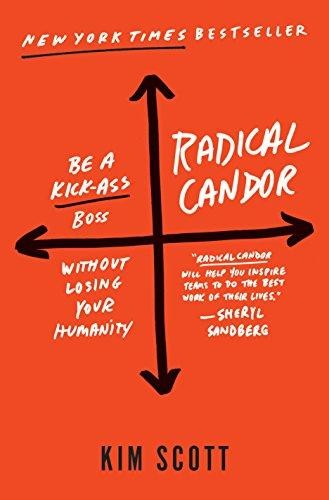
Radical Candor
Kim Scott
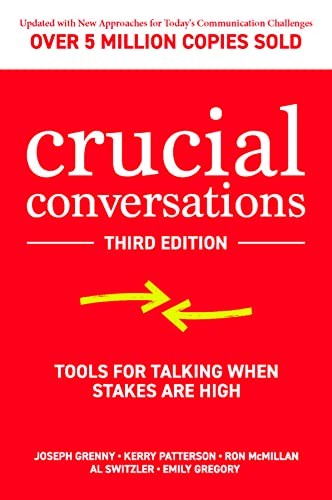
Crucial Conversations: Tools for Talking When Stakes Are High
Kerry Patterson, Joseph Grenny, Ron McMillan, and Al Switzler
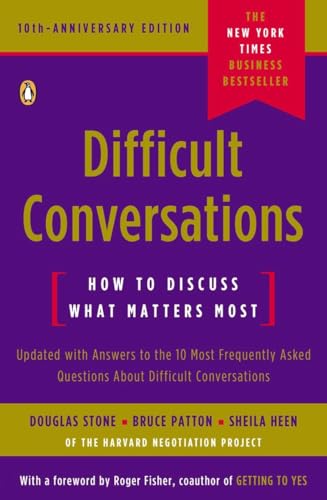
Difficult Conversations
Douglas Stone, Bruce Patton, and Sheila Heen
The Coaching Habit
Michael Bungay Stanier
