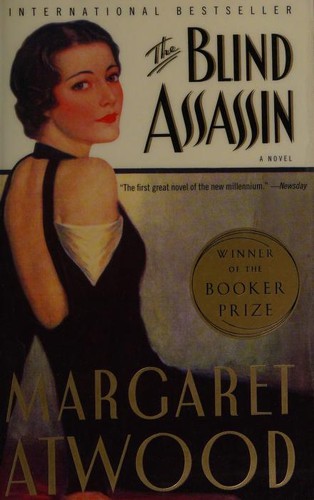
The Blind Assassin by Margaret Atwood is a 2000 literary fiction book about memory and self-deception, class and gender, complicity and survival. The novel's central structural revelation — who actually wrote the pulp novel attributed to Laura — reframes every scene involving the sisters and changes what you understand about Iris's entire life.
Summary
The Blind Assassin won the Man Booker Prize in 2000 and is arguably Atwood's most formally intricate novel. It opens with the announcement that Iris Chase's sister Laura died driving off a bridge shortly after the end of World War Two, and the question of whether that death was an accident or suicide hangs over everything that follows. The main narrative is Iris's memoir, written in her eighties in a small Ontario town where she is slowly dying, but the novel contains two other embedded narratives: a pulp science fiction story told by unnamed lovers in secret meetings, and newspaper clippings, society column entries, and other fragments from the period.
The science fiction story — in which a blind assassin on an alien world falls in love with a sacrificed mute girl — is the novel's most unexpected element. It appears as a posthumously published novel attributed to Laura Chase, and it becomes clear as the novel progresses that the story is actually about the secret affair between Iris and her lover, Alex Thomas, a left-wing activist her wealthy family disapproves of. The layers of narrative folding back on themselves — who wrote what, who knew what, who survived and who didn't — is what the novel is building toward, and the final revelation reshapes everything you've read.
Atwood is interested in how stories are used as containers for what cannot be said directly. The pulp fiction within the novel functions as an escape valve: the lovers can only discuss their real situation in the language of a made-up world. The novel as a whole asks whether Iris's memoir — ostensibly a confession — is actually an act of posthumous revenge, the final settling of a score with a dead husband and a dead society. Whether it's redemptive or merely vindictive is a question Atwood leaves open.
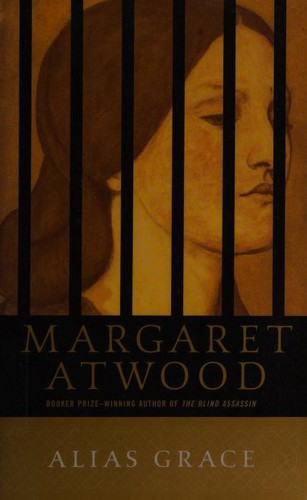
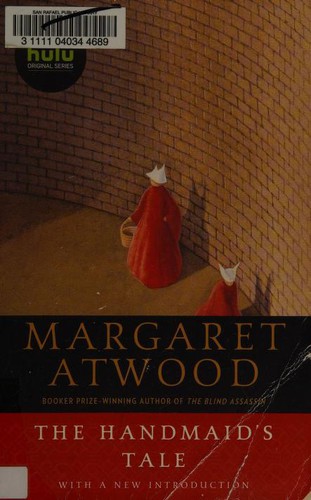
This is a long and layered novel that requires patience with multiple narrative timelines and a large cast. The science fiction sections, in particular, operate in a completely different register from the rest of the book — pulpy and allegorical rather than precise and historicized. The payoff is substantial, but the first hundred pages ask you to trust that the pieces will cohere. For readers who want a more immediately legible Atwood, The Handmaid's Tale or Alias Grace is a better starting point. But for readers prepared to commit to the structure, The Blind Assassin is a more ambitious and ultimately more devastating work than either.
Talk to The Blind Assassin like its author wrote you back.
Get the ideas that fit your life — not generic summaries.
- Chat with the book
- Audiobook-style main ideas
- Adapts to your life and goals
- Helps you take action
Key takeaways
- 1.
The novel's central structural revelation — who actually wrote the pulp novel attributed to Laura — reframes every scene involving the sisters and changes what you understand about Iris's entire life.
- 2.
Atwood uses genre fiction as a formal device: the pulp science fiction sections operate as a space where the lovers can speak truth they cannot speak anywhere else, which is what genre fiction has always been for.
- 3.
Iris's memoir is not straightforwardly reliable — she withholds information, misdirects the reader, and constructs herself as somewhat more innocent than she is. The reader's job is to notice what she doesn't say.
- 4.
The novel traces how upper-class women in early-twentieth-century Canada were treated as financial instruments — married off to solve family debt — and the long-term psychological costs of that transaction.
- 5.
Laura Chase, the dead sister, is one of the more unusual figures in modern fiction: we experience her entirely through Iris's memory, which is not neutral, and through the text attributed to her, which is a love story Iris wrote.
- 6.
The newspaper clippings scattered throughout the novel function as an ironic counterpoint — the public record of Iris's life bears almost no relationship to the private one she is transcribing in her memoir.
- 7.
The novel asks what women are allowed to want, what they sacrifice for survival, and whether survival on those terms is meaningfully different from complicity. Iris is not a comfortable narrator on this question.
- 8.
Atwood uses the aging narrator writing in full knowledge of the outcome — she knows who died, when, and how — to create a particular quality of retrospective grief that accumulates weight across the narrative.
Discussion questions
Use these on your own, with a book club, or as chat starters in Superbook. Book club version, ready to copy or print →
- 1.
The novel's central structural surprise changes the meaning of nearly everything that came before it. Looking back, what clues were planted that you missed? What does the re-reading reveal?
- 2.
Iris presents herself as someone to whom things were done, rather than someone who made choices. Is that self-presentation accurate? Where does the novel contradict it?
- 3.
The pulp science fiction sections are written in a completely different register from the rest of the book. Did you find them jarring, or did they work as a formal contrast? What do they add that the realist sections couldn't provide?
- 4.
Richard Griffen, Iris's husband, is presented as wholly villainous. Does the novel give him enough complexity, or is he too conveniently monstrous?
- 5.
Laura Chase is experienced entirely through others — her sister's memory, the text attributed to her, newspaper accounts. What picture of her do you construct? Is she sympathetic, or is she more disturbing than she appears?
- 6.
Iris sacrificed something significant to survive in the way she did. By the end of the novel, does she seem at peace with that sacrifice, or does the memoir feel like an act of unresolved grief?
- 7.
The novel spans several decades of Canadian history, including both World Wars. How does the historical backdrop — Depression-era Canada, wartime, postwar — function in relation to the personal story?
- 8.
Atwood embeds multiple narratives within the frame, requiring you to track who is narrating at any given moment. Did you find this intellectually satisfying or unnecessarily complex?
- 9.
The science fiction story within the novel is a love story between a man who talks and a woman who cannot speak. What is Atwood doing with the gendered dynamics of that story-within-a-story?
- 10.
The newspaper excerpts depict a public version of Iris's life that is entirely false. How does that gap between public and private function in the novel — as social criticism, as formal device, as something else?
- 11.
The novel won the Booker Prize. Given its formal complexity, does it seem like the right choice for a prize intended to honor accessible as well as literary excellence?
- 12.
The ending places Iris alone, physically declining, still writing. What does the act of completion — finishing the manuscript — represent for her?
Themes
Frequently asked questions
-
Is The Blind Assassin worth reading?
Yes, but it demands patience. The first hundred pages require you to hold three different narrative threads without knowing how they connect. Readers who persist are rewarded with one of the most satisfying structural revelations in recent literary fiction, and an emotional depth that the earlier Atwood novels do not quite reach.
-
Is The Blind Assassin hard to read?
It is long and structurally complex. You need to track three different narrative registers — Iris's memoir, the embedded pulp novel, and documentary fragments — and keep the timeline clear across several decades. The prose is not obscure, but the architecture requires active reading throughout.
-
What is the pulp fiction story within the novel about?
An alien world where a blind assassin falls in love with a mute girl who has been chosen for ritual sacrifice. It is clearly allegorical, and as the novel progresses it becomes apparent that it encodes the real-world secret affair at the novel's center. The pulp sections are intentionally written in a genre register very different from Atwood's usual voice.
-
Should I read The Handmaid's Tale before The Blind Assassin?
They are unrelated novels and can be read in either order. The Handmaid's Tale is a better introduction to Atwood if you haven't read her before — it is shorter, more immediately propulsive, and its formal choices are less demanding. The Blind Assassin is the more ambitious work but less accessible as a first encounter.
-
Who shouldn't read The Blind Assassin?
Readers who need a clear narrative thread and don't enjoy the experience of sustained uncertainty. The novel deliberately withholds information and asks you to revise your understanding of events repeatedly. If that feels like being manipulated rather than being engaged, this will be an unsatisfying read.