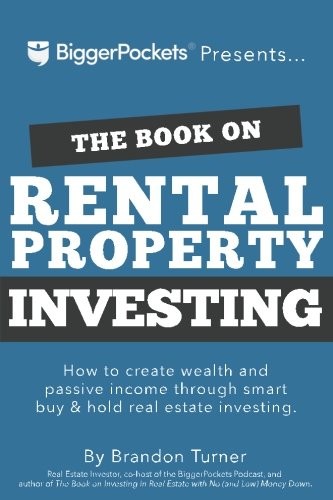
The Book on Rental Property Investing by Brandon Turner is a 2015 business book about real estate investing, rental income, property management. Rental properties build wealth through four simultaneous channels: cash flow, appreciation, loan paydown by tenants, and tax deductions. No single stock does all four.
Summary
Brandon Turner's guide to rental property investing is one of the most comprehensive introductions available to buy-and-hold real estate. Turner, a co-host of the BiggerPockets podcast and an active investor himself, writes from experience rather than theory. The book is aimed squarely at people who have some savings and a desire to generate passive income but don't know how to evaluate deals, finance them, or manage the properties once acquired.
The first section covers mindset and goal-setting. Turner argues that most would-be investors fail before they start by over-thinking and under-doing. He lays out why rental properties — specifically long-term, single-family and small multifamily — create wealth through four mechanisms: cash flow, appreciation, loan paydown, and tax advantages. The combination of these four streams, when compounded over a career, produces financial independence in a way most other investments don't.
The middle sections are the most practical. Turner explains how to analyze a rental deal using the "1% rule" and more rigorous cash-on-cash return calculations. He walks through financing options from conventional mortgages to creative seller financing, covers how to find below-market properties, and explains the BRRRR strategy — buy, rehab, rent, refinance, repeat — in enough depth that a first-time investor could actually execute it. He's direct about risks: vacancy, bad tenants, deferred maintenance, and market downturns are real and will happen.
The book's main limitation is that it stays at a general level when local market knowledge matters most. Cap rates in Detroit and San Francisco require entirely different thinking, and Turner's examples often favor the Midwest cash-flow model. Still, for anyone starting out, the frameworks here — how to screen tenants, how to structure leases, how to estimate rehab costs — are genuinely useful and grounded in practice rather than wishful thinking.
Talk to The Book on Rental Property Investing like its author wrote you back.
Get the ideas that fit your life — not generic summaries.
- Chat with the book
- Audiobook-style main ideas
- Adapts to your life and goals
- Helps you take action
Key takeaways
- 1.
Rental properties build wealth through four simultaneous channels: cash flow, appreciation, loan paydown by tenants, and tax deductions. No single stock does all four.
- 2.
The 1% rule — monthly rent should be at least 1% of purchase price — is a quick screen, not a final analysis. Use cash-on-cash return for real decisions.
- 3.
The BRRRR strategy (Buy, Rehab, Rent, Refinance, Repeat) lets you recycle capital and scale a portfolio without needing a new down payment for every property.
- 4.
Vacancy, maintenance, and property management fees eat more cash flow than beginners expect. Underestimate these at your peril.
- 5.
Tenant screening is the most leveraged hour you spend as a landlord. A bad tenant in a good property costs far more than a good tenant in a bad one.
- 6.
The best time to negotiate a deal is before you own it. Every dollar of purchase price reduction improves your returns permanently.
- 7.
Real estate investing rewards those who take imperfect action over those who wait for the perfect deal. Analysis paralysis kills more investors than bad markets.
- 8.
Local market knowledge — vacancy rates, rent trends, neighborhood trajectory — cannot be replaced by national statistics. Boots-on-the-ground research matters.
Discussion questions
Use these on your own, with a book club, or as chat starters in Superbook. Book club version, ready to copy or print →
- 1.
Turner argues that rental properties build wealth faster than most alternatives. Does that match what you've seen in your own financial network?
- 2.
The BRRRR strategy depends on getting strong appraisals after rehab. What could go wrong with that assumption in a flat or declining market?
- 3.
Turner emphasizes cash flow over appreciation. In your local market, which of those two drivers seems dominant right now?
- 4.
How would you estimate rehab costs on a property you've never seen before? What professionals or resources would you lean on?
- 5.
The 1% rule screens out most properties in high-cost cities. Does that make coastal investing a bad idea, or are there ways to adapt the framework?
- 6.
Tenant screening is presented as the key risk mitigation. What criteria would you use, and where do you draw the line on legal and ethical considerations?
- 7.
Turner says analysis paralysis kills more investors than bad markets. What would it take for you to make an offer on a property in the next 90 days?
- 8.
Property management fees run 8–12% of rent. At what point does it make sense to self-manage versus outsource?
- 9.
If you inherited a single rental property tomorrow with no mortgage, what would your first three steps be?
- 10.
Turner's examples skew toward Midwest markets. How would you adjust his framework for a city with a median home price above $600,000?
- 11.
What's the single biggest thing holding you back from buying your first rental property?
- 12.
Turner says real estate is not truly passive income, at least at first. How much active work are you willing to trade for a stream of rental income?
Themes
Frequently asked questions
-
Is The Book on Rental Property Investing worth reading for beginners?
Yes. It's one of the most thorough introductions available. Turner covers everything from deal analysis to tenant screening in plain language. Readers with zero real estate background will finish with a clear picture of how the business works. Veterans may find the pace slow in places, but the frameworks hold up.
-
What is the BRRRR strategy?
Buy a distressed property, Rehab it to force appreciation, Rent it out, Refinance to pull out equity, and Repeat the cycle with the recycled capital. The goal is to grow a portfolio without needing a fresh down payment for each property. It works best when you can accurately estimate rehab costs and refinance values.
-
How long is The Book on Rental Property Investing?
Around 370 pages. At an average reading pace it takes roughly six to seven hours. It's written in accessible chapters and works well read in sections alongside actual deal research.
-
Who should read this book?
Anyone who wants to invest in residential rental properties and hasn't done it before. It's also useful for people who've bought one property and want a structured framework for evaluating whether to buy a second. Active stock or index fund investors looking to diversify into real assets will find it a thorough orientation.
-
What does Turner say about the risks of rental investing?
He's unusually candid. He covers vacancy, problem tenants, unexpected maintenance, bad rehabs, over-leverage, and market downturns in detail. His consistent message is that risks are manageable if you underwrite conservatively and screen tenants rigorously, but they can't be eliminated, only priced in.