Livewired: The Inside Story of the Ever-Changing Brain by David Eagleman is a 2020 science book about neuroplasticity, brain, perception. The brain is not hardwired but livewired: it continuously rewrites its circuits in response to what it experiences, what it loses, and what it uses.
Summary
David Eagleman's argument is that "hardwired" is the wrong metaphor for the brain. The real story is livewiring: the nervous system is constantly rewriting its own circuitry in response to experience, injury, and deprivation. Eagleman prefers the term "livewired" to "plastic" because plasticity implies returning to an original shape, while the brain never returns anywhere — it only rewrites forward. This book is an account of that continuous rewriting and what it means for how we understand learning, recovery, identity, and the future of human experience.
The evidence Eagleman marshals is striking and well-chosen. People who are blind from birth use their visual cortex to process language and touch. Stroke patients who lose function in one hemisphere rewire around the damage if given the right stimulation. Musicians develop enlarged cortical maps for their dominant hand. Taxi drivers in London grow measurable hippocampal volume with each year of navigation. In each case the brain is not using a fixed structure but reassigning resources to match demand.
The book's most speculative section deals with sensory substitution and brain-computer interfaces. Eagleman has run experiments attaching vibrating vests to people who are deaf, feeding real-time sound data through the skin. The brain learns to interpret the skin's signals as hearing — not consciously, but automatically. He argues this suggests that the brain's job is to find structure in data streams regardless of what organ those streams come from. The boundaries of the body are therefore more negotiable than they appear.
Eagleman writes with genuine enthusiasm and the book moves quickly. His prose is accessible without being dumbed down. Where the book is less satisfying is in its treatment of limits: what the brain cannot recover from, what wiring is actually fixed, and where the evidence for sensory substitution as a genuine therapeutic tool currently stands. Livewired is stronger as a tour of neuroplasticity's possibilities than as a balanced account of its boundaries.

Talk to Livewired: The Inside Story of the Ever-Changing Brain like its author wrote you back.
Get the ideas that fit your life — not generic summaries.
- Chat with the book
- Audiobook-style main ideas
- Adapts to your life and goals
- Helps you take action
Key takeaways
- 1.
The brain is not hardwired but livewired: it continuously rewrites its circuits in response to what it experiences, what it loses, and what it uses.
- 2.
Cortical real estate follows demand. The more a brain region is stimulated — through skill, profession, or deprivation — the more territory it takes over from neighboring regions.
- 3.
Sensory deprivation triggers takeover. When the visual cortex stops receiving visual input, it doesn't go dark — it gets recruited by other senses within days.
- 4.
The brain's job is to find statistical structure in incoming data streams, regardless of what organ delivers them. This is why skin can be trained to 'hear' and other novel senses may be possible.
- 5.
Critical periods exist — windows during development when the brain is especially responsive to certain inputs — but plasticity persists throughout life at a reduced rate.
- 6.
Dreams may function as a consolidation mechanism that prevents sensory deprivation from triggering cortical takeover during the long hours of darkness.
- 7.
Brain-computer interfaces may eventually expand the human sensory repertoire not by repairing damaged circuits but by feeding new data streams into the brain's existing learning machinery.
- 8.
Memory is not a recording but a reconstruction. Each retrieval modifies the memory slightly, making remembering an active and inherently imperfect process.
Discussion questions
Use these on your own, with a book club, or as chat starters in Superbook.
- 1.
Eagleman argues the brain is always rewriting itself toward current demands. What does that imply about the person you will be in ten years compared to who you are now?
- 2.
The cortical takeover experiments show that the visual cortex processes language in blind people. What does this tell us about how the brain assigns meaning to experience?
- 3.
If the brain can learn to interpret vibration on the skin as sound, what other senses might be practically extensible, and what would be useful?
- 4.
Eagleman describes critical periods in development when the brain is especially malleable. What critical periods in your own life do you think shaped you most permanently?
- 5.
The book suggests dreams prevent sensory cortex takeover during sleep. How do you respond to the idea that your dreams may be serving a maintenance function rather than a symbolic one?
- 6.
What skill have you let atrophy? Based on what Eagleman describes, what would it take to rebuild those neural circuits?
- 7.
Eagleman is enthusiastic about brain-computer interfaces expanding human perception. What are the strongest ethical objections to pursuing that direction?
- 8.
Memory is reconstructive, not reproductive. Think of a vivid memory. How confident are you that what you remember actually happened as you remember it?
- 9.
The taxi driver hippocampus study shows that navigation produces measurable brain change. What does this suggest about the consequences of outsourcing navigation to GPS?
- 10.
Eagleman writes about cortical real estate as a competition between inputs. What is competing for territory in your own brain right now, and what is winning?
- 11.
The book is more enthusiastic about plasticity's possibilities than its limits. What questions does it leave unanswered that you'd want answered?
- 12.
If the brain is constantly rewriting itself, what does that mean for the concept of a stable identity or personality?
Themes
Frequently asked questions
-
What is the difference between 'livewired' and 'neuroplasticity'?
Eagleman finds 'neuroplasticity' misleading because plastic implies returning to an original shape after deformation. He prefers 'livewired' to capture the idea that the brain is always in motion, always overwriting itself without a stable original state to return to.
-
Is Livewired worth reading?
Yes, especially if you're interested in the science of learning, recovery from brain injury, or the future of brain-computer interfaces. Eagleman is an entertaining writer and the evidence is well-chosen. Readers who want depth on any individual topic will need to go further, but as an introduction it is excellent.
-
How does Livewired compare to The Brain That Changes Itself by Norman Doidge?
Both cover neuroplasticity, but with different emphases. Doidge focuses on clinical case studies of recovery; Eagleman is more interested in the underlying mechanisms and future applications. Eagleman's book is more recent and more speculative; Doidge's is more grounded in therapeutic contexts.
-
Who should read Livewired?
Anyone curious about how the brain changes in response to experience, injury, or skill-building. Also useful for educators, therapists, and technologists interested in sensory substitution or brain-computer interface research.
-
What is the most surprising idea in the book?
The sensory substitution experiments. Eagleman shows that you can feed real-time sound data through vibrations on the skin, and the brain learns to interpret those vibrations as sound. This suggests that the brain's learning machinery doesn't care what organ delivers the data.
Similar books
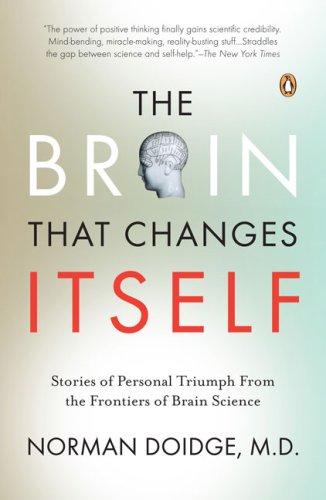
The Brain That Changes Itself
Norman Doidge

Phantoms in the Brain: Probing the Mysteries of the Human Mind
V. S. Ramachandran and Sandra Blakeslee

Seven and a Half Lessons About the Brain
Lisa Feldman Barrett
Social: Why Our Brains Are Wired to Connect
Matthew D. Lieberman
