The Cartel by Don Winslow is a 2015 thriller book about drug war violence, corruption and impunity, obsession and vengeance. The war on drugs creates power vacuums rather than eliminating power — every cartel leader who falls is replaced by someone more brutal and less restrained.
Summary
The Cartel is the second installment in Don Winslow's trilogy about the Mexican drug war, picking up years after The Power of the Dog left off. DEA agent Art Keller has spent decades in a personal war against Adán Barrera, the head of the Sinaloa cartel — and the two men are now inextricably bound by a shared history of violence, betrayal, and collateral damage that neither can walk away from. The novel spans roughly 2003 to 2014, tracking the explosion of cartel violence under figures who mirror real historical events with uncomfortable precision.
What the book is actually about is not a thriller plot but a systemic argument: that the American demand for drugs, combined with institutional corruption on both sides of the border, makes the war on drugs unwinnable. Winslow tracks how power vacuums created when one cartel leader falls are immediately filled by something worse. Journalists are murdered. Mayors and police chiefs are bought or killed. Mass graves become routine. The novel accumulates this violence not for spectacle but to make a case: every policy choice has a body count.
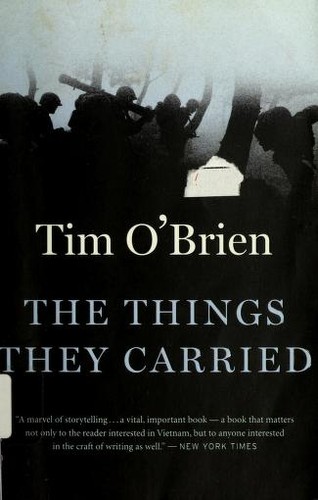
Structurally, The Cartel reads less like a traditional thriller than like a war novel — something closer to The Things They Carried than to a James Patterson procedural. Winslow is working in a loose, panoramic style, moving between hundreds of characters across a decade. The prose is spare and hard, and the violence is documented with the flatness of a coroner's report. This is deliberately uncomfortable; Winslow wants you to feel the weight of the numbers. Individual characters appear and disappear like figures in journalism. The book's sweep is its strength and its occasional weakness: it's exhausting in the way that real-world atrocity is exhausting.
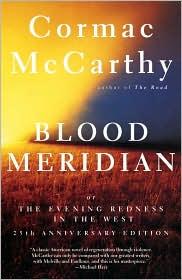
Readers who want tight plotting and a satisfying resolution will find The Cartel difficult. It doesn't offer that. Readers who want to understand — viscerally, not just intellectually — what the war on drugs has cost Mexico will find it essential. The clearest comparison is to Blood Meridian in its commitment to cataloguing violence without flinching, or to the journalism of Ioan Grillo. This is not a beach read. It's a five-hundred-page argument dressed as a thriller.
Talk to The Cartel like its author wrote you back.
Get the ideas that fit your life — not generic summaries.
- Chat with the book
- Audiobook-style main ideas
- Adapts to your life and goals
- Helps you take action
Key takeaways
- 1.
The war on drugs creates power vacuums rather than eliminating power — every cartel leader who falls is replaced by someone more brutal and less restrained.
- 2.
Corruption is structural, not individual: when police, judges, and politicians are underpaid and outgunned, the cartel's money doesn't corrupt so much as replace the state.
- 3.
The novel tracks how journalists became primary targets once cartels understood that narrative control mattered as much as territorial control.
- 4.
Keller's obsession with Barrera mirrors the obsession the U.S. government has with individual kingpins — a focus on personalities rather than systems that guarantees the same outcome each time.
- 5.
Mass civilian casualties are presented not as background noise but as the actual story: the war's victims are overwhelmingly not combatants.
- 6.
The American consumer is woven into every scene as an invisible third party — the demand that funds everything.
- 7.
Winslow shows that 'winning' a drug war campaign often just relocates violence rather than reduces it; taking Juárez from one cartel produced years of open warfare.
- 8.
The novel ends without resolution because the real history it documents ended without resolution — this is a formal choice, not an evasion.
Discussion questions
Use these on your own, with a book club, or as chat starters in Superbook. Book club version, ready to copy or print →
- 1.
Keller's pursuit of Barrera costs him marriages, friendships, and decades of his life. Does the novel ask us to admire this or to mourn it?
- 2.
The Cartel was researched alongside real journalists covering the drug war. How does the novel's fidelity to documented events affect how you read its fiction?
- 3.
Winslow indicts American drug consumers as complicit. Do you find that argument fair, or does it diffuse accountability too broadly?
- 4.
Several characters on both sides of the law compromise their ethics incrementally. At what point does the novel suggest a line was crossed that couldn't be uncrossed?
- 5.
The journalists in this novel are some of its most sympathetic characters — and the most likely to die. What does Winslow seem to be saying about the relationship between truth-telling and power?
- 6.
Compared to a more conventional thriller like Along Came a Spider, where does The Cartel land differently in terms of what it asks from the reader?
- 7.
The violence in the novel is documented with clinical detail rather than dramatized for excitement. Did that technique work for you, or did it become numbing?
- 8.
Adán Barrera is given significant interiority — we understand his reasoning. Does humanizing him complicate or clarify the moral argument?
- 9.
The novel covers about a decade. Does its length feel earned by the scope of what it's trying to show, or did you feel it could have been cut?
- 10.
Winslow said this series was partly an act of witnessing — a memorial to people killed in the drug war. Does that framing change how you evaluate the book as fiction?
- 11.
The ending offers no resolution. Is that honest or is it a failure to imagine an alternative?
- 12.
If you read The Power of the Dog first, how did returning to Keller and Barrera change the experience? If this was your entry point, did you feel lost?
Themes
Frequently asked questions
-
Do I need to read The Power of the Dog first?
Yes, strongly recommended. The Cartel assumes you know Art Keller and Adán Barrera and picks up threads from a relationship built over the first book. You can read it cold but you'll lose the weight of what came before, which is most of what makes the confrontations land.
-
How violent is The Cartel?
Extremely. Winslow documents the drug war's body count with deliberate fidelity — mass graves, assassinations, torture, and civilian massacres are described in plain language. It's not gratuitous but it is relentless. If graphic violence in prose is a dealbreaker, this is not the book for you.
-
Is The Cartel based on real events?
Closely. Winslow spent years researching the period and most major events, organizations, and dynamics map to documented history. Characters are composites or lightly fictionalized versions of real figures. The author's notes acknowledge the journalism his research drew on.
-
Why is The Cartel considered important?
Because it made the scale of the drug war legible to a mainstream audience through the form of a thriller rather than journalism. It sold enormously, and many readers report it changed how they think about drug policy, addiction, and border politics.
-
Who shouldn't read The Cartel?
Anyone who needs a plot that resolves satisfyingly, or who finds sustained violence in fiction distressing rather than illuminating. Also: anyone expecting a conventional thriller pacing — this is closer to epic historical fiction than to a beach read.