The Committed by Viet Thanh Nguyen is a 2021 literary fiction book about colonial memory, identity and doubling, violence and ideology. Colonialism doesn't end when armies leave. It persists in the bodies, psychologies, and social structures of the colonized long after formal independence.
Summary
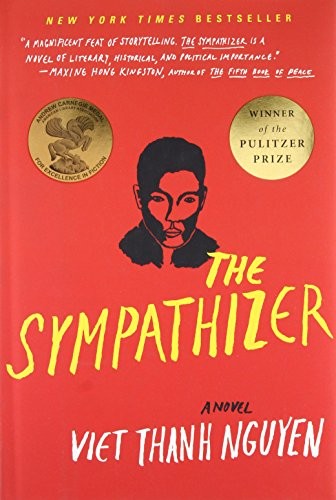
The Committed is the sequel to Nguyen's Pulitzer Prize-winning The Sympathizer, continuing the story of the unnamed narrator — the man of two faces, the spy who believes in nothing — as he arrives in Paris with his friend Bon in the early 1980s. Still traumatized by the reeducation camp that closed the first novel, the narrator attempts to build a new life, falling into the orbit of a Vietnamese crime network while navigating the intellectual and political culture of Paris's immigrant communities.
The novel is explicitly about the afterlife of French colonialism — not as distant history but as a lived condition that structures the lives of Vietnamese immigrants in France today. The narrator moves through two Parises: the glamorous city of French self-mythology and the grey banlieue where the colonized end up. He reads Frantz Fanon and Aimé Césaire between drug deals and violent confrontations, and the novel's most distinctive quality is the way it refuses to separate theory from action. Ideas about colonialism, double consciousness, and the violence done to the colonized are tested against the specific violence of crime, addiction, and survival.
Nguyen's narrator is one of the most distinctive voices in recent American fiction: sardonic, self-aware, intellectually voracious, and morally unreliable in ways he is entirely conscious of. The prose is dense with analysis and allusion, and the novel makes no apology for demanding engagement — it expects the reader to follow arguments about Fanon and Sartre as closely as plot developments. For some readers, this is the novel's great strength; for others, it will feel more like a critical essay that keeps interrupting a thriller.
The novel rewards readers who came to it through The Sympathizer but is less accessible to newcomers. It deepens and complicates the first book's concerns but also relies on the emotional weight of what came before. Those who want sharp literary fiction that takes colonial history as seriously as character psychology will find it essential. Those who want narrative momentum above all will find the intellectual density an obstacle.
Talk to The Committed like its author wrote you back.
Get the ideas that fit your life — not generic summaries.
- Chat with the book
- Audiobook-style main ideas
- Adapts to your life and goals
- Helps you take action
Key takeaways
- 1.
Colonialism doesn't end when armies leave. It persists in the bodies, psychologies, and social structures of the colonized long after formal independence.
- 2.
The narrator's defining condition — being 'of two minds' — is a form of double consciousness that colonialism imposed and that he can neither escape nor fully embrace.
- 3.
Fanon's argument that violence may be a necessary component of decolonization is tested against the brutal reality of street-level violence in Paris — and the test is inconclusive.
- 4.
Paris as a city embodies the contradiction of French civilization: the same culture that produced Enlightenment universalism also produced chattel slavery and empire.
- 5.
The Vietnamese diaspora in France occupies a position of racial hierarchy even within the already-marginalized immigrant population. The colonized do not all arrive equally.
- 6.
Theory and practice are not as separate as intellectuals pretend. The narrator's theoretical commitments are tested — and sometimes broken — by what he actually does.
- 7.
Memory is not neutral. The novel insists that whose story gets told, in what language, and with what authority shapes what can be remembered at all.
- 8.
The novel refuses the comfort of a protagonist who is fundamentally sympathetic. The narrator is capable of genuine insight and genuine cruelty in the same chapter.
Discussion questions
Use these on your own, with a book club, or as chat starters in Superbook. Book club version, ready to copy or print →
- 1.
The narrator reads Fanon and Sartre while dealing drugs and planning violence. Does the novel suggest that theory and action are reconcilable, or that the intellectual is always hypocrite?
- 2.
How does The Committed's portrayal of Paris compare to other literary visions of the city you've encountered? What is Nguyen arguing by setting the novel there?
- 3.
The narrator is unnamed throughout both novels. What does that namelessness do — for the novel's politics and for our relationship to the character?
- 4.
France is portrayed as a country that both celebrates its revolutionary heritage and structurally excludes the formerly colonized. Is that portrayal fair, or is the novel being tendentious?
- 5.
Bon is the narrator's foil — action without reflection. Does the novel treat Bon sympathetically, or is he a cautionary figure?
- 6.
The novel is dense with intellectual reference — Fanon, Césaire, Sartre, Beauvoir. Does the density feel earned, or does it tip into showing off?
- 7.
How does the narrator's experience in the reeducation camp (described in The Sympathizer) shape his behavior in Paris? Can you see its effects if you haven't read the first novel?
- 8.
The violence in the novel is graphic and specific. Is it gratuitous, or does the specificity serve the argument about colonialism and the body?
- 9.
What does the novel say about the possibility of solidarity among colonized peoples? Does the Vietnamese community in Paris achieve it?
- 10.
The Committed is explicitly a political novel. Does it persuade you of its politics, or does the fictional framing get in the way of the argument?
- 11.
The narrator describes himself as committed to nothing and yet acts with great conviction. By the end, has he committed to anything?
- 12.
Compare The Committed to another postcolonial novel you've read. Where does Nguyen's treatment of colonial memory feel most distinctive?
Themes
Frequently asked questions
-
Do I need to read The Sympathizer first?
Yes. The Committed is a direct sequel and relies on the emotional weight of what came before — particularly the narrator's time in the reeducation camp. You can read it standalone, but you'll lose most of the resonance. Read The Sympathizer first; it won the Pulitzer for good reason.
-
Is The Committed hard to read?
It's demanding. The prose is dense with intellectual reference — Fanon, Sartre, Césaire — and Nguyen expects engagement with ideas, not just plot. The narrative also moves in a somewhat fragmented, essayistic way. If you want a clear thriller with a throughline, this will frustrate. If you want fiction that thinks hard about colonialism, it's worth the effort.
-
What is The Committed about without spoilers?
A Vietnamese spy arrives in Paris after escaping a reeducation camp, falls into the city's criminal underworld, and grapples with the living legacy of French colonialism — intellectually, physically, and violently.
-
Who shouldn't read The Committed?
Readers who want narrative momentum above all, or who found The Sympathizer's intellectual density already too much. The Committed doubles down on the essayistic qualities of the first book.
-
Is The Committed as good as The Sympathizer?
The consensus among critics is that it's slightly weaker — more deliberately dense and less emotionally immediate. But it deepens the first novel's concerns in important ways and the narrator remains one of the most interesting voices in recent American fiction.