Psychology · Book club
The Compassionate Mind book club questions
Here are 12 book club questions for The Compassionate Mind by Paul Gilbert, ordered to open easily and end somewhere worth arguing about. Copy them, print them, or bring them up one at a time.
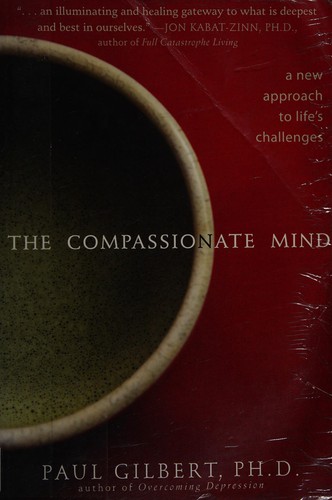
The Compassionate Mind is Paul Gilbert's comprehensive account of Compassion Focused Therapy, the approach he developed over decades of clinical work with people whose suffering was heavily compounded by shame, self-criticism, and an inability to feel comforted or to comfort themselves.
Paul Gilbert · 2009 · 6h 45m
Full summary and key takeaways →The 12 questions
- 1.
Gilbert argues that our evolved minds were not designed for happiness or well-being but for survival and reproduction. How does accepting that premise change how you think about your own mental struggles?
- 2.
Self-criticism often feels productive — like it's keeping you accountable. Gilbert says it activates threat rather than change. Have you experienced cases where self-criticism actually drove improvement, or did it only feel that way?
- 3.
Think of a moment when you were harshest on yourself. What would a genuinely compassionate response to that situation have looked like, and what stopped you from accessing it?
- 4.
Gilbert distinguishes between shame (about the self) and guilt (about behavior). Can you identify situations in your own life where these two got confused, and what effect that had?
- 5.
The book argues that many people find self-compassion threatening because it requires grieving what was not received early in life. How does developmental history shape a person's capacity for self-care as an adult?
- 6.
Contemporary culture prizes drive and ambition — the acquisition system. Which of Gilbert's three systems does your life most reward, and which does it most ignore?
- 7.
If you tried to imagine a genuinely compassionate inner voice, what would it say to you right now? What makes that exercise feel strange or uncomfortable?
- 8.
Gilbert uses evolutionary biology to explain why the human mind is so prone to suffering. Does that explanation make suffering feel more or less tractable to you?
- 9.
Compassionate Focused Therapy was developed partly for people with high shame who responded poorly to standard CBT. What does it suggest about the limits of approaches that focus only on changing thought content?
- 10.
The practices in the book — imagery, voice training, body-based soothing — require repetition and are not primarily intellectual. What barriers exist in your own life to engaging with that kind of practice?
- 11.
Gilbert draws on Buddhist psychology alongside Western clinical science. Does the combination strengthen or dilute each tradition for you?
- 12.
Who in your life models genuine compassion — toward themselves as well as others? What makes that quality rare?
How to run the discussion
- Pick six to eight, not all of them. An hour of real discussion covers fewer questions than anyone expects, and racing the list is what makes a book club feel like homework.
- Open with what people noticed, not what they concluded. Asking for a verdict first hardens opinions before anyone has heard each other.
- Let the disagreement run. The questions below that split a room are the ones worth the time; the ones everyone answers the same way can be skipped.
- Ask the quiet person a specific question. A direct, narrow question is far easier to answer than an open invitation to contribute.
Themes worth steering toward
If the conversation stalls, these are the threads that usually restart it.
Common questions
What are good book club questions for The Compassionate Mind?
Here are 12 book club questions for The Compassionate Mind by Paul Gilbert, ordered to open easily and end somewhere worth arguing about. The strongest openers ask what each reader noticed rather than what they concluded, and the discussion usually turns on self-compassion, shame, emotional regulation.
How long should a book club discussion of The Compassionate Mind last?
Most groups run 60 to 90 minutes of actual discussion. That is roughly six to eight questions, not all of them, so pick the ones that suit your group rather than working down the list in order.
What are the main themes in The Compassionate Mind?
Self-compassion, Shame, Emotional regulation, Evolutionary psychology, Mental health. Those are the threads most likely to divide a room, which makes them the useful places to steer a discussion that has gone quiet.
Picking the next one? See books like The Compassionate Mind or questions for other book club picks.
