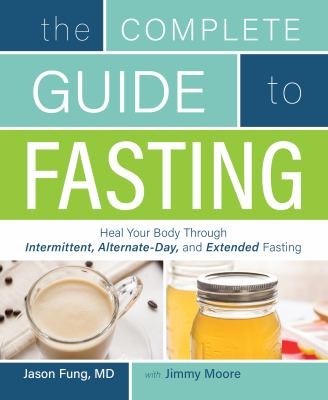
The Complete Guide to Fasting by Jason Fung is a 2016 health book about fasting, insulin resistance, obesity. Fasting is not the same as caloric restriction. Fasting produces a different hormonal response — particularly a sustained drop in insulin — that caloric restriction does not reliably achieve.
Summary
Jason Fung is a Canadian nephrologist who became convinced that the conventional dietary advice given to type 2 diabetics — eat less, eat frequently, reduce fat — was not only ineffective but was contributing to the disease it was meant to treat. The Complete Guide to Fasting, co-written with Jimmy Moore, presents fasting as the most direct intervention for the insulin resistance at the root of obesity and type 2 diabetes. Fung argues that all the time spent debating macronutrient ratios misses the point: what matters most is how often you eat, not just what you eat.
The first section lays out the hormonal case for fasting. Fung's argument centers on insulin. Every time you eat — regardless of what you eat — insulin rises. When insulin is chronically elevated, the body can't access stored fat for energy and body weight rises. The solution, in his framework, is extended periods without food, during which insulin falls low enough for fat stores to become accessible. He distinguishes fasting from caloric restriction, arguing that the latter triggers metabolic adaptation (the body lowers its metabolic rate to match reduced intake) while fasting does not, because the hormonal signal is different.
The middle section is a practical guide to different fasting protocols: the 16:8 window (16 hours fasted, 8 hours eating), alternate day fasting, 24-hour fasts, and multi-day extended fasts. Fung and Moore explain what can be consumed during a fast without breaking it (black coffee, tea, water), how to manage common side effects like hunger and headaches, and what electrolyte supplementation is appropriate during extended fasts. There are detailed protocols for different goals and health conditions, along with recipes for breaking a fast.
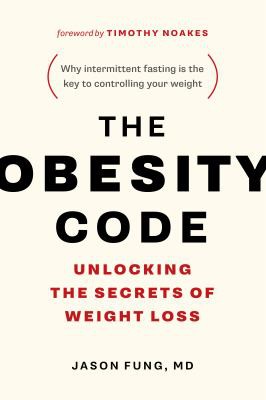
Readers familiar with the broader low-carbohydrate and insulin-centric literature will recognize the theoretical framework — Fung has developed it across several books including The Obesity Code. The Complete Guide to Fasting is more a manual than a theoretical text. The evidence Fung cites is real but selectively presented; critics have noted that the mechanistic story is cleaner in the book than in the research literature. That caveat aside, for readers who are interested in trying fasting and want clear protocols, this is one of the more comprehensive practical guides available.
Talk to The Complete Guide to Fasting like its author wrote you back.
Get the ideas that fit your life — not generic summaries.
- Chat with the book
- Audiobook-style main ideas
- Adapts to your life and goals
- Helps you take action
Key takeaways
- 1.
Fasting is not the same as caloric restriction. Fasting produces a different hormonal response — particularly a sustained drop in insulin — that caloric restriction does not reliably achieve.
- 2.
Insulin is the primary driver of fat storage. Chronically elevated insulin from frequent eating prevents the body from accessing fat stores regardless of caloric deficit.
- 3.
Type 2 diabetes and obesity, in Fung's framework, are primarily diseases of insulin resistance, and the most direct treatment is reducing insulin levels through fasting and carbohydrate reduction.
- 4.
The 16:8 protocol — eating within an 8-hour window — is the most accessible starting point for most people, producing metabolic benefits without requiring complete meal skipping.
- 5.
Extended fasting (24-72 hours) produces deeper ketosis and more pronounced autophagy, the cellular cleanup process, than shorter fasting windows.
- 6.
Hunger during fasting is typically hormonal (driven by ghrelin cycles that follow habitual meal times) rather than a signal of physiological need. It passes within 20-30 minutes if not acted on.
- 7.
Electrolytes — sodium, potassium, magnesium — are lost during extended fasting and supplementation reduces common side effects including headache and muscle cramps.
- 8.
Fasting has been practiced across virtually every major religious and cultural tradition for thousands of years, suggesting it is physiologically safe for healthy adults.
Discussion questions
Use these on your own, with a book club, or as chat starters in Superbook. Book club version, ready to copy or print →
- 1.
Fung argues that frequent eating is itself a driver of metabolic disease, not just what's eaten. How does that shift your understanding of conventional nutrition advice?
- 2.
The book distinguishes between fasting and caloric restriction primarily on hormonal grounds. How convincing did you find that distinction, and what evidence would change your view?
- 3.
What social and cultural obstacles make fasting harder than the physiology requires — and which of those are worth pushing against?
- 4.
Fung reports clinical results from his Toronto clinic using fasting to reverse type 2 diabetes. How do you evaluate that kind of clinical experience against randomized controlled trial evidence?
- 5.
The 16:8 protocol is presented as a reasonable starting point. How far is that from your current eating pattern, and what would make it feasible?
- 6.
Fung's critics argue his insulin-centric model oversimplifies obesity. Having read the book, where do you find his argument most persuasive and where does it feel incomplete?
- 7.
What is your intuition about hunger — is it a signal to be obeyed or a habit to be observed? Did the book change that view?
- 8.
Extended fasting for medical purposes (pre-surgery, religious practice) has a long history. How does knowing that change how you think about multi-day fasting?
- 9.
The book recommends fasting for people with type 2 diabetes but advises caution for those on medications. What does that caveat say about how fasting should be presented in a public health context?
- 10.
How does Fung's hormonal model of obesity change the moral framing of weight and body size?
- 11.
What aspects of the complete guide approach — having specific protocols, meal plans, recipes — are most useful compared to more theoretical treatments of fasting?
- 12.
If you tried a 16:8 window for two weeks, what would you actually do differently, and what would be hardest to give up?
Themes
Frequently asked questions
-
Is fasting safe?
For healthy adults, short to moderate fasting is generally safe and well-studied. Fung includes extensive cautions for people with diabetes on insulin or other medications, those who are underweight, pregnant women, and people with a history of eating disorders. The book is a reasonable resource but not a substitute for medical advice in those groups.
-
What is the 16:8 protocol?
The 16:8 protocol involves eating all food within an 8-hour window and fasting for the remaining 16 hours of each day. For most people this means skipping breakfast or finishing dinner earlier. It's the most common entry point because it requires skipping only one meal and doesn't demand calorie counting.
-
How long does The Complete Guide to Fasting take to read?
About four to five hours. At roughly 300 pages it's accessible and the later chapters function more as reference material — protocols, recipes, FAQs — than linear reading. Many readers read the first half through and use the second half as a reference when starting a fast.
-
Who should not read this as a how-to guide?
People with type 1 diabetes, eating disorders, low body weight, or those on insulin or blood-pressure medications should consult a clinician before any extended fasting protocol. Fung makes these caveats in the book, but they're easy to skim past.
-
How does this book compare to The Obesity Code?
The Obesity Code is Fung's more theoretical text, making the case for the insulin model of obesity. The Complete Guide to Fasting assumes you've accepted the premise and focuses on protocols and practice. Most readers interested in the science should start with The Obesity Code; those ready to try fasting will find this guide more immediately useful.