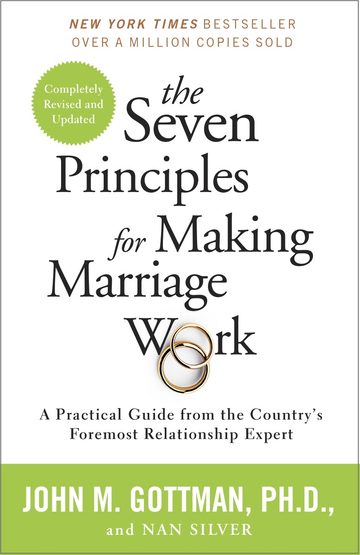
The Seven Principles for Making Marriage Work by John Gottman and Nan Silver is a 1999 psychology book about relationships, communication, conflict. Contempt is the single most corrosive pattern in relationships — more predictive of divorce than criticism, defensiveness, or conflict frequency. It signals a fundamental loss of respect.
Summary
John Gottman is a research psychologist who spent decades studying couples in his "Love Lab" at the University of Washington, filming interactions and measuring physiological responses, and developing a predictive model of relationship outcomes. His claim — that he can predict whether a couple will divorce with around 90 percent accuracy after watching them interact for a few minutes — is based on identifying specific patterns: contempt, criticism, defensiveness, and stonewalling, which he calls the "Four Horsemen" of relationship dissolution. The Seven Principles for Making Marriage Work is his account of what the research says, written for a general audience.
The book's structure moves from diagnosis to prescription. The diagnostic section explains what the research identifies as the markers of relationships in trouble: the ratio of positive to negative interactions (Gottman's "magic ratio" of 5:1 positives to negatives for stable relationships), the difference between criticism and complaint, the corrosive effect of contempt above all other patterns, and the role of physiological flooding — when one or both partners becomes so emotionally overwhelmed that rational conversation becomes impossible. These aren't abstract concepts; Gottman illustrates them with transcribed exchanges that make the patterns immediately recognizable.
The seven principles are the constructive side: building love maps (detailed knowledge of your partner's inner world), nurturing fondness and admiration, turning toward rather than away from bids for connection, accepting influence from your partner, solving solvable problems, overcoming gridlock on perpetual problems, and creating shared meaning. Most of the book's second half is devoted to these, with exercises that couples are meant to do together or individually.
The exercises are a feature and a limitation simultaneously. They make the book useful as a workbook — couples can actually use it to have structured conversations. But the register shifts between research-based analysis and something closer to a therapy worksheet, and not all readers find that transition comfortable. The research foundation is the book's distinctive strength. Unlike most relationship advice, Gottman's claims derive from data rather than clinical intuition or anecdote, which makes it possible to evaluate them rather than just accept or reject them on faith.
Talk to The Seven Principles for Making Marriage Work like its author wrote you back.
Get the ideas that fit your life — not generic summaries.
- Chat with the book
- Audiobook-style main ideas
- Adapts to your life and goals
- Helps you take action
Key takeaways
- 1.
Contempt is the single most corrosive pattern in relationships — more predictive of divorce than criticism, defensiveness, or conflict frequency. It signals a fundamental loss of respect.
- 2.
The ratio of positive to negative interactions matters more than the absence of conflict. Stable couples have roughly five positive interactions for every negative one, not zero negative ones.
- 3.
Criticism attacks the person; complaint addresses the behavior. The distinction sounds simple but is difficult to maintain under emotional pressure, and the difference in effect is large.
- 4.
Physiological flooding — the state of being emotionally overwhelmed — makes productive conversation impossible. Recognizing it in yourself and taking a break is not avoidance; it is a physiological necessity.
- 5.
Bids for connection are the small moments when one person reaches toward the other for attention, humor, or support. Turning toward those bids rather than away or against them is the foundation of day-to-day intimacy.
- 6.
Perpetual problems — conflicts rooted in fundamental personality differences or values — don't get resolved; they get managed. The goal is to find a way to live with them, not to win the underlying argument.
- 7.
Love maps are Gottman's term for detailed knowledge of your partner's inner world: their worries, dreams, preferences, history. Couples with rich love maps handle life transitions and stress better than couples without them.
- 8.
Accepting influence from your partner — actually changing your position because they've made a point — is strongly associated with relationship stability, and the research shows a significant asymmetry in how this plays out by gender.
Discussion questions
Use these on your own, with a book club, or as chat starters in Superbook. Book club version, ready to copy or print →
- 1.
Gottman identifies contempt as the most destructive pattern in relationships. Do you agree with that hierarchy, and can you identify what the specific mechanism is that makes contempt more damaging than other patterns?
- 2.
The 5:1 ratio of positive to negative interactions is one of the book's most cited findings. What does maintaining that ratio look like in practice, especially during genuinely difficult periods?
- 3.
Gottman distinguishes between solvable and perpetual problems. What are the perpetual problems in a relationship you've been in, and how have you managed — rather than resolved — them?
- 4.
The book argues that physiological flooding makes productive conversation impossible and that taking a break is the correct response. How do you distinguish a legitimate break from avoidance?
- 5.
Gottman's research found that men are more likely to stonewall and more likely to be flooded physiologically. How does that finding interact with cultural expectations about emotional expression?
- 6.
The concept of bids for connection — small reaches toward a partner — is appealing because it makes intimacy concrete rather than vague. What does turning toward bids look like in a relationship you know well?
- 7.
Love maps describe detailed knowledge of your partner's inner world. How much do you know about your partner's or close friend's current worries, dreams, and daily experiences?
- 8.
The book is built on observational research rather than clinical theory. Does the research foundation make the prescriptions feel more credible, or does it have its own limitations?
- 9.
Gottman studied mostly middle-class American couples. How much do you think his findings generalize across cultures, economic situations, or relationship structures?
- 10.
The book includes exercises couples are supposed to do together. Have you used workbook-style exercises in a relationship? What made them useful or awkward?
- 11.
The four horsemen — contempt, criticism, defensiveness, stonewalling — are all behaviors most people recognize. Which do you think is hardest to change, and why?
- 12.
Gottman claims about 90 percent accuracy in predicting divorce. What are the implications of that claim — for relationships, for therapy, for how we think about compatibility?
Themes
Frequently asked questions
-
Is The Seven Principles for Making Marriage Work only useful for married couples?
No. The research applies to committed partnerships generally, and most of the exercises and principles transfer to long-term relationships that aren't marriages. Gottman's subsequent work has also extended his framework to same-sex couples and other partnership structures.
-
What are the four horsemen Gottman identifies?
Criticism (attacking the person, not the behavior), contempt (treating the partner as inferior or worthless), defensiveness (deflecting responsibility and counter-attacking), and stonewalling (emotional withdrawal and non-responsiveness). He argues these patterns, especially contempt, are the most reliable predictors of relationship dissolution.
-
How accurate is Gottman's 90 percent divorce prediction claim?
The claim is based on his published research and has been replicated in some studies, though other researchers have raised methodological questions. The specific number varies across his publications. The broader finding — that the four horsemen patterns are strongly predictive of relationship problems — is more widely accepted than the specific accuracy figure.
-
Is this book better used individually or together as a couple?
Both, but it is more useful when both partners read it. The exercises are designed for couples and require participation from both people. Reading it alone can help with self-diagnosis but limits the ability to use the practical tools.
-
How does this book compare to couples therapy?
It provides the same conceptual framework that Gottman Method therapy uses, but reading it is not the same as working with a trained therapist. For couples in significant distress, the book can be a useful supplement to therapy but is unlikely to be sufficient on its own.
Similar books
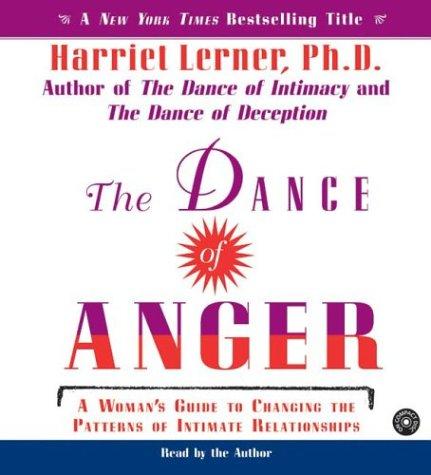
The Dance of Anger
Harriet Lerner
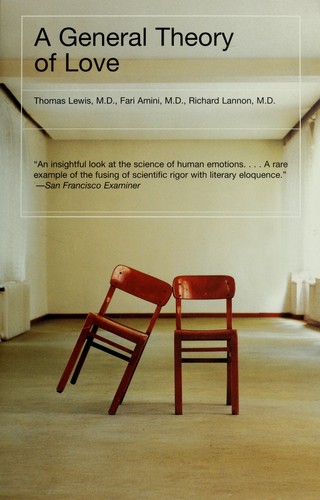
A General Theory of Love
Thomas Lewis, Fari Amini, and Richard Lannon
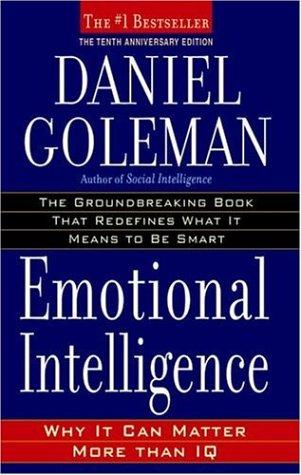
Emotional Intelligence
Daniel Goleman
How Emotions Are Made: The Secret Life of the Brain
Lisa Feldman Barrett
