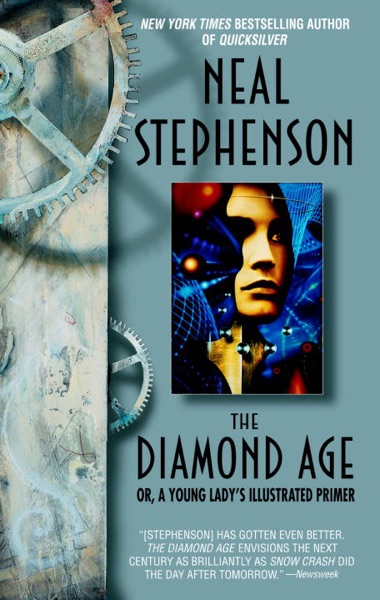
The Diamond Age by Neal Stephenson is a 1995 science book about education, technology and society, class. Nanotechnology in the novel solves material scarcity for some while leaving others dependent on centralized infrastructure — abundance and inequality coexist.
Summary
The Diamond Age, or A Young Lady's Illustrated Primer is a 1995 science fiction novel set in a near-future world where nanotechnology has solved most material scarcity but failed to eliminate inequality. Stephenson imagines a society organized around neo-Victorian "phyles" — voluntary cultural tribes defined by shared values rather than ethnicity or geography. The rich live in enclaves with powerful defenses and abundant matter compilers that fabricate almost anything from raw feedstock. The poor live in the Feed margins, dependent on centralized infrastructure they cannot control or understand.
The novel's engine is a piece of illegal technology: an interactive book called A Young Lady's Illustrated Primer, engineered by the brilliant Dr. John Percival Hackworth for a neo-Victorian lord who wants to give his daughter every cognitive advantage. The book is stolen, and a copy ends up in the hands of Nell, a young girl living in poverty on the outer edges of a Shanghai-like enclave. The Primer becomes Nell's tutor, companion, and surrogate parent — adapting its stories to her circumstances, teaching her not just facts but the capacity to think, question, and act.
The central argument the novel makes — through narrative rather than lecture — is that education is not information delivery. The Primer works because it responds to Nell as an individual and because a real human actor, a "ractor" named Miranda, breathes life into it for hours each night without knowing who the child is. The book raises the question of whether that human presence is irreplaceable, or whether a sufficiently sophisticated interactive system could substitute for it. The Chinese government thinks it can, and builds millions of Primers for the orphaned girls of Shanghai — a project that produces a different outcome than they expect.
Stephenson is a dense, allusive writer. The Diamond Age takes more work to follow than Snow Crash; it has more characters, a more fragmented structure, and an ending that leaves much unresolved. The payoff is a novel that takes ideas seriously — about education, about what culture is for, about whether technology can distribute cognitive advantage or whether the human element is always the bottleneck.
Talk to The Diamond Age like its author wrote you back.
Get the ideas that fit your life — not generic summaries.
- Chat with the book
- Audiobook-style main ideas
- Adapts to your life and goals
- Helps you take action
Key takeaways
- 1.
Nanotechnology in the novel solves material scarcity for some while leaving others dependent on centralized infrastructure — abundance and inequality coexist.
- 2.
The most powerful thing the Illustrated Primer does is not teach content but teach the capacity to learn, question, and improvise.
- 3.
Stephenson argues through narrative that education requires a human element — the ractors animating the Primer are as essential as the AI.
- 4.
Phyles — voluntary cultural tribes organized by shared values — are Stephenson's model for post-nation-state social organization, predating the real debates about network-based community by decades.
- 5.
Class in the Diamond Age is defined by access to technological capability, not just wealth. Understanding how the Feed works is power.
- 6.
The Chinese government's attempt to mass-produce the Primer's benefits misses what made the original work: adaptive responsiveness to one individual child.
- 7.
The novel treats culture not as an ornament but as load-bearing infrastructure — the neo-Victorians' etiquette and restraint are engineered responses to a world that could otherwise destroy itself.
- 8.
Miranda's relationship with Nell, conducted entirely through the Primer without either knowing the other's identity, is one of Stephenson's examinations of how genuine connection forms across mediation.
Discussion questions
Use these on your own, with a book club, or as chat starters in Superbook. Book club version, ready to copy or print →
- 1.
The Primer works because it adapts completely to Nell's individual situation. What would a real educational technology have to do to come close to that? What's currently stopping it?
- 2.
Stephenson suggests that the human element — Miranda's nightly labor — is what makes the Primer transformative. Do you agree, or does that sentimentalize something that might eventually be automated?
- 3.
The phyles are voluntary cultural associations rather than inherited identities. Is that a more appealing model of community than what we have now, or does it create new problems?
- 4.
Nell's Primer gives her advantages that no one else in her community has. Is that a story about the democratizing potential of technology or about how technology deepens inequality?
- 5.
The novel ends ambiguously. The Mouse Army and the young ractors seem to be building something new. What does Stephenson seem to think that is, and do you find his optimism earned?
- 6.
Dr. Hackworth creates the Primer illegally for Lord Finkle-McGraw's granddaughter. What does the novel say about whether such an advantage should be freely distributed?
- 7.
The neo-Victorians choose elaborate social constraints — manners, hierarchy, restraint — in a world of near-unlimited material possibility. Why does Stephenson seem to think those constraints are necessary?
- 8.
How does the Feed versus Source distinction in the novel map onto real questions about centralized versus decentralized infrastructure in our world?
- 9.
The government's mass Primer project fails to produce the same results as Nell's individual Primer. What lessons does Stephenson seem to be drawing about the limits of scaling education?
- 10.
Hackworth spends years among the Drummers, largely absent from the plot. What does Stephenson seem to be doing with that part of the story?
- 11.
The Diamond Age was published in 1995. Which of its predictions about technology and society look most accurate from where you stand today?
- 12.
Miranda never knows who Nell is until the end. How does that constraint — genuine caring relationship without conventional intimacy — function in the novel?
Themes
Frequently asked questions
-
Is The Diamond Age as good as Snow Crash?
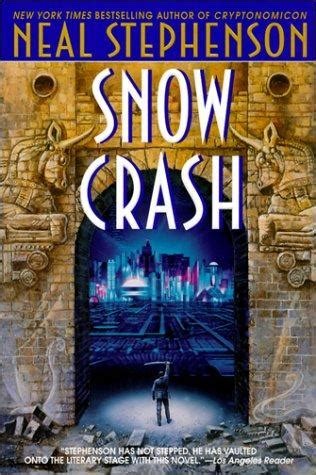
Different rather than better or worse. Snow Crash is faster and more satirical; The Diamond Age is denser, more ambitious, and more interested in education and culture. Readers who want Stephenson's ideas taken more seriously often prefer The Diamond Age; readers who want pure propulsive entertainment usually prefer Snow Crash.
-
How long does it take to read The Diamond Age?
The novel is about 500 pages and takes around twelve hours at average pace. The structure is fragmented and some sections are slower than others. It rewards patience more than Snow Crash does.
-
What is The Diamond Age actually about?
At its core it is a novel about education: what it actually requires, who gets access to it, and whether the human element can be replaced by technology. The nanotechnology setting is the vehicle for exploring how cognitive advantage is distributed in a society of near-unlimited material abundance.
-
Do I need to read Snow Crash first?
No. The Diamond Age is set in a different future and shares no characters or plot with Snow Crash. A passing familiarity with Stephenson's style helps, but the book stands alone.
-
Who should read The Diamond Age?
Readers interested in speculative ideas about education, culture, and technology will get the most from it. Pure action readers may find it slow. It rewards readers who are willing to sit with an unresolved ending.