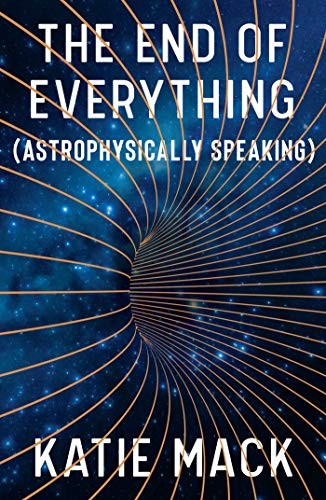
The End of Everything (Astrophysically Speaking) by Katie Mack is a 2020 science book about cosmology, fate of the universe, astrophysics. The universe has at least five plausible endings: Big Crunch, Heat Death, Big Rip, Vacuum Decay, and the Bounce — each following from different assumptions about dark energy.
Summary
The End of Everything is cosmologist Katie Mack's tour through the five leading theories about how the universe will eventually cease to exist. The scenarios range from the merely disturbing — a slow decay into cold emptiness over trillions of years — to the cosmically violent: a phase transition in the quantum vacuum that could erase everything in an instant. Mack writes with warmth and dry wit, making the subject feel less like an existential threat and more like a fascinating unsolved physics problem.
The book covers the Big Crunch, Heat Death, the Big Rip, Vacuum Decay, and the Bounce. Each scenario follows from different assumptions about the universe's energy content, the behavior of dark energy, and the stability of the quantum vacuum. Mack is careful to distinguish between scenarios that are physically ruled out and those that remain live possibilities — she treats the reader as capable of handling genuine scientific uncertainty rather than demanding a clean answer.
Much of the book's appeal comes from what it explains along the way. To understand how the universe might end, readers need to understand dark energy, inflation, the cosmic microwave background, and quantum field theory at a conceptual level. Mack builds these ideas efficiently, using them as scaffolding for the end-state scenarios rather than padding the book with standalone explainers.
Mack is also candid about what scientists don't know. The ultimate fate depends on measurements — the precise value of dark energy, whether it changes over time, the stability of the Higgs field — that remain uncertain. The book's honesty about this is one of its strengths. It ends not with false comfort but with genuine intellectual wonder: the universe is doing something extraordinary, and the fact that we can figure out roughly how it ends is itself remarkable.
Talk to The End of Everything (Astrophysically Speaking) like its author wrote you back.
Get the ideas that fit your life — not generic summaries.
- Chat with the book
- Audiobook-style main ideas
- Adapts to your life and goals
- Helps you take action
Key takeaways
- 1.
The universe has at least five plausible endings: Big Crunch, Heat Death, Big Rip, Vacuum Decay, and the Bounce — each following from different assumptions about dark energy.
- 2.
Heat Death is currently the most favored scenario: as the universe expands, galaxies drift apart, stars burn out, and the cosmos approaches a state of maximum entropy and near-zero usable energy.
- 3.
Dark energy — a repulsive force driving accelerated expansion — is the dominant factor in determining the universe's fate, and its precise nature remains unknown.
- 4.
Vacuum Decay is the most alarming possibility: if the Higgs field is in a metastable state, a quantum fluctuation could trigger a phase transition that expands at light speed and rewrites the laws of physics as it goes.
- 5.
The Big Rip requires dark energy to strengthen over time, eventually overcoming gravity, then chemical bonds, then atomic nuclei, tearing apart all structure in the universe.
- 6.
The Big Bang was not an explosion in space but an expansion of space itself, and the early universe's near-perfect uniformity is explained by inflation — a period of exponential expansion in the first fractions of a second.
- 7.
The cosmic microwave background — the afterglow of the Big Bang — contains detailed information about the early universe's composition and geometry, and remains our most precise cosmological dataset.
- 8.
Our inability to detect dark matter directly, combined with our certainty that it exists from gravitational evidence, illustrates a central feature of cosmology: much of the universe is known only by its effects.
Discussion questions
Use these on your own, with a book club, or as chat starters in Superbook. Book club version, ready to copy or print →
- 1.
Mack presents five plausible endings without declaring one correct. How do you respond to genuine scientific uncertainty at this scale — as a puzzle to be solved, or as vertigo?
- 2.
The Heat Death scenario involves the universe becoming cold, dark, and inert over an unimaginably long timescale. Does contemplating that timescale change how you feel about anything on a human scale?
- 3.
Vacuum Decay could happen anywhere, at any moment, with no warning. How does a risk that is genuinely impossible to mitigate or detect change how you think about existential risk?
- 4.
Mack uses humor throughout a book about annihilation. Is that an appropriate tone, or does it feel like deflection? What tone would you prefer?
- 5.
The fact that we can calculate how the universe ends — despite being a tiny feature of it — strikes Mack as remarkable. Do you share that sense of wonder, or does the sheer scale make it hard to feel anything personal?
- 6.
Dark energy accelerates the expansion of space, but its physical nature is completely unknown. How comfortable are you with the fact that an unknown quantity drives the most important dynamical feature of the universe?
- 7.
Many of the end scenarios take place so far in the future that no current forms of life could survive. Does that make them irrelevant, or is there something worth caring about in knowing the shape of deep time?
- 8.
The book distinguishes between what physics rules out and what remains possible. In everyday reasoning, how do you handle the difference between 'impossible' and 'we don't know yet'?
- 9.
Mack describes cosmology as a field where the most interesting questions are genuinely unanswered. Which of the five end scenarios do you find most scientifically plausible and why?
- 10.
If Vacuum Decay occurred in a distant galaxy right now, we would have no warning until it arrived at light speed. How does the existence of undetectable, unavoidable threats change your intuitions about safety?
- 11.
The Bounce scenario suggests the universe might cycle through expansions and contractions. What would it mean for there to have been universes before ours?
- 12.
Mack is a working cosmologist writing for a general audience. Does knowing the author is an active researcher change how you read the uncertainty she describes?
Themes
Frequently asked questions
-
Is The End of Everything worth reading?
Yes, especially if you want a current account of cosmology that doesn't pretend everything is settled. Mack is an active researcher, and her explanation of dark energy, the Higgs field, and the various end scenarios is unusually clear. The book is short enough to read in a weekend and dense enough to reward it.
-
How long is The End of Everything?
About 220 pages. At average reading pace that's roughly four to five hours. The chapters are short and punchy, and the tone is accessible enough that most readers move quickly.
-
What are the five ways the universe could end?
Big Crunch (collapse back to a point), Heat Death (slow expansion into cold emptiness), Big Rip (dark energy tears apart all structure), Vacuum Decay (a phase transition rewrites the laws of physics), and the Bounce (a cyclical model). Mack explains the physics behind each.
-
Who should read The End of Everything?
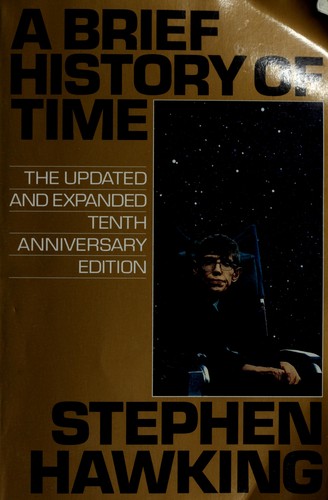
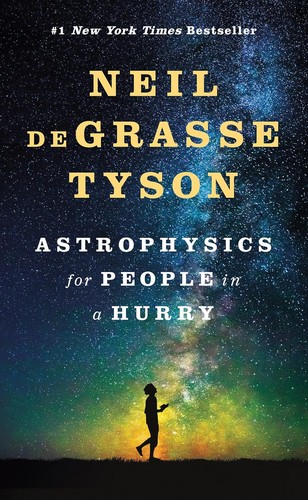
Anyone curious about the large-scale fate of the universe without wanting a textbook. Mack assumes no prior physics knowledge but doesn't talk down to the reader. It's well-suited to readers who enjoyed A Brief History of Time or Astrophysics for People in a Hurry and want something more focused.
-
Is vacuum decay actually possible?
Possibly. If the Higgs field is in a metastable rather than truly stable configuration, a quantum fluctuation could trigger a phase transition that expands outward at light speed, converting space to a lower-energy state with different physical laws. Current measurements suggest the universe is on the boundary between stable and metastable — the uncertainty is real.