Science · Similar reads
Books like The End of Everything (Astrophysically Speaking)
The best books like The End of Everything (Astrophysically Speaking) are A Brief History of Time, Astrophysics for People in a Hurry, and The Fabric of the Cosmos. The End of Everything (Astrophysically Speaking) by Katie Mack is about cosmology, fate of the universe, astrophysics. If that's what drew you in, here are 12 books that share its DNA — each summarized on Superbook, and ready to chat with in the app.
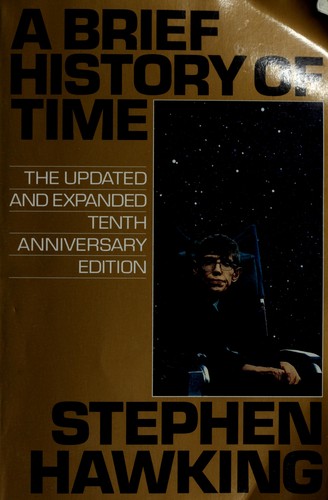
- A Brief History of Time
01
Stephen Hawking · Science
A Brief History of Time is Stephen Hawking's attempt to explain the biggest questions in physics — where the universe came from, how it behaves, and where it might be going — to readers with no scientific training.
Both dig into cosmology.
Read the summary → - Astrophysics for People in a Hurry
02
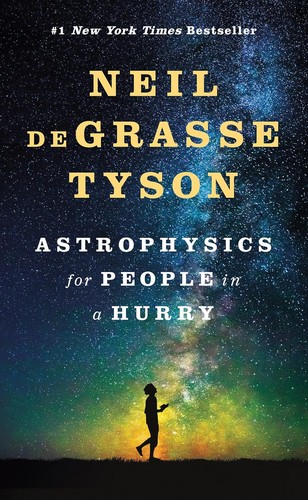
Astrophysics for People in a Hurry
Neil deGrasse Tyson · Science
Astrophysics for People in a Hurry is Neil deGrasse Tyson's deliberately compact introduction to the biggest ideas in modern astrophysics.
Shares cosmology and astrophysics with The End of Everything (Astrophysically Speaking).
Read the summary → - The Fabric of the Cosmos
03
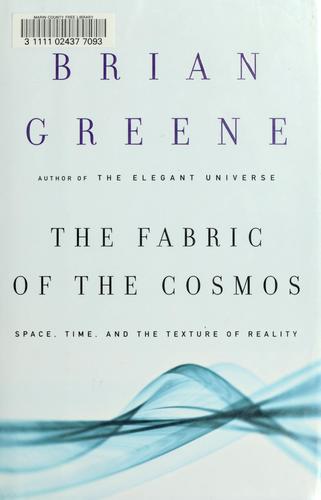
Brian Greene · Science
The Fabric of the Cosmos is Brian Greene's attempt to explain what physicists actually mean when they talk about space and time — not the intuitive everyday notions, but the deeply strange picture that emerges from general relativity and quantum mechanics.
Both dig into cosmology.
Read the summary →
- A Universe from Nothing
04
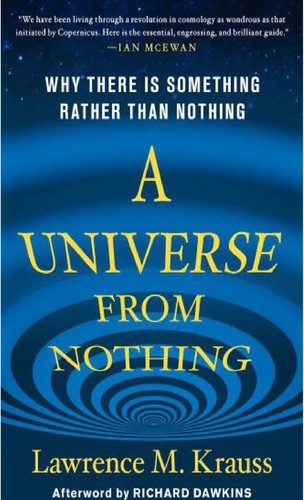
Lawrence M. Krauss · Science
A Universe from Nothing is Lawrence Krauss's argument that modern physics has resolved, or at least reframed, the ancient philosophical question of why there is something rather than nothing.
Shares cosmology and dark energy with The End of Everything (Astrophysically Speaking).
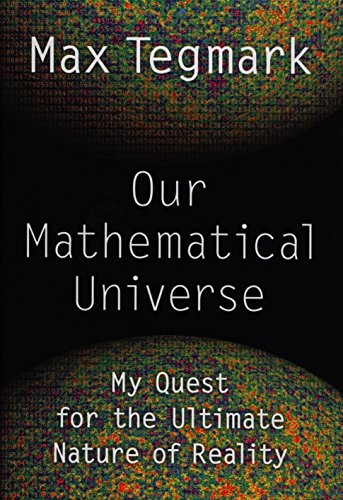
Read the summary → - Our Mathematical Universe
05
Max Tegmark · Science
Our Mathematical Universe is Max Tegmark's argument for what he calls the Mathematical Universe Hypothesis: the bold claim that the universe is not merely described by mathematics but is a mathematical structure.
Both dig into cosmology.
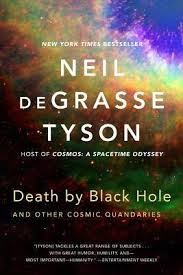
Read the summary → - Death by Black Hole
06
Neil deGrasse Tyson · Science
Death by Black Hole is a collection of essays by Neil deGrasse Tyson drawn from his "Universe" column in Natural History magazine.
Shares cosmology and astrophysics with The End of Everything (Astrophysically Speaking).
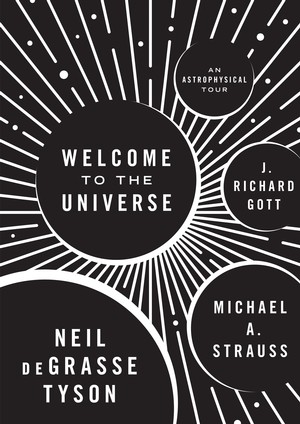
Read the summary → - Welcome to the Universe
07
Neil deGrasse Tyson, Michael A. Strauss, and J. Richard Gott · Science
Welcome to the Universe began as a popular astrophysics course at Princeton taught by three faculty members — Neil deGrasse Tyson, Michael Strauss, and J.
Shares cosmology and astrophysics with The End of Everything (Astrophysically Speaking).
Read the summary → - A Short History of Nearly Everything
08
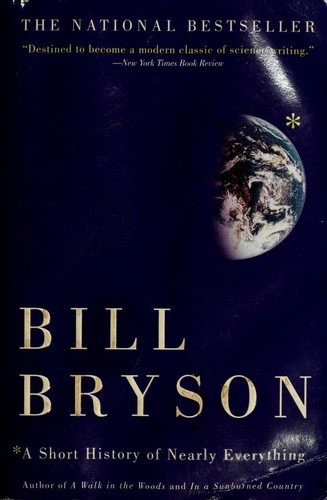
A Short History of Nearly Everything
Bill Bryson · Science
A Short History of Nearly Everything is Bill Bryson's attempt to understand the scientific story of everything — from the Big Bang to the emergence of modern humans — by spending three years talking to scientists and reading science history.
Both dig into cosmology.
Read the summary → - Four Laws That Drive the Universe
09
Four Laws That Drive the Universe
Peter Atkins · Science
Peter Atkins, one of the most respected chemistry educators of the twentieth century, wrote this book as a compact but uncompromising account of the four laws of thermodynamics.
Both dig into entropy.
Read the summary → - Quantum Theory Cannot Hurt You
10
Quantum Theory Cannot Hurt You
Marcus Chown · Science
Marcus Chown, a former radio astronomer and longtime science writer, takes two of the most counterintuitive theories in physics — quantum mechanics and special relativity — and presents them in a single short book aimed squarely at readers who find both intimidating.
Both dig into cosmology.
Read the summary → - Reality Is Not What It Seems
11
Carlo Rovelli · Science
Reality Is Not What It Seems is Rovelli's most ambitious popular book: a history of human understanding of physical reality from the pre-Socratics to loop quantum gravity, the theory of quantum spacetime that Rovelli himself has spent his career developing.
Both dig into cosmology.
Read the summary → - Seven Brief Lessons on Physics
12
Seven Brief Lessons on Physics
Carlo Rovelli · Science
Carlo Rovelli, a theoretical physicist best known for his work on loop quantum gravity, wrote this book originally as a series of essays for an Italian Sunday newspaper.
Both dig into cosmology.
Read the summary →
Books like The End of Everything (Astrophysically Speaking): quick answers
What are the best books like The End of Everything (Astrophysically Speaking)?
The best books like The End of Everything (Astrophysically Speaking) by Katie Mack are A Brief History of Time by Stephen Hawking, Astrophysics for People in a Hurry by Neil deGrasse Tyson, The Fabric of the Cosmos by Brian Greene, A Universe from Nothing by Lawrence M. Krauss, Our Mathematical Universe by Max Tegmark, plus 7 more below. Each was chosen for themes it shares with The End of Everything (Astrophysically Speaking), such as cosmology, fate of the universe, astrophysics.
What should I read after The End of Everything (Astrophysically Speaking)?
A natural next read after The End of Everything (Astrophysically Speaking) is A Brief History of Time by Stephen Hawking. Both dig into cosmology. Other strong choices are Astrophysics for People in a Hurry by Neil deGrasse Tyson, The Fabric of the Cosmos by Brian Greene, A Universe from Nothing by Lawrence M. Krauss.
What books are similar to The End of Everything (Astrophysically Speaking) by Katie Mack?
The End of Everything (Astrophysically Speaking) centers on cosmology, fate of the universe, astrophysics. Books with a similar feel include A Brief History of Time by Stephen Hawking, Astrophysics for People in a Hurry by Neil deGrasse Tyson, The Fabric of the Cosmos by Brian Greene, A Universe from Nothing by Lawrence M. Krauss, Our Mathematical Universe by Max Tegmark, Death by Black Hole by Neil deGrasse Tyson — all free to read and chat with on Superbook.
