The Eye of the World by Robert Jordan is a 1990 fantasy book about destiny and resistance, coming of age, good versus evil. Jordan's world is built with the density and specificity of a historian, not a storyteller — he cares about how economies, religions, and power structures work, and that care makes the world feel inhabited.
Summary
The Eye of the World is the opening volume of Robert Jordan's Wheel of Time, a fourteen-book series that spent more than two decades reshaping the commercial landscape of epic fantasy. Set in a secondary world where time moves in cycles and the Dark One has been imprisoned since the beginning of the age, the book follows five young people from the village of Emond's Field who are forced to flee when the Dark One's agents come looking for one of them. Moiraine, an Aes Sedai — one of a female order of magic-users — and her Warder Lan guide the group across a dangerous continent while they flee, fight, and slowly begin to understand what they might be.
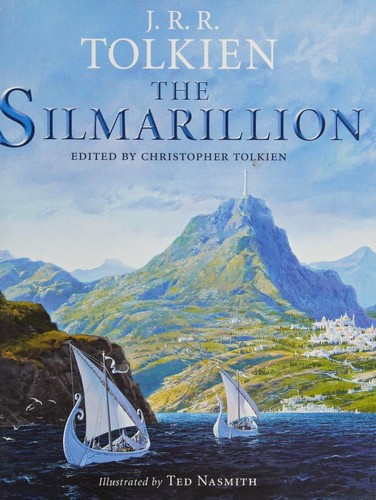
The book is unambiguously Tolkien in its architecture — the idyllic village disrupted, the flight from pursuers, the quest for an ancient power — but Jordan builds the template into something distinctly his own. The world of the Wheel of Time has a depth of history, cultural diversity, and gender politics that Tolkien's legendarium lacks; the magic system (the One Power, divided between saidin and saidar, male and female channels) has specific rules and consequences that make it feel like a real force rather than plot convenience. Jordan is also interested in things Tolkien was not: commerce, fashion, cuisine, the bureaucracy of magical institutions. The world feels inhabited rather than merely imagined.
Rand, Mat, and Perrin are three young men each carrying a different kind of potential — and a different kind of crisis as that potential emerges. The slow revelations about each of their natures, parceled out across the early volumes, is one of the series' central pleasures. The Eye of the World is the most Tolkienian of the fourteen books, the one that most closely follows the quest-structure conventions, and by later standards its plotting is relatively linear. Readers often describe it as the book they were most uncertain about and least likely to cite as a favorite — the series tends to find its voice in the middle volumes.
The Wheel of Time is enormously long — 4.4 million words across fourteen books — and this is an honest entry in a very long commitment. The Eye of the World leaves enough questions unanswered to make clear that nothing will be resolved in a single volume. Jordan's world rewards patience and accumulated investment; the pleasures grow with familiarity. But readers who want tight, self-contained stories should know what they are entering.
Talk to The Eye of the World like its author wrote you back.
Get the ideas that fit your life — not generic summaries.
- Chat with the book
- Audiobook-style main ideas
- Adapts to your life and goals
- Helps you take action
Key takeaways
- 1.
Jordan's world is built with the density and specificity of a historian, not a storyteller — he cares about how economies, religions, and power structures work, and that care makes the world feel inhabited.
- 2.
The Aes Sedai — a powerful female institution that is explicitly political, internally factional, and sometimes deeply corrupt — is one of the more interesting takes on institutionalized magic in genre fiction.
- 3.
Mat, Rand, and Perrin are deliberately different types: the trickster, the reluctant hero, and the gentle giant. Their diverging relationships with their own power is the series' central argument about destiny and choice.
- 4.
The Dark One's imprisonment and the inevitable turning of the Wheel — the idea that this confrontation has happened before and will happen again — gives the series a tragic register that a single-cycle good-versus-evil story lacks.
- 5.
Jordan writes female characters with more range than most fantasy authors of his era, though readers disagree fiercely about whether his treatment of gender is progressive or merely descriptive.
- 6.
The One Power's division along gender lines — and the madness that male channelers eventually develop — is the central tragedy of the world's backstory and shapes almost every political and social arrangement.
- 7.
The Eye of the World is the slowest and most conventionally plotted of the series; readers who find it derivative should know the later volumes diverge significantly from the Tolkienian template.
- 8.
The Wheel of Time requires investment across millions of words that Jordan did not live to complete; the final three books were finished by Brandon Sanderson from Jordan's notes after Jordan's death in 2007.
Discussion questions
Use these on your own, with a book club, or as chat starters in Superbook. Book club version, ready to copy or print →
- 1.
Moiraine is competent, secretive, and clearly manipulating the group for reasons she won't explain. The book asks you to trust her before you understand her. Did you? At what point does trust without explanation become reasonable?
- 2.
The five young people from Emond's Field all react differently to being told they might be the subject of prophecy. Which reaction felt most honest to you? Which would be your own?
- 3.
Jordan's world is gender-divided in ways that feel specific and intentional: the Aes Sedai, the Warders, the way different cultures treat women. Does the book's treatment of gender feel progressive, regressive, or simply strange to a 2024 reader?
- 4.
The first hundred pages are deliberately slow — Jordan keeps the horror at a distance and the village at the center. How long did it take for the book to pull you in? Was the slow opening worth it?
- 5.
Compare Rand's heroic reluctance to Frodo's, or to Kaladin in The Way of Kings, or to Vin in Mistborn. Is the reluctant hero still a useful narrative device, or has it become a convention that the genre needs to question?
- 6.
Lan's relationship with Moiraine — the Warder bond — is introduced without full explanation. Does the mystery of how that relationship works make it more or less interesting than if it had been explained?
- 7.
The book ends with a revelation about the nature of the Eye and what the group achieved there. Was that climax satisfying as a conclusion to this volume? Does it earn the opening journey?
- 8.
The Wheel of Time is fourteen books. Given what you know at the end of The Eye of the World, are you committed to the full series, curious but uncertain, or done? What would change your answer?
- 9.
The Dark One is kept almost entirely offscreen in this volume — present only through his agents and effects. How does that affect the threat compared to a villain the reader can observe directly?
- 10.
Jordan's world contains many cultures, each with distinct customs, dress, and social hierarchies. How much of that detail is enriching and how much is it slowing the story?
- 11.
Mat is afflicted by a cursed dagger for much of the book and is clearly not himself. How does Jordan use that possession to complicate what would otherwise be a fairly straightforward character?
- 12.
The Wheel of Time was completed after Jordan's death by Brandon Sanderson. Does knowing the author didn't live to finish his series change how you feel about committing to it?
Themes
Frequently asked questions
-
Is The Eye of the World worth starting if the series has fourteen books?
That depends on your tolerance for long-form commitment. The Wheel of Time is the defining epic fantasy series of its era and rewards the investment. If you find the first book enjoyable, the series tends to grow stronger through the middle volumes. If you find it derivative, you are unlikely to feel differently about the rest.
-
Is it hard to keep track of all the characters and world-building?
The books include glossaries and pronunciation guides, which helps. The cast is large by the end — dozens of named characters across multiple political factions — but the first book is relatively focused. Most readers find the complexity manageable and eventually engaging.
-
Should I watch the Amazon Prime series instead?
The Amazon adaptation covers roughly the first two books with significant changes and has received mixed reviews. Most readers and fans recommend the books as the primary experience. The show is a reasonable introduction but not a substitute.
-
Who might find The Eye of the World disappointing?
Readers who have encountered a lot of epic fantasy and find the Tolkienian template overworked. The first book is the most derivative of the series. If you are familiar with the genre's tropes, the early chapters may feel like a checklist.
-
Is there a good point to stop reading the series if I don't want to commit to all fourteen books?
Books one through three form a loosely coherent early arc. The series doesn't resolve in any clean sense until the final volume. Readers who stop mid-series often report feeling unsatisfied; the investment compounds across the books.