Mistborn: The Final Empire by Brandon Sanderson is a 2006 fantasy book about revolution and oppression, hope in a hopeless world, identity and power. The premise — what if the hero of prophecy failed and the Dark Lord won — is not just a marketing hook; the book takes it seriously and builds a coherent oppressive world from that starting point.
Summary
Mistborn: The Final Empire opens with a premise that inverts a thousand years of genre convention: the Dark Lord won. The Lord Ruler has ruled the ash-covered world for a millennium, the slave class — the skaa — are kept in near-total subjugation, and the nobility who serve the Lord Ruler maintain their position through brutal control over an economy of metals and fear. Into this world, Brandon Sanderson drops a classic heist plot: a crew of thieves and con artists, led by the charismatic and possibly unhinged Kelsier, plans to rob the empire and start a revolution.
The book's central relationship is between Kelsier — all fire and mission and cultivated legend — and Vin, a young skaa thief who discovers she has Allomantic powers: the ability to burn metals and use them to enhance senses, emotions, and physical ability. Vin is the reader's point of entry into the world, and Sanderson uses her to explore what it costs to trust when survival has always required isolation. The romance subplot that develops is present but handled lightly; the more interesting relationship is Vin's evolving understanding of Kelsier's plan and whether she believes in it.
Sanderson's signature is his magic systems, and Allomancy is among his best: specific, internally consistent, with clear rules and escalating applications that make action sequences feel like logic puzzles as much as spectacle. The "hard magic" approach — where rules govern powers precisely and readers can follow the reasoning — contrasts sharply with the vaguer supernatural of Tolkien or Jordan and gives the book a different texture. Plot mechanics and magic are woven tightly together; understanding the system is part of understanding the story.
The Final Empire is a propulsive, accessible read — the most common complaint is that it is almost too plotted, that character depth is traded for mechanism. That is a fair observation: Sanderson writes characters with clarity and function rather than ambiguity. But the book earns its ending, which recontextualizes much of what came before and lands harder than its heist-adventure framing suggested. For readers new to Sanderson, this is where to start. For readers who want morally complex, slow-burning character studies, it may not be the right tool.
Talk to Mistborn: The Final Empire like its author wrote you back.
Get the ideas that fit your life — not generic summaries.
- Chat with the book
- Audiobook-style main ideas
- Adapts to your life and goals
- Helps you take action
Key takeaways
- 1.
The premise — what if the hero of prophecy failed and the Dark Lord won — is not just a marketing hook; the book takes it seriously and builds a coherent oppressive world from that starting point.
- 2.
Allomancy is one of fantasy fiction's most satisfying hard magic systems: each metal has a specific effect, the rules are consistent, and mastery means puzzle-solving rather than escalating power fantasy.
- 3.
Vin's arc — from a girl who survives by trusting no one to someone capable of being changed by other people — is the emotional core of the book, even when the heist plot takes over.
- 4.
Kelsier is a more interesting character than he first appears: the charisma and confidence conceal a grief and a willingness to use people that the narrative doesn't fully excuse.
- 5.
The book asks what hope looks like in a world constructed to make hope impossible — and answers that it looks irrational, because rationality has been weaponized against the oppressed.
- 6.
Sanderson's pacing is engineered: chapters build to mini-climaxes, information is metered carefully, and the architecture of the plot is tidier than almost any comparable epic fantasy.
- 7.
The treatment of religion — the Lord Ruler as literal god-king, faith as both tool of oppression and genuine comfort — is more nuanced than a casual read suggests.
- 8.
The twist in the final act is one of Sanderson's best: not a reversal for its own sake but a revelation that makes thematic sense of everything that preceded it.
Discussion questions
Use these on your own, with a book club, or as chat starters in Superbook. Book club version, ready to copy or print →
- 1.
Kelsier builds his revolution on legend as much as logistics — he deliberately turns himself into a myth. Is that a clever tactic, a form of manipulation, or something more troubling?
- 2.
The skaa have been oppressed for a thousand years. The book suggests they've internalized their own subjugation. Does the narrative handle that honestly, or does it simplify the psychology of long-term oppression?
- 3.
Vin's distrust of other people is presented as a survival mechanism she needs to unlearn. But the world of the book suggests that distrust was entirely rational. How does Sanderson resolve that tension?
- 4.
The Lord Ruler is set up as the ultimate villain, but the book complicates that by the end. Did you find the complication satisfying or did it feel like it let him off the hook?
- 5.
Sanderson's magic system has clear, consistent rules. How does that change the experience of reading the action sequences compared to fantasy where magic is more mysterious and undefined?
- 6.
The heist genre usually assumes the audience roots for the thieves regardless of legality. Does Mistborn earn that investment, or do the revolutionary stakes make the heist framing feel like a mismatch?
- 7.
Elend Venture is introduced as a potentially significant character but is relatively underdeveloped in this volume. Did his relationship with Vin feel earned, or did it feel like setup for later books?
- 8.
The ash-covered world is described in great physical detail. How much did the environmental setting affect the mood of the book for you? Does a world in decay feel fundamentally different from a beautiful or neutral secondary world?
- 9.
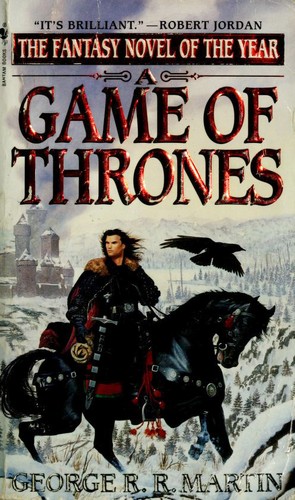
Sanderson writes characters who are competent and largely self-aware. Is that a strength or a limitation compared to authors like Martin or Le Guin who write characters who often misread themselves?
- 10.
The ending recontextualizes the entire plot. In retrospect, were there clues that telegraphed what was coming, or did Sanderson play it completely straight until the reveal?
- 11.
This is the first book of a trilogy. Does it function as a satisfying standalone, or does it feel incomplete without reading the full series?
- 12.
The noble class in Mistborn collaborates with the oppressive regime in exchange for privilege and safety. How does the book judge them? Are any of them sympathetic?
Themes
Frequently asked questions
-
Is Mistborn: The Final Empire a good starting point for Brandon Sanderson?
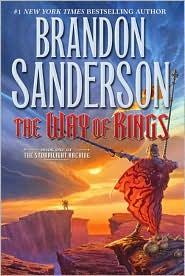
Yes — it is the most commonly recommended entry into Sanderson's work. The magic system is well-constructed, the plot is self-contained, and the world is introduced with less front-loading than The Way of Kings.
-
Do I need to read the whole Mistborn trilogy?
The first book ends in a place that feels reasonably complete, though it leaves significant threads open. The trilogy tells a single story across three volumes. Most readers who enjoy the first find the second and third essential.
-
Is The Final Empire appropriate for younger readers?
Yes, with caveats for violence. The book contains action-sequence violence and references to sexual exploitation of the slave class, but it is not graphic and is appropriate for most readers in their mid-teens and up.
-
How does Mistborn compare to The Wheel of Time?
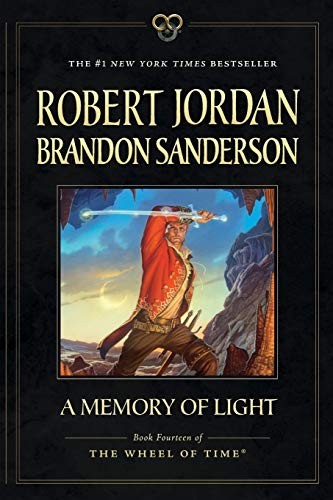
Mistborn is considerably shorter, tighter, and more focused on mechanism. The Wheel of Time is a much longer, more character-dense, and more sprawling series. They share an emphasis on systematic world-building but feel very different in texture.
-
Who might not enjoy this book?
Readers who prefer psychologically complex, ambiguous characters over plot-driven narratives may find Sanderson's characterization too functional. The book is engineered to deliver satisfaction more than discomfort.