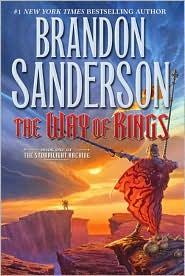
The Way of Kings by Brandon Sanderson is a 2010 fantasy book about duty and sacrifice, mental health and survival, ancient knowledge and lost history. Kaladin's chapters are a rare attempt in epic fantasy to portray clinical depression with specificity — the paralysis, the numbness, the way hope becomes a liability when the world keeps proving it wrong.
Summary
The Way of Kings is the first volume of The Stormlight Archive, Brandon Sanderson's most ambitious project: a ten-book epic set in Roshar, a world of continent-wide storms, symbiotic armor, and an ancient catastrophe that everyone has forgotten. At nearly 400,000 words, it is one of the longest single fantasy novels ever published, and Sanderson designed it as an opening statement — an introduction to a world and cast he intends to develop across a decade or more of books. Readers who want resolution should know upfront that this is a foundation, not a complete structure.
The book follows three primary threads: Kaladin, a former soldier enslaved and assigned to the most suicidal position on the battlefield, whose arc is a study in depression, leadership, and the cost of caring about people in a system designed to grind them down; Shallan, a young scholar who comes to Kharbranth to study under a controversial Radiant scholar, carrying secrets that will eventually reshape the larger plot; and Dalinar, a highprince trying to lead honorably among men who have given up on honor. The Kaladin chapters are widely considered the strongest: Sanderson writes trauma and mental collapse with more directness than most epic fantasy attempts, and the progression from despair to agency is earned over hundreds of pages rather than in a single breakthrough moment.
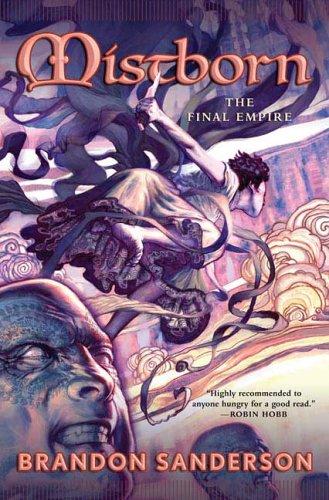
What distinguishes The Stormlight Archive from Sanderson's Mistborn series is scale and texture. The world-building is more elaborate — Roshar's ecology, economics, and history are embedded in the prose at the level of background detail — and the magic systems are more numerous and interconnected. The Stormlight mechanic, where Radiants bond Spren and use stormlight to enhance their abilities, is developed slowly and deliberately; readers expecting early payoff will wait. The book rewards patience and re-reading in ways that Mistborn does not require.
This is not a book for casual readers or for people new to epic fantasy. It assumes a tolerance for slow build, large casts, and narrative investment across thousands of pages. The payoff chapters — certain action sequences, several character revelations — are among the most technically accomplished things Sanderson has written. But the path there is long, and readers who want character ambiguity, literary prose, or moral complexity in the vein of Martin or Le Guin will likely find the book too clean and too earnest for their taste.
Talk to The Way of Kings like its author wrote you back.
Get the ideas that fit your life — not generic summaries.
- Chat with the book
- Audiobook-style main ideas
- Adapts to your life and goals
- Helps you take action
Key takeaways
- 1.
Kaladin's chapters are a rare attempt in epic fantasy to portray clinical depression with specificity — the paralysis, the numbness, the way hope becomes a liability when the world keeps proving it wrong.
- 2.
Sanderson structures the book around the question of what it means to be a leader in a system that punishes leadership — and refuses the easy answer that good leaders always succeed.
- 3.
The flashback chapters interspersed throughout Kaladin's present-day arc are a structural device that makes the emotional beats land harder by forcing the reader to reconcile who he was with who he has become.
- 4.
Roshar's ecology — creatures without terrestrial analogs, a world shaped by recurring catastrophic storms — is one of the most internally consistent secondary world-builds in contemporary fantasy.
- 5.
Dalinar's subplot is a slow exploration of what it looks like to try to lead ethically when everyone around you has normalized the opposite. It is less dramatic than Kaladin's arc but more politically interesting.
- 6.
The Stormlight Archive is explicitly designed as a long-form work; The Way of Kings functions as an overture, introducing themes and characters that will only fully resolve across ten volumes.
- 7.
Sanderson is unusual among epic fantasy authors in treating his religious and philosophical texts as genuine world-building rather than set dressing — the epigraphs from in-world sources accumulate meaning across the book.
- 8.
The book's emotional climax earns its place because it has been prepared across nearly 400,000 words of accumulated context — which is either a mark of patient craft or of indulgence, depending on your tolerance for length.
Discussion questions
Use these on your own, with a book club, or as chat starters in Superbook. Book club version, ready to copy or print →
- 1.
Kaladin's depression is depicted in sustained, specific detail. Did you find that a strength of the book — a fantasy novel taking mental health seriously — or did the extended darkness make it difficult to continue reading?
- 2.
The Way of Kings is nearly 400,000 words and the series is planned at ten volumes. Is that scale a feature or a flaw? What does a story need that length to do?
- 3.
Dalinar receives visions during the Highstorms that he cannot share with anyone around him without appearing mad. How does the book use that isolation to develop him as a character?
- 4.
Kaladin begins the book having given up on hope because hope has always led to catastrophic loss. At what point in the narrative did you believe his recovery was genuine rather than temporary?
- 5.
The Alethi warrior culture has a codified system of honor — the Way of Kings — that Dalinar follows. The book presents it as both admirable and complicit in an unjust system. Does it resolve that tension?
- 6.
Shallan's chapters function quite differently from Kaladin's — lighter, more intellectual, with a different kind of moral peril. Do the two narrative threads feel like parts of the same book, or do they pull in different directions?
- 7.
The Spren — semi-sentient manifestations of natural forces and emotions — are a distinctive element of Roshar's world. How do they change the way the magic feels compared to more standard fantasy power systems?
- 8.
Sanderson has said he wanted The Way of Kings to be a book about a character who has hit absolute bottom. Does the length of time Kaladin spends at bottom feel necessary, or does it overstay its welcome?
- 9.
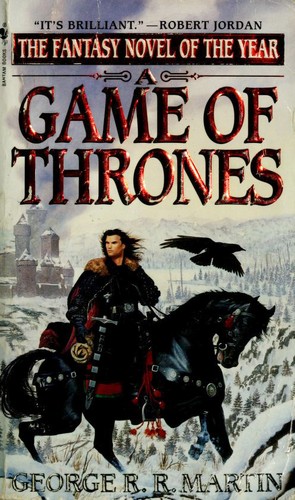
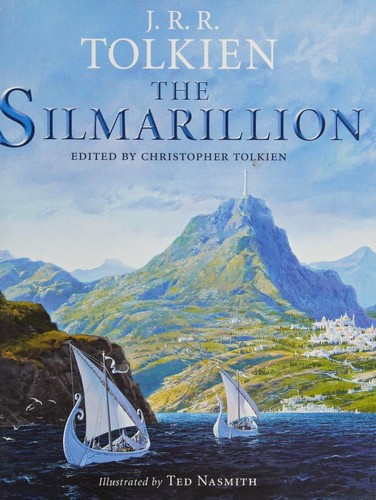
Compare Sanderson's approach to depicting warfare — the bridge runs, the logistics of the Shattered Plains — with Martin's or Tolkien's. What does each author think war is, based on how they write it?
- 10.
The Stormlight Archive has a very strong online community of readers who theorize about the cosmology. Does knowing that a fandom of that kind exists change how you read the book, or does it feel irrelevant?
- 11.
The book ends with a significant revelation about Szeth and the nature of the larger threat. Was that ending satisfying as a conclusion to this volume, or did it feel like a commercial hook?
- 12.
Who was your favorite character at the end of the book, and who surprised you most? Were those the same person?
Themes
Frequently asked questions
-
Should I read Mistborn before The Way of Kings?
The Cosmere novels are set in the same universe but can be read independently. Most readers start with Mistborn because it is shorter and more self-contained. The Way of Kings rewards the investment more but demands more from the reader upfront.
-
Is The Way of Kings too long?
At nearly 400,000 words it is genuinely demanding. The opening 200 pages are slow and the payoff requires significant patience. Readers who have bounced off long fantasy epics before are likely to struggle. Those who commit to it tend to find the second half significantly more rewarding than the first.
-
How many books are in The Stormlight Archive?
Ten books are planned, split into two five-book arcs. Four books and a novella have been published as of 2026. The series is ongoing.
-
Is the depression in the book handled well?
More carefully than most fantasy. Sanderson has spoken about researching depression to write Kaladin's arc. The depiction is sympathetic and specific rather than using mental illness as a shorthand for dramatic suffering. Some readers have found it genuinely validating; others found the sustained darkness difficult to get through.
-
Who shouldn't read this book?
Readers who want concise, self-contained stories; those who find long fantasy series frustrating when they are unfinished; anyone who needs literary prose rather than functional genre writing. The book is earnest in a way that may feel naive to readers of Martin or Le Guin.