The Idiot by Fyodor Dostoevsky is a 1869 literary fiction book about goodness and its costs, society's cruelty toward innocence, beauty and destruction. Myshkin's goodness is not naive — he sees what is happening around him very clearly — but he cannot respond to it with the strategic self-protection the world requires.
Summary
Prince Myshkin returns to Russia after years in a Swiss sanatorium being treated for epilepsy. He is gentle, perceptive, and entirely without guile — a genuinely good person in a society that has no idea what to do with one. The novel tracks his collision with Russian high society, primarily through two women: the feverishly beautiful and self-destructive Nastasya Filipovna and the young, fresh, bourgeois Aglaya Yepanchina, who is drawn to and frightened by him. At the center of the novel's drama is whether anyone in this world can accept authentic goodness without mocking it, exploiting it, or destroying it.
Dostoevsky's stated ambition was to depict a positively beautiful human being — something he found harder to do than depicting vice or philosophical crisis. Myshkin is partly modeled on Christ and partly on Don Quixote: a figure who is either idiotic or saintly depending on the angle, and whose inability to see malice in others makes him uniquely vulnerable to it. The novel's tragic engine is that Myshkin's goodness is not sufficient to save anyone, including himself; it is sufficient only to illuminate, briefly, what could have been different.
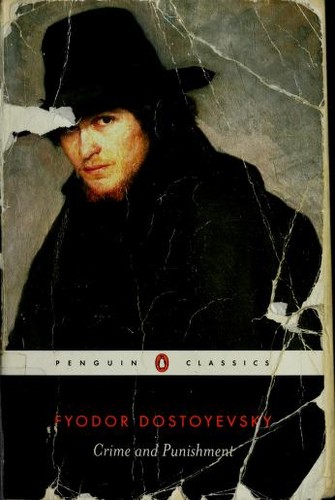
The prose here is Dostoevsky at his most chaotic and most alive. Scenes pile up, conversations run on past their natural ending points, characters announce their inner states in speeches that feel more theatrical than realistic but somehow truer for it. The two infamous dinner party scenes — Nastasya's birthday and the Yepanchin drawing room visit — are as set-piece brilliant as anything in the Russian canon. The novel is structurally looser than Crime and Punishment and harder to summarize, which is partly why it is less often assigned.
Readers who fall for The Idiot often consider it their favorite Dostoevsky — not the greatest but the most emotionally direct. It asks a question that never dates: if a perfectly good person actually appeared among us, what would we do to them? The answer is not encouraging. Readers who find Nastasya's behavior frustratingly self-defeating, or who require their characters to make coherent decisions, will struggle with the novel's final hundred pages.

Talk to The Idiot like its author wrote you back.
Get the ideas that fit your life — not generic summaries.
- Chat with the book
- Audiobook-style main ideas
- Adapts to your life and goals
- Helps you take action
Key takeaways
- 1.
Myshkin's goodness is not naive — he sees what is happening around him very clearly — but he cannot respond to it with the strategic self-protection the world requires.
- 2.
Nastasya Filipovna destroys herself not from stupidity but from the conviction that she is fallen and therefore does not deserve happiness, however much she desires it.
- 3.
The novel is Dostoevsky's most direct attempt to answer the question: can pure goodness exist in the world, or does the world always corrupt or destroy it?
- 4.
Rogozhin, Myshkin's double and rival, represents passionate possessive love — the opposite of Myshkin's compassionate non-possessive love — and the novel traces both to their conclusions.
- 5.
Myshkin's epileptic aura, which he describes as a moment of perfect harmony before the seizure, is Dostoevsky's image of mystical perception — insight that cannot be maintained in ordinary life.
- 6.
The novel's tragedy is that Myshkin cannot save Nastasya because she will not let herself be saved, and he cannot stand aside because his nature will not let him.
- 7.
Society's cruelty to Myshkin takes the form of mockery and condescension rather than active malice — which is, Dostoevsky suggests, more typical and more corrosive than outright hatred.
Discussion questions
Use these on your own, with a book club, or as chat starters in Superbook. Book club version, ready to copy or print →
- 1.
Is Myshkin actually good, or is he simply without guile — and is that the same thing? Does the novel ever distinguish between the two?
- 2.
Nastasya Filipovna is one of the most compelling and most discussed female characters in Dostoevsky. Is her self-destruction a form of agency, or is it Dostoevsky punishing a woman he can't fully understand?
- 3.
Dostoevsky said he wanted to depict a positively beautiful human being. By the end of the novel, do you think he succeeded or failed?
- 4.
Rogozhin kills Nastasya in the final pages. Is this the inevitable conclusion of his type of love, or does the novel hold Myshkin partly responsible?
- 5.
The drawing room scene where Myshkin accidentally breaks the vase is often read as a set piece about social anxiety. What else is it doing?
- 6.
Aglaya is intelligent, proud, and attracted to Myshkin precisely because he doesn't perform. Why does their relationship fail, and whose failure is it?
- 7.
Myshkin is epileptic, as was Dostoevsky himself. How does the novel use epilepsy — as disability, as spiritual marking, as something else?
- 8.
The final scene, with Myshkin and Rogozhin sitting with Nastasya's body, is one of the strangest endings in major fiction. What is Dostoevsky doing there?
- 9.
The novel was serialized under enormous time pressure and Dostoevsky considered it unfinished. Does it feel that way to you? What would a more controlled version lose?
- 10.
Myshkin is often compared to Don Quixote and to Christ. Which comparison do you find more illuminating, and what does each say about the novel's vision of goodness?
- 11.
The world around Myshkin is not monstrous — it is recognizable, social, moderately corrupt. Does that make his failure more or less devastating?
Themes
Frequently asked questions
-
Is The Idiot worth reading?
Yes, especially if you've already read Crime and Punishment and want a different angle on Dostoevsky. The Idiot is looser, stranger, and more emotionally raw. It's the Dostoevsky novel most likely to produce a kind of helpless devastation rather than philosophical satisfaction.
-
Is The Idiot hard to read?
Harder than Crime and Punishment in structure — it sprawls more, the plot lines are harder to track, and the final hundred pages require significant tolerance for characters acting in ways that feel chaotic. The prose is vivid and propulsive, but the narrative architecture is less tight.
-
What does 'the idiot' mean in the title?
Both things: Myshkin is called an idiot by people who find his goodness incomprehensible and his epilepsy embarrassing, and the title is also Dostoevsky's irony — the 'idiot' sees things more clearly than almost everyone else in the novel.
-
Is there a good film adaptation of The Idiot?
Akira Kurosawa's 1951 film, set in postwar Japan, is the most celebrated adaptation. It is long, visually striking, and captures the emotional core of the novel better than most critics expected when it was released.
-
Who shouldn't read The Idiot?
Readers who need psychologically coherent character motivations throughout. Nastasya's behavior in particular is driven by an internal logic the novel renders impressionistically rather than systematically. If that kind of ambiguity frustrates you, Crime and Punishment is the better choice.