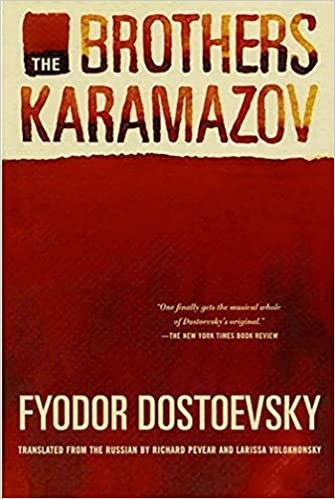
The Brothers Karamazov by Fyodor Dostoevsky is a 1880 literary fiction book about faith and doubt, fathers and sons, free will and moral responsibility. Ivan's rebellion — refusing to accept any God who permits the suffering of innocent children — is Dostoevsky's most honest engagement with atheism, built to be as strong as he could make it.
Summary
Three brothers — Dmitri, Ivan, and Alyosha Karamazov — orbit around their contemptible, sensuous father Fyodor, who is also a rival with Dmitri for the affections of a local woman. When Fyodor is murdered, each brother is implicated in a different way: Dmitri had motive and was seen near the house; Ivan's philosophical ideas, stripped of God and therefore of moral law, arguably made the act thinkable; Alyosha, the youngest and most saintly, failed to prevent it. The murder mystery is real, but it is a frame for questions that go much deeper.
The Brothers Karamazov is the most explicitly philosophical major novel in the Western canon. Ivan's rebellion against God — his argument that the suffering of innocent children makes any divine plan morally inadmissible — is one of the most serious challenges to theodicy in literature, and it arrives not in an essay but in a conversation between brothers that Dostoevsky renders with complete fairness to both sides. The Grand Inquisitor chapter, in which Ivan reads a prose poem about Christ returning to fifteenth-century Seville only to be arrested by the Church, is one of the most discussed passages in modern literature. Dostoevsky the believer built the strongest case he could against his own beliefs, and then attempted to answer it through Alyosha and the elder Zosima.
The novel's range is staggering: murder mystery, courtroom drama, philosophical dialogue, religious hagiography, psychological thriller, broad comedy. The supporting cast — Grushenka, Katerina, the boys of Ilyusha's chapter — are drawn with the same intensity as the brothers. The courtroom scene in the final third is among the best in literary fiction, and it concludes in a verdict that most first readers find outrageous in exactly the way Dostoevsky intended.
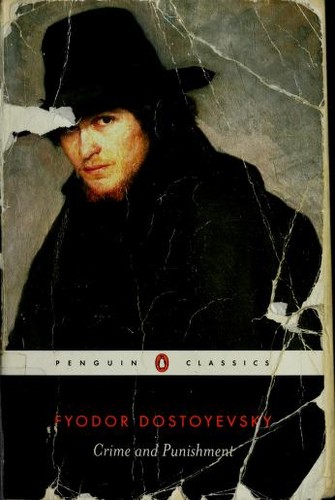
This is the hardest major Dostoevsky novel and also widely considered his greatest. The length, the philosophical density, and the Russian name-switching between formal and diminutive forms are all real obstacles. But readers who clear them find a novel that engages the hardest questions — about God, about suffering, about what we owe each other — with more intellectual honesty than almost any work of philosophy proper. Read Crime and Punishment first. Then read this.
Talk to The Brothers Karamazov like its author wrote you back.
Get the ideas that fit your life — not generic summaries.
- Chat with the book
- Audiobook-style main ideas
- Adapts to your life and goals
- Helps you take action
Key takeaways
- 1.
Ivan's rebellion — refusing to accept any God who permits the suffering of innocent children — is Dostoevsky's most honest engagement with atheism, built to be as strong as he could make it.
- 2.
The Grand Inquisitor chapter argues that human beings want bread and authority more than freedom, and that the Church understands this better than Christ did. Dostoevsky spent the rest of the novel trying to answer it.
- 3.
Alyosha is Dostoevsky's counter to Ivan: not an intellectual but a loving presence whose faith is embodied rather than argued.
- 4.
The murder mystery is deliberately constructed so that the reader cannot be certain of the truth — and that uncertainty mirrors the epistemological uncertainty at the center of the novel's theology.
- 5.
Zosima's teaching — that everyone is responsible for everyone — is the novel's positive ethical vision, and it is most convincingly dramatized not in argument but in the subplot about the dying boy Ilyusha.
- 6.
Dmitri is guilty of desire, intent, and the full moral weight of wanting his father dead — and yet is not guilty of the murder itself. The verdict the court reaches is unjust and also entirely logical.
- 7.
The novel insists that without God, everything is permitted — but it demonstrates this by showing that Ivan's philosophical permission enables Smerdyakov's action, not his own.
- 8.
The epilogue, centered on the children gathered at Ilyusha's grave, is Dostoevsky's final argument: that love expressed in small acts, not philosophical resolution, is the answer to Ivan's challenge.
Discussion questions
Use these on your own, with a book club, or as chat starters in Superbook. Book club version, ready to copy or print →
- 1.
Ivan presents the suffering of children as the single best argument against a benevolent God. Does Dostoevsky ever actually answer that argument, or does he just dramatize a counter-attitude through Alyosha?
- 2.
The Grand Inquisitor tells Christ that humans want miracle, mystery, and authority rather than freedom. Is the Inquisitor wrong? Where in your own experience do you see his argument confirmed?
- 3.
Dmitri is convicted of a murder he didn't commit, partially because he is guilty of everything else and partially because the system needs a convenient narrative. Is the trial section a critique of legal justice specifically, or of rationality in general?
- 4.
Alyosha is the novel's saint, but he is also its least psychologically vivid brother. Is that deliberate? Does goodness resist detailed interiority?
- 5.
Smerdyakov carries out Ivan's ideas while Ivan refuses to acknowledge the connection. At what point in the novel did you feel Ivan became morally culpable for the murder?
- 6.
Zosima's hagiographic chapters are the most openly religious and the least dramatically compelling part of the book. Did you find them necessary, or did you skim?
- 7.
The novel ends on 'Hurrah for Karamazov!' — the children cheering Alyosha after Ilyusha's funeral. Is that an earned ending, or does it feel like Dostoevsky changing the subject?
- 8.
Grushenka and Katerina are both powerful, complex characters who are also defined by their relationship to men. Does the novel treat them as fully autonomous, or does it ultimately reduce them?
- 9.
Ivan has a breakdown after Smerdyakov's death and his own devil-hallucination. Is Ivan's collapse a moral defeat or a moral awakening?
- 10.
How does The Brothers Karamazov compare to Crime and Punishment on the question of whether ideas have consequences? Which novel makes the case more convincingly?
- 11.
The novel was meant to be the first part of a longer work Dostoevsky died before writing. Does it read as complete, or does it feel like something is missing?
- 12.
Dostoevsky called the answer to Ivan the 'artistic answer.' Meaning Alyosha's life rather than a philosophical rebuttal. Is that a cop-out, or is it the only honest response available?
Themes
Frequently asked questions
-
Is The Brothers Karamazov the best Russian novel?
Many readers and critics would say yes — it or War and Peace. The Brothers Karamazov is more philosophically concentrated and more psychologically intense; War and Peace is wider in scope. Both are reasonable answers, depending on what you want from a novel.
-
Is The Brothers Karamazov hard to read?
Yes, genuinely. The Russian names are confusing (characters have multiple names and nicknames), the philosophical dialogues are dense, and the novel is long. The Grand Inquisitor chapter alone requires full attention. That said, the murder plot and courtroom sections are as gripping as any thriller.
-
Do I need to read Crime and Punishment first?
Not required, but recommended. Crime and Punishment introduces you to Dostoevsky's style and his core concerns in a shorter, more focused form. Going into The Brothers Karamazov cold is possible, but having a Dostoevsky reference point helps.
-
What is the Grand Inquisitor chapter about?
Ivan reads a prose poem to Alyosha in which Christ returns to Seville during the Inquisition and is arrested by the Grand Inquisitor, who argues that the Church has corrected Christ's mistake: humans want security and authority, not the burden of freedom. It is Dostoevsky's most direct engagement with the case against his own faith.
-
Who shouldn't read The Brothers Karamazov?
Readers who haven't yet found a Dostoevsky they love. Start with Crime and Punishment or The Idiot. The Brothers Karamazov rewards the commitment it demands, but making that commitment before you know whether Dostoevsky's world is for you is risky.