The Intelligence Trap: Why Smart People Make Dumb Mistakes by David Robson is a 2019 psychology book about cognitive bias, decision-making, critical thinking. High IQ predicts academic performance and certain cognitive tasks but does not predict sound judgment, rational decision-making, or resistance to motivated reasoning.
Summary
The Intelligence Trap is science journalist David Robson's investigation into a paradox: high intelligence and education do not protect against bad reasoning, and can actively make it worse. Robson draws on cognitive psychology, behavioral economics, and biographical research to document how intelligent people — doctors, scientists, politicians, even Nobel laureates — make systematic errors that their intelligence should theoretically prevent. The result is a book about the limits of IQ as a predictor of sound judgment and the distinct skills that actually produce good thinking.
The core claim is that intelligence, as measured by IQ or academic credential, tells you a great deal about a person's cognitive capacity but almost nothing about how they apply it. Robson introduces the concept of "dysrationalia" — rationality failures in intelligent people — and argues that high-IQ individuals often have more elaborate and coherent justifications for their biases than less intelligent people. They are better at constructing post-hoc rationalizations, better at finding evidence that confirms their existing views, and more confident that their reasoning is sound when it isn't. The book cites studies showing that measures of analytical thinking and actively open-minded thinking predict good judgment far better than IQ.
The middle section uses case studies to illustrate these failures. Arthur Conan Doyle's credulous belief in spiritualism. Linus Pauling's aggressive vitamin C advocacy despite weak evidence. The confident wrongness of financial analysts and geopolitical experts whose track records are worse than chance. Each case shows a brilliant person applying their intelligence in service of a prior conclusion rather than toward an open inquiry.
The final section is constructive. Robson explores practices that improve judgment regardless of baseline intelligence: actively open-minded thinking, intellectual humility, the scientific mindset, and techniques drawn from research on "superforecasters" — the small group of amateur forecasters who dramatically outperform experts. The solutions are specific enough to be useful, though readers hoping for a quick fix will find that the underlying habits require sustained practice.
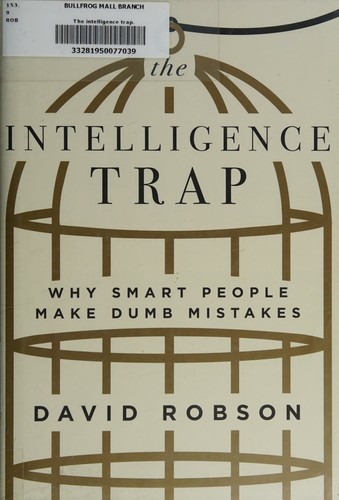
Talk to The Intelligence Trap: Why Smart People Make Dumb Mistakes like its author wrote you back.
Get the ideas that fit your life — not generic summaries.
- Chat with the book
- Audiobook-style main ideas
- Adapts to your life and goals
- Helps you take action
Key takeaways
- 1.
High IQ predicts academic performance and certain cognitive tasks but does not predict sound judgment, rational decision-making, or resistance to motivated reasoning.
- 2.
Intelligent people are often more vulnerable to confirmation bias because they are better at constructing sophisticated justifications for their existing beliefs.
- 3.
Dysrationalia — the failure to think rationally despite high intelligence — is widespread. It explains why brilliant people endorse conspiracy theories, make ruinous decisions, and double down on errors.
- 4.
Actively open-minded thinking — the disposition to seek out evidence that might disconfirm your beliefs — is a better predictor of good judgment than intelligence alone.
- 5.
Intellectual humility is not just a social virtue; it is a cognitive strategy. Accurately knowing the limits of your own knowledge is a measurable trait that improves forecasting and decision quality.
- 6.
Superforecasters outperform domain experts not because of superior intelligence but because of specific epistemic habits: probabilistic thinking, willingness to update, comfort with uncertainty.
- 7.
The 'earned dogmatism' effect means that experts in a field often become more closed-minded about that field than intelligent non-experts, because their credentials license them to stop questioning.
- 8.
Mindfulness and slow deliberate thinking can interrupt the automatic pattern-matching that underlies many intelligent errors, giving the more deliberate, reflective system a chance to operate.
Discussion questions
Use these on your own, with a book club, or as chat starters in Superbook. Book club version, ready to copy or print →
- 1.
Robson argues that the skills that make someone successful in academic or professional domains can actively worsen judgment in others. Where have you seen this play out?
- 2.
Think of a strongly held belief you have. How hard would you work to find evidence against it? What would change your mind?
- 3.
The book describes how intelligent people often have more sophisticated rationalizations for their biases. Have you noticed this in yourself or in high-intelligence people you know?
- 4.
Robson distinguishes intelligence from rationality. How would you assess your own rationality separate from your intelligence or expertise?
- 5.
The 'earned dogmatism' effect suggests that credentials can make people less open-minded in their own domain. In what area might your own expertise be limiting your thinking?
- 6.
Superforecasters do better than experts partly because they update their views frequently and without ego. Where in your own thinking are you most resistant to updating?
- 7.
The book suggests that intellectual humility is trainable. What would it look like to practice it deliberately in a professional or personal domain you care about?
- 8.
Linus Pauling's vitamin C advocacy is a case of genius misapplied. What famous example from your own field resembles this pattern?
- 9.
Actively open-minded thinking requires seeking disconfirming evidence rather than just evaluating the evidence that arrives. In your current major decisions, have you done this?
- 10.
Robson says smart people are better at motivated reasoning, not worse. What does that imply about how much weight to give to the confident judgments of intelligent friends or colleagues?
- 11.
If IQ is a poor guide to wisdom, what qualities would you actually want to see in a doctor, financial advisor, or political leader?
- 12.
The book ends with practices that improve judgment. Which of the practices Robson describes do you think would be hardest for you personally to adopt, and why?
Themes
Frequently asked questions
-
What is the intelligence trap?
The intelligence trap is Robson's term for the paradox that high intelligence and education can make people more, not less, prone to certain reasoning failures. Intelligent people are better at constructing convincing justifications for wrong beliefs, more confident in their conclusions, and sometimes more closed-minded in their own domain.
-
Is The Intelligence Trap worth reading?
Yes, especially for highly educated readers. The irony is that the people who would most benefit from the book may be least likely to think it applies to them. The research is well-sourced and the case studies are entertaining. It is more cautious and better argued than most popular books on cognitive bias.
-
How does this book compare to Thinking, Fast and Slow?
Both cover cognitive bias, but Robson focuses specifically on how intelligence interacts with reasoning failures, while Kahneman's book covers a broader range of heuristics and biases. The Intelligence Trap is somewhat more practical in its final section on how to improve judgment, and shorter.
-
What are superforecasters and why does Robson care about them?
Superforecasters are a small group of amateur predictors who dramatically outperform domain experts and intelligence analysts in forecasting geopolitical and economic events. Philip Tetlock identified them in his Good Judgment Project. Robson uses them as evidence that specific epistemic habits — probabilistic thinking, willingness to update, intellectual humility — matter more than expertise or IQ.
-
What is the most actionable idea in the book?
Actively open-minded thinking: the deliberate practice of seeking out evidence and arguments that could prove your current belief wrong before committing to it. Robson documents that this trait predicts good judgment better than intelligence, and suggests it can be developed through deliberate practice.
Similar books
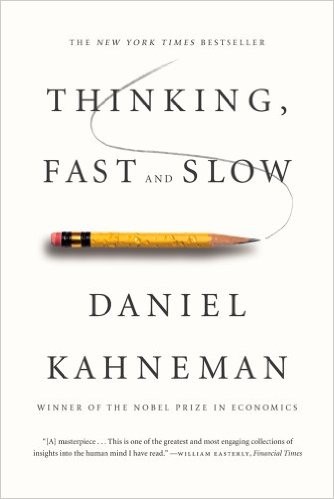
Thinking, Fast and Slow
Daniel Kahneman
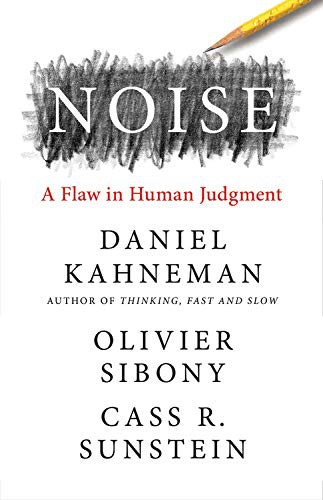
Noise: A Flaw in Human Judgment
Daniel Kahneman, Olivier Sibony, and Cass R. Sunstein
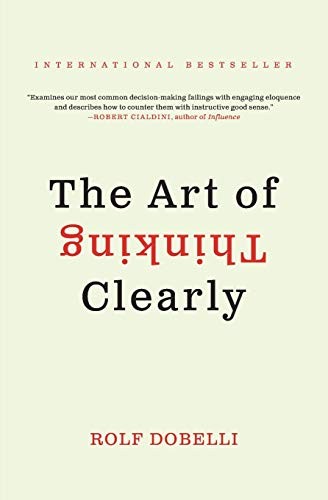
The Art of Thinking Clearly
Rolf Dobelli
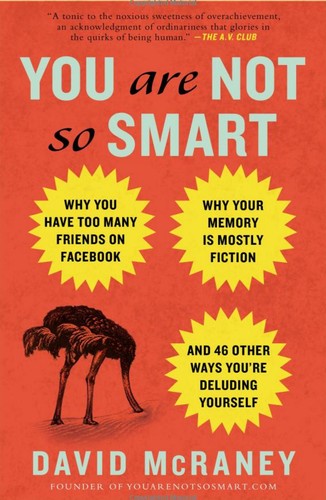
You Are Not So Smart
David McRaney
