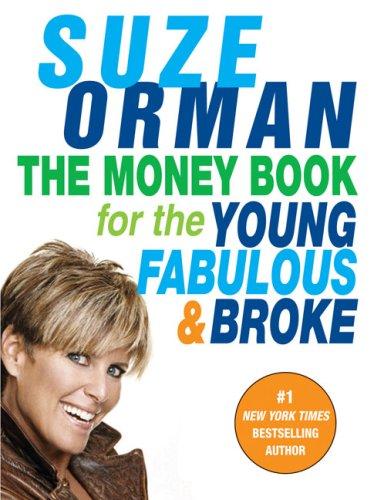
The Money Book for the Young, Fabulous & Broke by Suze Orman is a 2005 self-help book about personal finance, student debt, credit and debt. Student loan debt is manageable if you understand income-based repayment options, consolidation, and the long-term cost of different payoff speeds.
Summary
The Money Book for the Young, Fabulous and Broke is Suze Orman's attempt to give practical financial guidance to young adults who are entering the workforce burdened by student loans, earning modest incomes, and facing a financial system they have not been taught to navigate. The book takes the position that the standard financial advice aimed at this demographic is often patronizing, dismisses real constraints, or assumes an earning power that does not yet exist. Orman tries to meet people where they are rather than lecture them about what they should have done differently.
The book covers the major financial challenges of the early adult years: managing and paying down student debt, understanding and building credit scores, handling credit card debt strategically, negotiating salary, and starting to invest on a limited budget. Orman is notably pragmatic about debt. She does not advise readers to put every dollar toward loan payoff before starting to invest; she argues that the Roth IRA's tax-advantaged growth is valuable enough that young earners should contribute even while carrying some debt, particularly at low interest rates.
Credit score mechanics receive unusually thorough treatment for a book at this level. Orman explains how the score is calculated, which behaviors damage it most, and why a strong credit score is consequential not just for borrowing but for insurance rates, rental applications, and in some cases employment. She frames credit building as a financial skill, not just a number to optimize.
The book's tone is more sympathetic than Orman's later work. She acknowledges that being broke in your 20s is not primarily a discipline problem — it is the structural result of rising tuition, stagnant starting wages, and an expensive housing market. The advice is calibrated accordingly: it focuses on building the right financial habits and structures while living within real constraints rather than moralizing about spending. The guidance is somewhat dated by platform — apps and fintech tools Orman did not have access to in 2005 — but the foundational advice on debt, credit, and starting to invest remains solid.
Talk to The Money Book for the Young, Fabulous & Broke like its author wrote you back.
Get the ideas that fit your life — not generic summaries.
- Chat with the book
- Audiobook-style main ideas
- Adapts to your life and goals
- Helps you take action
Key takeaways
- 1.
Student loan debt is manageable if you understand income-based repayment options, consolidation, and the long-term cost of different payoff speeds.
- 2.
Credit scores affect more than borrowing — they influence insurance rates, rental applications, and some hiring decisions. Building credit early matters.
- 3.
Contributing to a Roth IRA should begin as early as possible, even while carrying moderate-interest debt, because tax-free compound growth over decades is difficult to replicate.
- 4.
Salary negotiation at entry-level is not rude — it is expected. Most employers leave room in initial offers, and a few thousand dollars difference compounds significantly over a career.
- 5.
Credit cards are tools, not enemies. Using them for everyday spending and paying in full monthly builds credit while avoiding interest, and rewards can offset costs.
- 6.
An emergency fund matters even when income is low. Three months of expenses prevents a job loss or unexpected bill from cascading into credit card debt.
- 7.
Spending authentically means aligning discretionary spending with what actually matters to you — not matching others' spending patterns or social expectations.
- 8.
401(k) employer match is free money with no risk. Contributing at least enough to capture the full match should come before any other savings priority except high-interest debt elimination.
Discussion questions
Use these on your own, with a book club, or as chat starters in Superbook. Book club version, ready to copy or print →
- 1.
Orman argues that being broke in your 20s is often structural rather than behavioral. Do you agree, and how does that framing change what financial advice is useful?
- 2.
She recommends starting Roth IRA contributions even while carrying student debt. What assumptions about interest rates and expected returns underlie that advice?
- 3.
How much of the financial difficulty young adults face today was predictable with better information, and how much is genuinely unavoidable given current conditions?
- 4.
Orman covers salary negotiation at length. What psychological barriers prevent people from negotiating, and does her advice address them effectively?
- 5.
Credit scores have become significant beyond lending. Is that a reasonable expansion of their use, or a problematic extension of financial judgment into unrelated domains?
- 6.
The book was written in 2005. What has changed about the financial landscape for young adults since then — student debt levels, housing costs, the gig economy — that would update her advice?
- 7.
How does the advice in this book compare to financial guidance you received or observed growing up? What was missing from what you were taught?
- 8.
Orman encourages spending on what genuinely matters to you rather than conforming to others' patterns. What practical obstacles make that harder than it sounds?
- 9.
What is the most financially consequential decision a person in their 20s can make, and does Orman agree with your answer?
- 10.
How should young adults think about the trade-off between paying off debt aggressively and building savings simultaneously?
- 11.
Financial stress in early adulthood can shape attitudes toward money for decades. What does Orman suggest about how to prevent that stress from becoming a lasting behavioral pattern?
Themes
Frequently asked questions
-
Is The Money Book for the Young, Fabulous & Broke still relevant?
The core advice on Roth IRAs, credit scores, employer match, and debt management remains sound. Specific platform recommendations and some interest rate context are dated. For a 2025 reader, the fundamentals are still valid even if some details need updating.
-
How long does this book take to read?
Around four to five hours. It is longer than most books in its category and covers a wide range of topics. Readers dealing with a specific situation — student debt, first job, credit building — can navigate to those chapters.
-
What makes this book different from other personal finance books for young adults?
Orman's explicit acknowledgment that financial difficulty in your 20s is often structural, not just a spending problem. She calibrates advice to real constraints rather than assuming disposable income that does not exist. The Roth IRA argument even while carrying debt is a distinctive and defensible departure from conventional advice.
-
Who should read this book?
People in their 20s and early 30s who are navigating student debt, building credit for the first time, or starting to invest on limited income. Also useful for parents who want to discuss money with college-age or just-graduated children.
-
What is the most actionable advice in the book?
Capture the full 401(k) employer match before anything else, then open and contribute to a Roth IRA even on a modest salary. These two steps together, started early, produce outcomes that are very difficult to replicate by starting later.