The Moor's Last Sigh by Salman Rushdie is a 1995 literary fiction book about identity and belonging, generational decline, art and obsession. The Moor's double-speed aging is the novel's controlling metaphor: India itself is rushing through time, unable to slow down long enough to process what it is losing.
Summary
The Moor's Last Sigh is narrated by Moraes Zogoiby — the Moor — a man who ages at twice the normal rate and has only months to live. Half Hindu, half Jewish, with Portuguese colonial ancestry and a criminal empire in the background, he is a walking emblem of mixed-blood India. His story is really his family's story, stretching back generations to the spice merchants of Kerala, and centered most obsessively on his mother Aurora Zogoiby, a painter of world-historical ambition and maternal catastrophe.
The novel is fundamentally about India — its contradictions, its capacity for both splendor and violence, its layers of religious and cultural identity compressed into a single geography. Aurora's paintings, especially her Moor series depicting a fantasia of tolerance and hybridity, stand against the novel's increasingly violent backdrop of Hindu nationalism and organized crime. The book was published the year after the Bombay riots, and Rushdie's anger at communalist violence is unmistakable even through the fabular surface.
Rushdie writes in the tradition of Rabelais and García Márquez — digressive, carnivalesque, crammed with puns and allusions and set-piece virtuosity. The prose is exhausting in the best possible way. There is a strand here about the theft of paintings and a sinister character named Vasco Miranda that pushes the novel toward something like a Gothic thriller in its final section, set in Spain, where the historical Moors made their last sigh before exile. The symmetry is deliberate and somewhat heavy-handed, but the emotional payoff is real.
Readers who loved Midnight's Children will find familiar DNA here — the narrator cursed with a special body, history personalized through family myth, India rendered as magic and wound. Readers approaching Rushdie for the first time may find The Moor's Last Sigh more accessible in some ways (the timeline is mostly linear) and harder in others (the prose density never relents). It rewards patience and a tolerance for a narrator who is simultaneously charming and self-deceiving.
Talk to The Moor's Last Sigh like its author wrote you back.
Get the ideas that fit your life — not generic summaries.
- Chat with the book
- Audiobook-style main ideas
- Adapts to your life and goals
- Helps you take action
Key takeaways
- 1.
The Moor's double-speed aging is the novel's controlling metaphor: India itself is rushing through time, unable to slow down long enough to process what it is losing.
- 2.
Aurora Zogoiby's paintings dramatize Rushdie's argument that India's deepest strength is its hybridity — and that communalism is a kind of self-destruction.
- 3.
The novel is structured around acts of betrayal that pass down generations. Love in this family is inseparable from damage.
- 4.
Rushdie uses the historical Moors of Andalusia as a mirror for India: both are civilizations that achieved remarkable synthesis, then lost it to religious and political violence.
- 5.
The relationship between art and power runs throughout: Aurora's work is celebrated, stolen, weaponized, and finally hidden. What happens to art in a country turning against itself?
- 6.
The prose style itself enacts the theme — dense, mixed, allusive, refusing to be purely anything. Reading it is an experience of hybridity.
- 7.
The Bombay underworld sections are among Rushdie's darkest writing: a reminder that the cheerful carnivalesque sits on top of real, grinding violence.
- 8.
The Spain ending brings the novel full circle geographically and historically, but it also signals something elegiac: the Moor's last sigh is for a world that was never quite real and is now gone for good.
Discussion questions
Use these on your own, with a book club, or as chat starters in Superbook. Book club version, ready to copy or print →
- 1.
Aurora is a monster of a mother and a magnificent artist. Does the novel ask us to separate the two, or is the monstrousness part of what makes the art possible?
- 2.
The Moor ages at double speed and cannot slow down. How does that physical condition shape his relationship to memory, regret, and choice?
- 3.
Rushdie wrote this novel in the shadow of the Bombay riots. How does political anger shape the book — does it strengthen it or sometimes overwhelm the story?
- 4.
The Moor's hybrid identity (Jewish, Hindu, Catholic, Portuguese) is presented as both richness and burden. Does the novel romanticize hybridity, or does it also show its costs honestly?
- 5.
Vasco Miranda claims to love Aurora's work but destroys it in the end. What does that dynamic say about the relationship between art, obsession, and possession?
- 6.
The novel ends in Spain, at the site of the historical Moors' defeat. Was that structural choice earned, or does it feel like it's straining for a grand symbolic payoff?
- 7.
Compare Aurora Zogoiby to other monstrous/magnificent mother figures in literary fiction. What does Rushdie add to that archetype?
- 8.
The Zogoiby family's criminal empire is largely treated as backdrop. Did that feel like a missed opportunity, or was the focus on Aurora and the Moor the right choice?
- 9.
How does The Moor's Last Sigh compare to Midnight's Children as a novel about India? What does it do differently, and what does it give up?
- 10.
The Moor is an unreliable narrator by nature — he's telling his story at extraordinary speed, facing death. How does that affect your trust in what he tells you?
- 11.
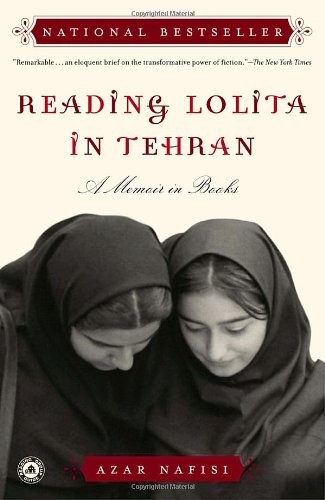
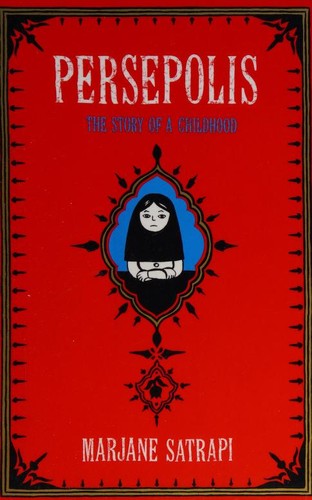
Reading Lolita in Tehran and Persepolis are also in this catalog as stories of cultures under pressure. How does Rushdie's approach differ from those books' documentary impulses?
- 12.
What does the theft and hiding of Aurora's paintings finally mean? Is the Moor's last act one of preservation, defeat, or something else?
Themes
Frequently asked questions
-
Is The Moor's Last Sigh worth reading?
Yes, if you have patience for dense, allusive prose and don't mind a narrator who frequently gets in his own way. It's a rich, angry, beautiful novel about India's contradictions. If Midnight's Children defeated you, this one is somewhat more navigable — the timeline is cleaner, though the sentences are just as thick.
-
Do I need to read Midnight's Children first?
No, but reading Midnight's Children first gives you a frame for Rushdie's India-as-personal-history approach. The Moor's Last Sigh stands alone. Some readers actually prefer it — it's a bit tighter and the central mother-son relationship gives it more emotional anchor.
-
What is The Moor's Last Sigh actually about?
On the surface it's a family saga set across decades in India and Spain, narrated by a man aging at double speed. Underneath it's about India's loss of its hybrid, pluralist identity to religious nationalism and violence — and about the relationship between great art and deeply flawed human beings.
-
Who shouldn't read this book?
Readers who want plot to drive the narrative and find digressions frustrating. Rushdie's prose is associative and digressive by design. If you bounced off García Márquez or Günter Grass for the same reason, this will likely frustrate you too.
-
Is The Moor's Last Sigh political?
Very. It was published in 1995, a year after the Bombay riots, and Rushdie's fury at Hindu nationalism and communal violence shapes the entire second half. The politics are embedded in the fiction rather than stated directly, but they're unmistakable.