The Organized Mind by Daniel J. Levitin is a 2014 science book about cognitive load, decision-making, attention. The brain's attentional filter is not designed for modern information loads. Every notification, decision, and context switch costs cognitive resources that are genuinely finite.
Summary
Daniel Levitin's argument is that the human brain's organizational architecture was built for a very different world — one with far fewer decisions, far less information, and far lower cognitive demand than the environment most people now navigate daily. The organized mind he describes is not a mythically efficient brain but one that has been deliberately aligned with its biological limits rather than fighting against them.
The neuroscience here is substantive. Levitin covers the default mode network (the brain's resting state, which is actually highly active and energy-expensive), the attentional filter, the costs of multitasking, and the role of the hippocampus in both memory consolidation and spatial navigation. He connects these mechanisms to practical implications: why to-do lists reduce anxiety even before you complete them (they offload active memory tracking), why categorizing objects by where you use them beats categorizing by type, and why making decisions depletes the same cognitive resource as resisting temptation.
The book is organized in loose sections covering home, social world, time, and business decisions. Each applies the underlying neuroscience to a different domain. The business section, in particular, covers base rates, Bayesian reasoning, and how to make better decisions under uncertainty — material that goes beyond organization into statistical thinking. This range is both the book's strength and its weakness. At 500-plus pages, it covers more ground than any single reader will find equally useful, and the depth varies considerably between sections.
Levitin is a neuroscientist and musician, and the writing reflects both: scientifically credible but accessible, with enough narrative texture to carry the longer sections. For readers who want to understand why their minds feel overwhelmed — not just what to do about it — this is more satisfying than most productivity books. The recommendations are practical, but the grounding is the point.
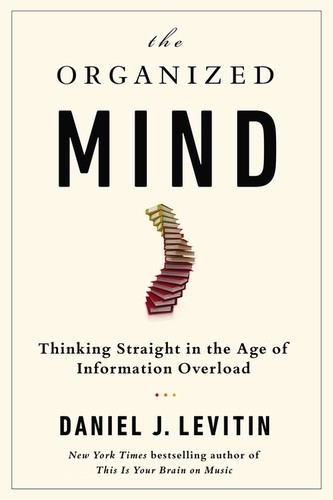
Talk to The Organized Mind like its author wrote you back.
Get the ideas that fit your life — not generic summaries.
- Chat with the book
- Audiobook-style main ideas
- Adapts to your life and goals
- Helps you take action
Key takeaways
- 1.
The brain's attentional filter is not designed for modern information loads. Every notification, decision, and context switch costs cognitive resources that are genuinely finite.
- 2.
Externalizing decisions and reminders into trusted systems — lists, calendars, physical categories — reduces active memory load and the anxiety that comes with it.
- 3.
Multitasking is neurologically impossible for cognitively demanding tasks. What feels like multitasking is rapid serial switching, each switch carrying a cost.
- 4.
Decision fatigue is real. The same neural resources used for self-control deplete with repeated decisions, regardless of the decision's importance.
- 5.
Organizing objects by the location where you use them beats organizing by type. The brain retrieves by context, not category.
- 6.
The two-list system — a master list and a current list — prevents today's tasks from being buried under future-task noise.
- 7.
Sleep is when the hippocampus transfers information to long-term memory. Chronic sleep reduction is a direct tax on learning and recall.
- 8.
Base rates matter enormously in decision-making and are almost universally ignored. Training yourself to ask 'what usually happens in cases like this?' improves predictions.
Discussion questions
Use these on your own, with a book club, or as chat starters in Superbook. Book club version, ready to copy or print →
- 1.
Levitin argues the brain's limits are features, not bugs, evolved for a different environment. Which aspect of modern information load do you find most cognitively expensive?
- 2.
When did you last experience decision fatigue — making worse choices late in the day than you would have made in the morning?
- 3.
The book recommends externalizing memory into trusted external systems. What are the systems you trust, and what do you still keep in your head that shouldn't be there?
- 4.
Levitin's claim that multitasking doesn't exist for demanding tasks contradicts how most knowledge workers actually operate. How much of your own 'multitasking' do you think is actually hurting you?
- 5.
The section on base rates is almost a separate book. When have you made a decision without considering what the base rate was, and how did that go?
- 6.
The book distinguishes between the mind-wandering mode and the task-focused mode. When do you find mind-wandering genuinely useful rather than disruptive?
- 7.
Levitin covers organizing physical spaces, social networks, time, and business decisions. Which of those domains feels most disorganized in your own life?
- 8.
He recommends keeping a small notepad to capture loose ends and obligations as they arise. Do you have a system for capturing these, and does it actually work?
- 9.
The hippocampus organizes memory by space and narrative. What does that imply about how we should structure information we want to remember?
- 10.
The book is long and covers more ground than most readers need equally. Which sections felt most applicable to your life, and which felt like detours?
- 11.
Levitin is skeptical of simplistic advice about focus and productivity. How does his neuroscience framing change the way you think about popular self-help recommendations?
Themes
Frequently asked questions
-
Is The Organized Mind worth reading?
Yes, if you want the neuroscience behind organizational advice rather than just the prescriptions. It's long and uneven, but the sections on attention, decision fatigue, and memory consolidation are genuinely useful. Readers looking for a shorter, more practical guide may prefer Getting Things Done or Make Time.
-
How long does it take to read The Organized Mind?
The book runs over 500 pages and takes most readers seven to nine hours. It's not a quick read. The depth rewards selective reading — different sections will resonate with different readers.
-
What is the main argument of The Organized Mind?
That human cognitive limits are real, well-understood, and routinely violated by modern information environments. The solution is to design systems that work with the brain's architecture rather than against it — externalizing decisions, limiting cognitive load, and protecting attention.
-
Who should read this book?
Knowledge workers, managers, and anyone who wants to understand the science behind why they feel overwhelmed. Also useful for people who've tried productivity systems that didn't stick and want a deeper account of why.
-
How does it compare to Getting Things Done?
Getting Things Done is a prescriptive system without much neuroscience. The Organized Mind explains why GTD-style externalizing works at a neurological level and covers far more ground, but leaves implementation to the reader.
Similar books
Thinking, Fast and Slow
Daniel Kahneman
Deep Work
Cal Newport
The Distracted Mind
Adam Gazzaley and Larry D. Rosen
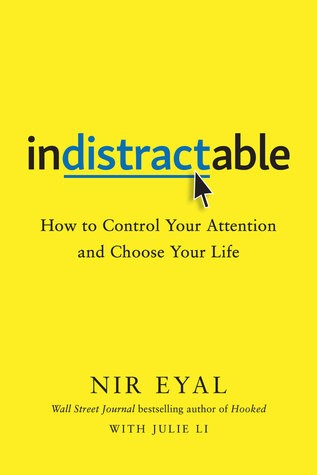
Indistractable: How to Control Your Attention and Choose Your Life
Nir Eyal
