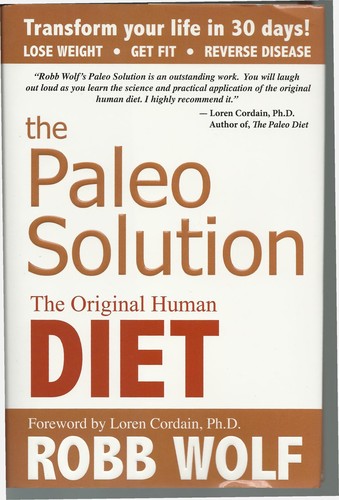
The Paleo Solution by Robb Wolf is a 2010 health book about ancestral diet, nutrition, metabolic health. The human genome evolved over millions of years on a diet of meat, fish, vegetables, and fruit. Modern grains, legumes, and seed oils are evolutionary newcomers that our digestive systems handle poorly.
Summary
The Paleo Solution is Robb Wolf's argument that most chronic disease — obesity, type 2 diabetes, autoimmune conditions, cardiovascular disease — traces back to a mismatch between the foods modern humans eat and the foods our genome evolved to process. Wolf, a former research biochemist and student of Loren Cordain, frames evolutionary biology as the lens through which nutrition advice should be filtered, and argues that the standard Western diet of grains, legumes, dairy, and processed seed oils is incompatible with human physiology at a fundamental level.
The central claim is that grains and legumes contain antinutrients — lectins, phytic acid, saponins — that damage the gut lining, contribute to systemic inflammation, and impair nutrient absorption. Wolf argues that removing these foods, along with processed sugar and industrial oils, and replacing them with meat, fish, vegetables, fruit, and tubers produces measurable improvements in insulin sensitivity, body composition, and inflammatory markers. He backs the argument with a selective but reasonably thorough review of research and clinical case studies from his gym clientele.
Wolf writes with more personality than most health authors, mixing biochemistry explanations with gym-floor irreverence and occasional profanity. The tone is engaging, though critics note the science is presented confidently where genuine uncertainty exists. The book includes a 30-day meal plan with recipes and a section on sleep, exercise, and stress, making the case that the paleo framework is a lifestyle, not just a diet.
The honest caveat is that the research base for strict paleo eating remains contested. Many of Wolf's claims about grains and lectins are more mechanistic than conclusively proven in long-term human trials. The book is most persuasive as a prompt to eliminate processed food and prioritize whole foods than as a precise prescription. Readers who have struggled with conventional low-fat or low-calorie approaches often report meaningful results, which is the pragmatic case Wolf would make regardless of theoretical debates.
Talk to The Paleo Solution like its author wrote you back.
Get the ideas that fit your life — not generic summaries.
- Chat with the book
- Audiobook-style main ideas
- Adapts to your life and goals
- Helps you take action
Key takeaways
- 1.
The human genome evolved over millions of years on a diet of meat, fish, vegetables, and fruit. Modern grains, legumes, and seed oils are evolutionary newcomers that our digestive systems handle poorly.
- 2.
Antinutrients in grains and legumes — lectins, phytic acid, saponins — can damage the gut lining and contribute to systemic inflammation, impairing both digestion and immune function.
- 3.
Insulin resistance sits at the root of most metabolic disease. Removing refined carbohydrates and processed foods improves insulin sensitivity more reliably than caloric restriction alone.
- 4.
Industrial seed oils (corn, soy, canola) have dramatically shifted the ratio of omega-6 to omega-3 fatty acids in modern diets. Restoring this balance reduces chronic low-grade inflammation.
- 5.
Sleep, stress management, and exercise are as important as food choices. A paleo diet paired with inadequate sleep and chronic stress will not produce optimal health.
- 6.
A 30-day elimination of grains, dairy, legumes, and processed foods is Wolf's recommended entry point. Most people notice significant changes in energy, body composition, and digestion within weeks.
- 7.
Autoimmune conditions in particular may improve with stricter elimination protocols, since gut permeability and immune dysregulation appear to be tightly linked.
- 8.
The paleo framework is not primarily about reenacting prehistoric life. It is a heuristic: foods that humans have eaten for millions of years are generally safer bets than foods invented in the last century.
Discussion questions
Use these on your own, with a book club, or as chat starters in Superbook. Book club version, ready to copy or print →
- 1.
Wolf argues that evolutionary biology should guide dietary choices. How persuasive is that logic to you, and what are its limits?
- 2.
Have you ever done an elimination diet or a significant dietary change? What happened, and how did you decide what to reintroduce?
- 3.
Wolf makes strong claims about grains and legumes that many mainstream dietitians dispute. How do you evaluate competing nutrition claims when the evidence is genuinely uncertain?
- 4.
The book ties metabolic disease to industrialization and food processing. What would it mean practically to eat foods that existed before 1900 in your daily life?
- 5.
Wolf frames the 30-day protocol as a controlled experiment on your own body. Is that framing useful or reductive?
- 6.
Which of the lifestyle pillars — sleep, stress, exercise, nutrition — do you think has the most leverage in your own health right now?
- 7.
The paleo diet is criticized for being expensive and inaccessible. Is that criticism fair, and does it change your view of its value?
- 8.
Wolf is candid that the ancestral diet is a reconstruction, not a literal blueprint. Does the uncertainty about what our ancestors actually ate undermine the argument?
- 9.
Many people who adopt strict dietary frameworks report improvement. How much of that is diet-specific versus the effect of paying close attention to food at all?
- 10.
Wolf dedicates significant space to insulin resistance and metabolic disease. Did learning about the mechanism behind these conditions change how you think about food choices?
- 11.
How does the paleo framework fit or conflict with cultural food traditions that matter to you?
- 12.
If you followed the 30-day plan and felt noticeably better, what would it take to make those changes permanent?
Themes
Frequently asked questions
-
What is The Paleo Solution about?
It argues that most chronic disease stems from eating foods — grains, legumes, dairy, processed seed oils — that the human body did not evolve to handle well, and proposes a diet based on meat, fish, vegetables, and fruit as the corrective.
-
Is The Paleo Solution worth reading?
Yes, if you want a thorough, opinionated case for ancestral eating presented by someone with a biochemistry background. The science is sometimes stated with more certainty than the research supports, but the core argument — eliminate processed food, prioritize whole foods — holds up regardless.
-
How long is The Paleo Solution?
Around 320 pages, or roughly six hours at average reading pace. Wolf's writing is conversational and often funny, so it reads faster than its density of biochemical content might suggest.
-
Who should read this book?
People dealing with metabolic issues, inflammation, autoimmune conditions, or persistent body composition problems who have not gotten results from conventional dietary advice. It is also useful for athletes interested in nutrition periodization and recovery.
-
What is the most actionable idea in The Paleo Solution?
The 30-day challenge: remove grains, legumes, dairy, and processed foods for a month, eat meat, fish, vegetables, fruit, and nuts freely, and observe what changes. Wolf frames it as personal experimentation rather than permanent commitment.