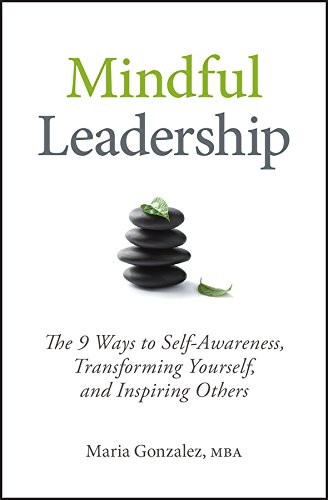
Mindful Leadership by Maria Gonzalez is a 2012 business book about mindfulness, leadership presence, self-awareness. Mindfulness is attention training, not relaxation. The goal is the capacity to choose where attention goes rather than having it captured by whatever is most urgent or emotionally salient.
Summary
Mindful Leadership is Maria Gonzalez's argument that mindfulness practice is not a wellness accessory for leaders but a core performance tool. Gonzalez, a management consultant and mindfulness teacher, draws on her work with executives and organizations to make the case that the reactive, distracted mode most leaders operate in produces measurably worse decisions, worse relationships, and worse results than a more deliberate, present-centered approach. The book is both a practical guide to mindfulness practice and an application of that practice to the specific demands of organizational leadership.
Gonzalez introduces mindfulness through the lens of focus and attention management. Leaders are constantly pulled between demands — email, meetings, strategic planning, people problems — and the default response is to multitask and react. She argues that this mode of operating is cognitively expensive and relationship-damaging, and that mindfulness practice trains the capacity to choose where attention goes rather than having it captured by whatever is loudest. This, she argues, is a prerequisite for the kind of presence that effective leadership requires.
The book moves through applications across leadership contexts: listening in conversations, managing emotional reactivity in conflict, maintaining strategic clarity under pressure, and sustaining energy over long periods. Gonzalez draws on Buddhist mindfulness traditions but keeps the framing practical and secular. She provides guided practices and exercises throughout, making the book partly a workbook. The emphasis is on building a sustainable daily practice rather than occasional retreat-style immersion.
The book will resonate most with leaders who have noticed that busyness is not the same as effectiveness, and who suspect that their own internal state affects their team's performance more than they'd like to admit. Gonzalez doesn't oversell mindfulness as a cure for organizational problems, but she makes a credible case that a leader who can manage their own attention and reactivity will make better decisions and lead more effectively than one who cannot.
Talk to Mindful Leadership like its author wrote you back.
Get the ideas that fit your life — not generic summaries.
- Chat with the book
- Audiobook-style main ideas
- Adapts to your life and goals
- Helps you take action
Key takeaways
- 1.
Mindfulness is attention training, not relaxation. The goal is the capacity to choose where attention goes rather than having it captured by whatever is most urgent or emotionally salient.
- 2.
Leader reactivity is contagious. When a leader operates from anxiety or distraction, it shapes the emotional tone of the whole team in ways that compound over time.
- 3.
Multitasking is a myth for cognitively complex work. Switching between tasks costs more than people realize and degrades the quality of thinking on each.
- 4.
Presence in conversation is a leadership skill. People know when they're being half-listened to, and the trust cost of inattention accumulates faster than most leaders notice.
- 5.
Emotional reactivity in high-pressure moments is predictable and trainable. Mindfulness practice builds the capacity to notice a reaction before it expresses itself destructively.
- 6.
Strategic clarity requires sustained, undistracted attention. Leaders who cannot give focused time to the most important decisions consistently underinvest in them.
- 7.
Sustainable leadership requires attention to the leader's own internal state. Chronic stress and depletion don't just affect wellbeing; they degrade judgment.
- 8.
A daily mindfulness practice of even ten to fifteen minutes builds the attentional capacity that supports all the other skills the book describes.
Discussion questions
Use these on your own, with a book club, or as chat starters in Superbook.
- 1.
Gonzalez argues that leader reactivity affects team performance. Can you think of an example from your own experience where a leader's internal state visibly shaped a team?
- 2.
What does presence in a conversation actually feel like on the receiving end? When was the last time you felt genuinely heard by someone in a position of authority?
- 3.
How do you currently manage your own attention? What competes most aggressively for it, and how deliberately do you assign it?
- 4.
Gonzalez distinguishes between being busy and being effective. Where in your work life do you notice that distinction most clearly?
- 5.
Have you ever had a moment where you noticed your own emotional reaction before it expressed itself? What made that possible?
- 6.
What does strategic clarity require of you in terms of how you protect time and attention? How well are you currently doing that?
- 7.
Gonzalez recommends a regular mindfulness practice. What's your honest reaction to that recommendation? What would get in the way?
- 8.
How does your current stress level affect the quality of your decisions? Is that something you track or notice?
- 9.
What would change in your team or organization if the leader consistently showed up with more presence and less reactivity?
- 10.
Gonzalez frames mindfulness as a performance tool, not a wellness practice. Does that framing make it more or less appealing to you? Why?
- 11.
What's one habit or pattern in how you work that mindfulness practice might change? What would you have to give up to change it?
Themes
Frequently asked questions
-
Who should read Mindful Leadership?
Leaders and managers who suspect that their own internal state and attention habits are limiting their effectiveness, and who want a practical framework for developing greater presence and intentionality. Also useful for executive coaches and leadership development professionals.
-
Is Mindful Leadership a spiritual book?
It draws on Buddhist mindfulness traditions but is written in a secular, professional register. Gonzalez keeps the focus on practical application and performance rather than spiritual development, though readers with no interest in the underlying tradition will still find the practice guidance useful.
-
What is the most actionable idea in Mindful Leadership?
The case for a short daily formal practice — even ten to fifteen minutes — as the foundation for all the attentional and emotional skills the book describes. Gonzalez provides guided exercises throughout and is clear that occasional large blocks of practice are less effective than consistent small ones.
-
How does Mindful Leadership compare to other mindfulness books?
It is more specifically focused on leadership and organizational contexts than most mindfulness books, which tend toward personal wellbeing framing. Gonzalez applies mindfulness to the specific demands of managing people, making decisions under pressure, and sustaining presence in high-stakes conversations.
-
How long does it take to read Mindful Leadership?
Around three to four hours as a straight read, though the exercises and practices are designed to be returned to repeatedly. Many readers find it more useful as a working reference than a cover-to-cover read.