The Signal and the Noise by Nate Silver is a 2012 science book about prediction, probability, data analysis. Most predictions fail because forecasters confuse noise for signal — mistaking random fluctuation for meaningful pattern in their data.
Summary
Nate Silver made his reputation predicting baseball statistics and then political elections. This book is his attempt to explain why some predictions succeed and most fail — and what separates the two. The title captures his central distinction: signal is the true pattern you're trying to find; noise is everything else that misleads you into thinking you've found something you haven't.
Silver works through a dozen domains: weather forecasting, earthquake prediction, economic models, epidemics, chess, poker, the stock market, and political punditry. Each domain reveals a different failure mode. Economists build models that fit past data beautifully but forecast poorly because they mistake correlation for understanding. Political pundits claim certainty they don't have because certainty is more engaging than honest probability. Seismologists can't predict individual earthquakes because the underlying system is genuinely chaotic. The book uses these cases not as gotchas but as lessons — each failed prediction teaches something about the structure of uncertainty.
The thread running through every chapter is Bayesian thinking: start with a prior belief, update it as evidence arrives, and never stop updating. Silver argues that overconfidence is the primary failure mode across nearly every field. Forecasters who express calibrated uncertainty — who say "70% likely" rather than "it will happen" — outperform those who project false precision. The book spends significant time on superforecasters, poker players, and weather modelers who have achieved unusually reliable predictions not through superior intuition but through rigorous probabilistic discipline.
The book is long and uneven — some chapters, like the one on poker, wander further than necessary. But the core argument is worth the detour. In an era when confident prediction has become a form of entertainment and most forecasters are measured by their willingness to commit rather than their accuracy, Silver's insistence on honest uncertainty reads almost like a contrarian manifesto. The book doesn't give you a formula for being right; it gives you a framework for being less wrong.
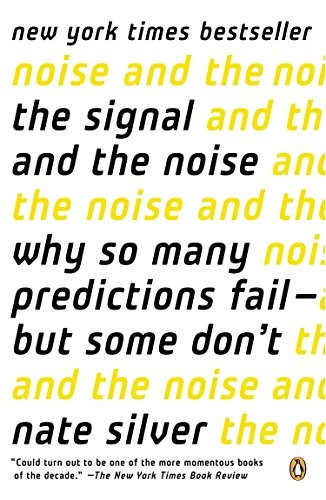
Talk to The Signal and the Noise like its author wrote you back.
Get the ideas that fit your life — not generic summaries.
- Chat with the book
- Audiobook-style main ideas
- Adapts to your life and goals
- Helps you take action
Key takeaways
- 1.
Most predictions fail because forecasters confuse noise for signal — mistaking random fluctuation for meaningful pattern in their data.
- 2.
Bayesian reasoning means updating your beliefs proportionally as new evidence arrives, never treating any belief as certain and never treating any evidence as definitive.
- 3.
Calibration matters more than confidence. A forecaster who says '70% likely' and is right 70% of the time is more useful than one who says 'certain' and is right 60% of the time.
- 4.
The distinction between risk (uncertainty you can quantify) and genuine uncertainty (uncertainty you can't) is critical. Many forecasters treat one as the other.
- 5.
In complex systems like economies and earthquakes, models that fit historical data too closely often perform worse on new data — a phenomenon called overfitting.
- 6.
Expert political pundits are among the worst forecasters studied, largely because the incentives of media reward confident wrong predictions over hedged right ones.
- 7.
Poker players and weather forecasters tend to be better calibrated than most because they get frequent, fast feedback on their probabilistic estimates.
- 8.
The signal-to-noise ratio in any data stream determines how many observations you need before you can reliably detect a real pattern.
Discussion questions
Use these on your own, with a book club, or as chat starters in Superbook. Book club version, ready to copy or print →
- 1.
Silver argues calibration is more valuable than conviction. In what domains of your own life do you project more certainty than the evidence warrants?
- 2.
Think about a prediction you made that turned out to be wrong. Was the failure caused by bad reasoning or by genuine unknowability?
- 3.
Silver is harshest on political pundits. Why do you think the incentive structure of public commentary punishes honesty about uncertainty?
- 4.
What prior beliefs do you hold that you rarely update because you don't seek out contradicting evidence?
- 5.
Weather forecasts have become significantly more accurate over decades. What does that tell us about what makes prediction improvable?
- 6.
Silver says poker trains probabilistic thinking better than most intellectual pursuits. Do you find games or competitive activities have changed how you think about odds?
- 7.
What's the difference between a domain where better models will eventually predict well and one where genuine chaos makes prediction impossible in principle?
- 8.
Silver writes about the 2008 financial crisis as a failure to recognize uncertainty. What similar blind spots might exist in fields we trust today?
- 9.
How do you personally handle communicating uncertainty to people who want a definitive answer?
- 10.
Silver distinguishes foxes (who know many small things) from hedgehogs (who know one big thing) as forecasters. Which are you?
- 11.
What's a domain where you've noticed experts perform worse than simple rules or base rates?
- 12.
If most predictions are noise dressed up as signal, what habits of consumption should change in how you read news or analysis?
Themes
Frequently asked questions
-
Is The Signal and the Noise worth reading?
Yes, particularly if you consume a lot of predictions — in news, finance, or sports — and want a framework for evaluating them. Some chapters are stronger than others, and the book is longer than it needs to be. But the Bayesian core and the case studies across multiple domains make it one of the more substantive books on forecasting available.
-
What is the main argument of The Signal and the Noise?
That most predictions fail because forecasters are overconfident, mistake noise for signal, and don't update their beliefs properly. Silver argues for Bayesian thinking — honest probability estimates that get revised as evidence accumulates — as the best available remedy.
-
How long does it take to read The Signal and the Noise?
About eight to nine hours at average pace. The book is over 500 pages with substantive chapters. Some sections, particularly on poker and chess, can be skimmed without losing the main argument if you're time-constrained.
-
Who should read this book?
Anyone who makes or consumes predictions professionally: investors, analysts, policy advisors, and journalists. Also valuable for readers who want to improve their everyday reasoning about uncertain events — though the applications to daily life are less developed than in some similar books.
-
What is the difference between signal and noise in Silver's framework?
Signal is the true underlying pattern you're trying to detect — the causal relationship or trend that actually predicts the future. Noise is everything else: random variation, measurement error, and patterns that appear meaningful in your data but don't generalize. The challenge is that noise can look exactly like signal until you have enough observations.
Similar books
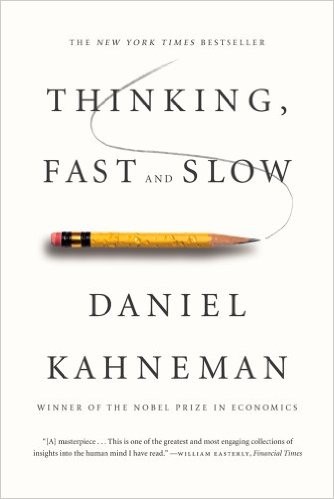
Thinking, Fast and Slow
Daniel Kahneman
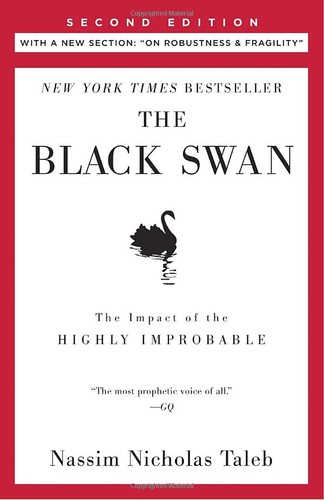
The Black Swan: The Impact of the Highly Improbable
Nassim Nicholas Taleb
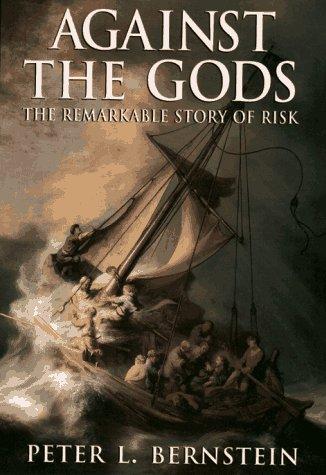
Against the Gods: The Remarkable Story of Risk
Peter L. Bernstein
Thinking in Bets: Making Smarter Decisions When You Don't Have All the Facts
Annie Duke
