The Three-Body Problem by Liu Cixin is a 2008 science fiction book about first contact and civilization, cultural revolution and ideology, scientific progress. The Cultural Revolution sections are not backstory — they are the moral center of the novel, explaining how betrayal at civilizational scale becomes transmissible across generations.
Summary
The Three-Body Problem begins during China's Cultural Revolution, where a young astrophysicist witnesses her father's murder at the hands of Red Guard cadres and subsequently makes a decision that will determine the fate of humanity. The novel then moves forward to a near-future present, following a physicist named Wang Miao who becomes entangled in a mysterious virtual reality game called Three Body and a string of suicides among the world's top scientists. The two storylines converge on a secret that has been hidden for decades: Earth has made contact with an alien civilization, and it's coming.
Liu Cixin is not primarily interested in alien invasion as adventure story. The book is a meditation on what contact between civilizations at radically different technological levels means — not culturally but physically, cosmically. The alien civilization, the Trisolarans, inhabit a solar system governed by three suns in chaotic orbital patterns, making their world almost uninhabitable, and their response to discovering a stable, resource-rich Earth involves a logic so cold and utilitarian that it reads as a kind of physics rather than villainy. Liu's worldview — sometimes called "dark forest theory," developed fully in the sequels — holds that the universe's silence is not emptiness but strategic concealment by civilizations that understand predation as the cosmos's base condition.
What makes the novel unusual is its Chinese perspective and its roots in actual hard physics. The three-body problem is a real unsolvable problem in orbital mechanics, and Liu uses it as both plot device and metaphor. The Cultural Revolution opening is not decoration; it establishes how a civilization can turn on its own scientists, and how that betrayal echoes outward. Ken Liu's translation (from the original Mandarin) is widely praised for preserving both the scientific rigor and the emotional register.
Western readers will find the pacing different from Anglo-American thriller conventions — the novel builds slowly, explains carefully, and rewards the patience. Readers who want to understand why this became the best-selling science fiction novel in Chinese history, and why Barack Obama and Mark Zuckerberg both cited it publicly, will find a book that takes its premise with uncommon seriousness. Readers who want action and dialogue will find the first third particularly challenging.
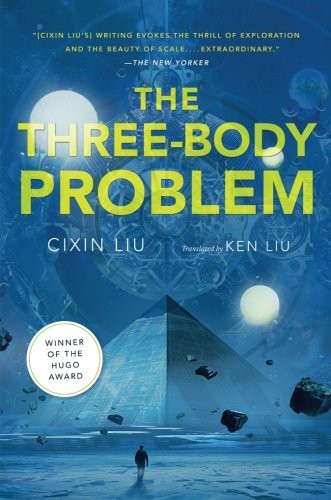
Talk to The Three-Body Problem like its author wrote you back.
Get the ideas that fit your life — not generic summaries.
- Chat with the book
- Audiobook-style main ideas
- Adapts to your life and goals
- Helps you take action
Key takeaways
- 1.
The Cultural Revolution sections are not backstory — they are the moral center of the novel, explaining how betrayal at civilizational scale becomes transmissible across generations.
- 2.
Dark forest theory: in a cosmos of finite resources and impossible communication, the rational strategy for any civilization is to destroy any other civilization it discovers before being destroyed first.
- 3.
The three-body problem is genuinely unsolvable by analytical methods; Liu uses this real mathematical constraint as a metaphor for unpredictability and the limits of human reason.
- 4.
First contact in this novel is not Spielberg-style wonder but strategic crisis — the question is not 'are we alone' but 'what happens when something with better technology decides we are a resource.'
- 5.
Scientific optimism — the faith that more knowledge leads to more safety — is the novel's central assumption to be tested, and the test is not gentle.
- 6.
Liu portrays ideological fanaticism (Red Guard violence) and civilizational cold logic (Trisolaran strategy) as structurally similar: both override individual moral judgment with systemic imperatives.
- 7.
The novel treats physics not as background but as drama — the instability of the alien solar system is genuinely frightening once Liu makes you understand what it would feel like to live in it.
- 8.
Ye Wenjie, the physicist who makes first contact, is the most fully realized character in the book, and the novel asks without fully answering whether her choice was understandable given what she'd survived.
Discussion questions
Use these on your own, with a book club, or as chat starters in Superbook. Book club version, ready to copy or print →
- 1.
Ye Wenjie's decision to respond to the alien signal is motivated by her experience of the Cultural Revolution. Does the novel frame this as understandable, tragic, or wrong?
- 2.
Dark forest theory says every civilization must eventually destroy every other. Does that logic hold up, or does it require assumptions about scarcity and communication that might not apply universally?
- 3.
The novel suggests that ideological fanaticism and cold utilitarian logic lead to similar outcomes. Do you find that equivalence convincing?
- 4.
The scientists who receive the Trisolaran warning and commit suicide — are they cowards, or is their reasoning defensible?
- 5.
Liu is an engineer by training and it shows in the prose. Does the technical precision enhance the novel's themes, or does it create emotional distance?
- 6.
The three-body problem is real and genuinely unsolvable. How does that fact — that Liu is working with real physics — change how you read the novel?
- 7.
The Cultural Revolution is depicted with enough distance that it functions almost as myth. Does that mythic treatment serve the novel or sanitize something that should remain specific?
- 8.
Wang Miao is in many ways a viewpoint character rather than a protagonist — things happen to him and around him. Is that a weakness or an intentional structural choice?
- 9.
The novel ends with the Trisolarans' fleet launched toward Earth, 400 years away. It ends on dread rather than resolution. Was that the right ending?
- 10.
Compare the Trisolarans' logic to the logic of any historical empire you know. How far does the analogy hold?
- 11.
The sequels develop dark forest theory much further. Having read the first book, do you want to continue? What would change your answer?
- 12.
Liu wrote this book in China, and it was published there before being translated. Does knowing that change how you read the Cultural Revolution sections?
Themes
Frequently asked questions
-
Is The Three-Body Problem hard to read?
It's demanding in specific ways. The physics requires attention and Liu doesn't simplify it. The pacing is slow by thriller standards, and the Cultural Revolution opening is emotionally heavy. That said, the ideas are explained clearly and the translation is excellent. Readers who engage with the premise will find it compulsive; readers who want fast pacing will struggle.
-
Do I need to read the sequels?
The first book stands alone as a complete narrative, though it ends on an unresolved note. The sequels — The Dark Forest and Death's End — are where Liu develops his most ambitious ideas, and many readers consider The Dark Forest the strongest of the three. You don't have to commit to all three, but the first book is partly setup for what follows.
-
What is the three-body problem, actually?
It's a real, unsolved problem in physics: predicting the orbits of three bodies under mutual gravitational influence. Two bodies have an elegant closed-form solution; three do not. Liu uses this as both literal plot device (the alien solar system has three suns) and metaphor for the limits of prediction and control.
-
Why did this book become so famous globally?
It was the first Chinese science fiction novel to win the Hugo Award, and it was recommended publicly by Barack Obama and Mark Zuckerberg in the same year, both calling it one of their favorite books. Its civilizational scope and willingness to follow dark logic wherever it leads felt unlike anything in contemporary Western SF.
-
Who shouldn't read The Three-Body Problem?
Readers who need strong character interiority, fast momentum, or emotional warmth. This is a book of ideas, not feelings, and its characters are often more representative than individual. The cold logic that powers its worldview is also what makes it emotionally remote.
Similar books
Cosmos
Carl Sagan
Astrophysics for People in a Hurry
Neil deGrasse Tyson
Sapiens: A Brief History of Humankind
Yuval Noah Harari
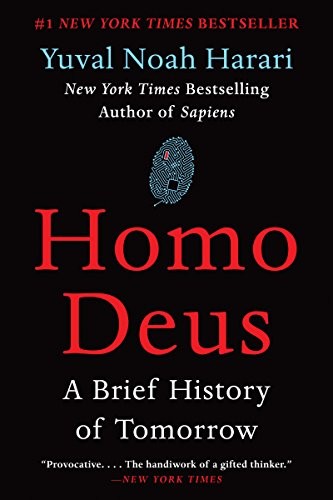
Homo Deus: A Brief History of Tomorrow
Yuval Noah Harari
