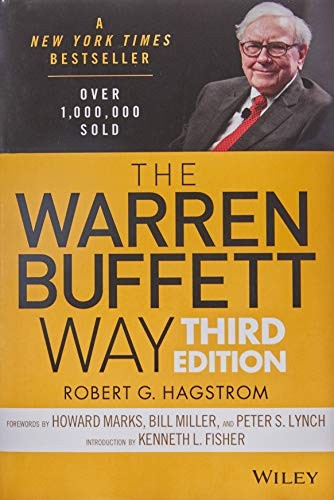
The Warren Buffett Way by Robert G. Hagstrom is a 1994 business book about value investing, business analysis, long-term thinking. Buffett thinks like a business owner, not a stock trader. He buys a portion of a business and expects to hold it for a very long time.
Summary
The Warren Buffett Way is Robert Hagstrom's systematic account of how Warren Buffett thinks about investing. First published in 1994 and updated since, it organizes Buffett's approach into a coherent set of principles drawn from his annual letters, interviews, and public statements. Hagstrom's contribution is translation: he takes what Buffett said over decades and arranges it into teachable frameworks rather than leaving it scattered across decades of shareholder letters.
The core of the book is twelve investing tenets organized into four categories: business tenets (understand the business, favor consistent operating history, look for favorable long-term prospects), management tenets (rational capital allocation, candor with shareholders, resistance to the institutional imperative), financial tenets (high return on equity with minimal debt, substantial owner earnings, high profit margins), and value tenets (determine the value of the business and buy it at a meaningful discount). Each tenet is illustrated through Buffett's actual investments in companies like Coca-Cola, The Washington Post, GEICO, and American Express.
Hagstrom also covers Buffett's intellectual lineage: the influence of Benjamin Graham's margin-of-safety framework, Philip Fisher's qualitative assessment of management and competitive position, and Charlie Munger's push toward paying reasonable prices for great businesses rather than bargain prices for mediocre ones. The synthesis is what distinguishes Buffett from pure Graham disciples — he evolved the approach.
The book has limits. It's stronger on qualitative principles than on the quantitative mechanics of valuation. Some case studies feel dated given how much Berkshire has changed since 1994. But as a structured introduction to how a genuinely great investor reasons about business and capital, it holds up well. Hagstrom doesn't add noise by speculating about what Buffett would do today; he sticks to explaining what Buffett did and why, which makes the book more durable than most Buffett interpretations.
Talk to The Warren Buffett Way like its author wrote you back.
Get the ideas that fit your life — not generic summaries.
- Chat with the book
- Audiobook-style main ideas
- Adapts to your life and goals
- Helps you take action
Key takeaways
- 1.
Buffett thinks like a business owner, not a stock trader. He buys a portion of a business and expects to hold it for a very long time.
- 2.
Consistent operating history matters more than recent results. A business that has performed well across economic cycles is more predictable than one with one great year.
- 3.
Rational capital allocation is one of the most underrated management qualities. CEOs who reinvest at high returns on equity compound value faster than those who diversify aimlessly.
- 4.
The institutional imperative — the tendency of organizations to resist change and follow peers — destroys more value than incompetence. Buffett seeks managers who resist it.
- 5.
Owner earnings, not reported earnings, represent the true cash generation of a business. Adjust net income for capital expenditures required to maintain competitive position.
- 6.
High profit margins sustained over time indicate pricing power. A company that must perpetually cut prices to compete will eventually earn nothing.
- 7.
The margin of safety is not just a valuation concept — it's a temperament. Waiting for a clear discount on intrinsic value protects against errors in your own analysis.
- 8.
Concentration over diversification. Buffett's best returns came from a small number of large positions held for long periods, not from spreading capital across dozens of businesses.
Discussion questions
Use these on your own, with a book club, or as chat starters in Superbook. Book club version, ready to copy or print →
- 1.
Hagstrom describes Buffett's evolution from pure Graham-style bargain hunting to paying fair prices for great businesses. What does that evolution suggest about the limits of any single investing framework?
- 2.
The institutional imperative describes how organizations drift toward doing what everyone else is doing. Where do you see this phenomenon outside of investing?
- 3.
Buffett emphasizes businesses with consistent operating history. How do you apply that criterion to younger companies or industries that simply didn't exist twenty years ago?
- 4.
Owner earnings are net income adjusted for capex required to maintain competitive position. How would you estimate the difference for a business you know well?
- 5.
Hagstrom shows Buffett holds concentrated positions. Most professional investors are told to diversify. What would it take to build enough conviction to concentrate?
- 6.
Buffett looks for management candor — executives who report bad news clearly, not just good news cheerfully. Can you think of a recent earnings report or shareholder letter that modeled this quality well or poorly?
- 7.
The book covers Buffett's investment in The Washington Post in the 1970s. What made it a Buffett-style investment despite being a media company in a struggling sector?
- 8.
Hagstrom argues that Buffett's approach requires patience that most investors can't sustain. What structural forces in the market make patience harder than it used to be?
- 9.
Philip Fisher emphasized understanding a business qualitatively through scuttlebutt — talking to customers, suppliers, and competitors. Is that still feasible for an individual investor today?
- 10.
Buffett famously avoids businesses he doesn't understand. Does that create a blind spot for technology-driven companies that are genuinely hard to understand but important to invest in?
- 11.
The book was first published in 1994. Which of Buffett's tenets do you think have held up best and which have been most challenged by how markets have evolved?
- 12.
Buffett often says he'd be happy to hold a great business forever. What are the risks of that permanence mindset when a business's competitive position is slowly eroding?
Themes
Frequently asked questions
-
Is The Warren Buffett Way worth reading?
Yes, especially for investors who want a structured account of Buffett's principles. It's more systematic than reading Buffett's actual letters and more focused than most biographies of him. The case studies are dated but the principles remain applicable.
-
How long does it take to read The Warren Buffett Way?
Around four to five hours depending on which edition and how closely you engage with the case studies. The book is denser than a typical business book but well-organized, and the chapter structure means you can return to individual tenets as reference material.
-
What is the main idea of the book?
That Buffett's investment decisions follow a coherent set of principles about business quality, management integrity, financial strength, and intrinsic value — and that these principles can be learned and applied by individual investors willing to think like business owners rather than stock traders.
-
Who should read this book?
Investors who are past the basics and want a comprehensive treatment of value investing as Buffett practices it. It's more useful for someone who has already read The Intelligent Investor than for a complete beginner.
-
How is this different from reading Buffett's own shareholder letters?
The letters are primary source material — richer, funnier, and more specific, but sprawling across decades. Hagstrom's book synthesizes and organizes the principles, so it's a faster entry point. Reading both is ideal.
Similar books
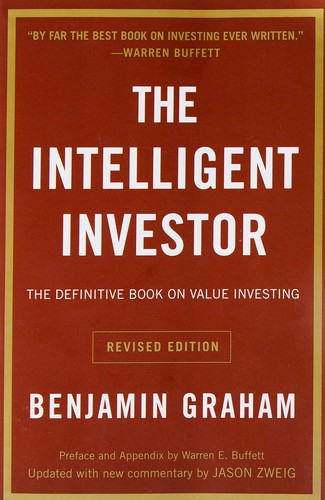
The Intelligent Investor
Benjamin Graham
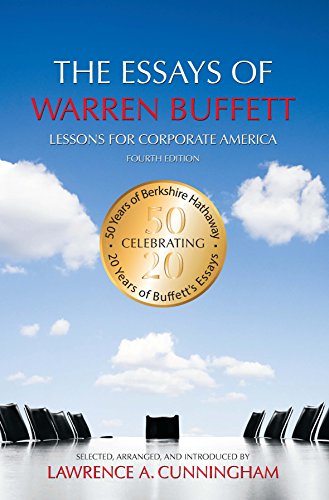
The Essays of Warren Buffett
Warren Buffett
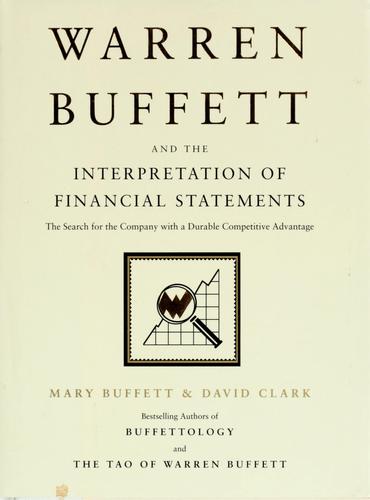
Warren Buffett and the Interpretation of Financial Statements
Mary Buffett
Common Stocks and Uncommon Profits
Philip A. Fisher
