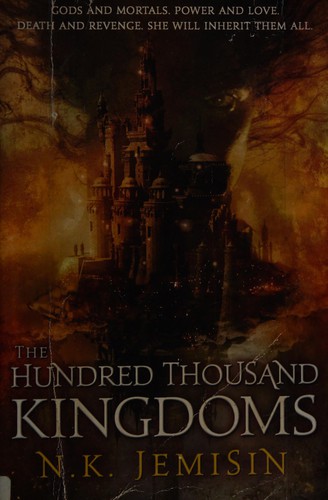
The Hundred Thousand Kingdoms by N.K. Jemisin is a 2010 fantasy book about power and oppression, inheritance and legacy, gods and mortality. The enslaved gods are the novel's most sustained argument: what does it mean to hold power over a being far greater than yourself, and what does that do to the one who holds the chains?
Summary
The Hundred Thousand Kingdoms is the first book in N.K. Jemisin's Inheritance trilogy. Yeine Darr is a barbarian chieftain's daughter from the conquered north who is unexpectedly summoned to Sky, the palace-city of the ruling Arameri family. Her grandfather, the head of the family and effectively ruler of the known world, names her as one of his heirs — a political maneuver more dangerous than it sounds. The Arameri have enslaved three gods, and those gods are woven into every power struggle Yeine now finds herself inside.
The book is about what it means to inherit a system you didn't build and didn't choose. Yeine is a colonized subject brought into the heart of the empire that colonized her people, asked to compete for power within that system, and slowly forced to understand how the system sustains itself — including through her. The enslaved gods, particularly Nahadoth the Nightlord, are the novel's emotional and thematic center: immortal beings reduced to servitude as punishment for a war they lost, forced to perform harm on behalf of the family that holds their chains.
Jemisin's prose is intimate and strange. The novel is narrated by Yeine in retrospect, and the narration itself is unstable — she frequently interrupts herself, questions her own memory, and addresses the reader directly. This structure asks you to consider from the first page whether the narrator knows the full story she's telling. It's a technique that pays off, but it requires patience and buy-in. This is not a novel that explains itself early.
The Hundred Thousand Kingdoms won the World Fantasy Award and launched Jemisin to prominence. Readers who respond to it tend to love its density of ideas and its refusal to let the political be decorative. Readers who bounce off it often find the non-linear narration frustrating and the relationship between Yeine and Nahadoth overwrought. Both reactions are fair. The sequels are thematically related but follow different characters, so each book in the trilogy stands somewhat on its own.
Talk to The Hundred Thousand Kingdoms like its author wrote you back.
Get the ideas that fit your life — not generic summaries.
- Chat with the book
- Audiobook-style main ideas
- Adapts to your life and goals
- Helps you take action
Key takeaways
- 1.
The enslaved gods are the novel's most sustained argument: what does it mean to hold power over a being far greater than yourself, and what does that do to the one who holds the chains?
- 2.
Yeine's dual status — outsider and heir — forces the novel to examine complicity. Being brought inside a system of power does not mean escaping it.
- 3.
Jemisin's world treats colonialism not as backstory but as an ongoing present. The conquered north isn't just history; it's in every interaction Yeine has at Sky.
- 4.
The unstable narration is intentional. Jemisin is asking whether any single perspective — even the narrator's own — can hold the full truth of a story this entangled.
- 5.
The gods in this novel are not omnipotent patrons. They are prisoners, and their imprisonment is the source of the ruling family's power. Power here depends on humiliation.
- 6.
Yeine's investigation into her mother's death becomes an investigation into the empire itself. Personal grief and political history collapse into the same inquiry.
- 7.
The book is unusually attentive to how beauty and violence coexist in empires — Sky is genuinely extraordinary, and it is sustained by atrocities. The novel doesn't let you choose between those two facts.
- 8.
The ending requires you to revise your understanding of who has been speaking throughout the novel. Jemisin earns this, but it demands that you trust the construction before the payoff.
Discussion questions
Use these on your own, with a book club, or as chat starters in Superbook.
- 1.
Yeine is summoned to compete for an inheritance she didn't ask for. At what point, if ever, does participation in a corrupt system make you responsible for it?
- 2.
Nahadoth is described as both terrifying and seductive. Do you think the novel is using that duality to say something specific about power, or does it risk romanticizing captivity?
- 3.
The Arameri maintain control through enslaved gods. What contemporary systems does this remind you of, and how deliberately do you think Jemisin intended those parallels?
- 4.
The novel's narration is retrospective and unstable. Did this structural choice draw you in or push you away? What was it doing that a conventional third-person narration couldn't?
- 5.
Yeine's mother left Sky and chose the north. What does the novel suggest about why, and what does it cost her daughter to finally understand that choice?
- 6.
The conquered Darre people are treated as primitive by the Arameri. How does Jemisin use Yeine's perspective to complicate or reverse that framing?
- 7.
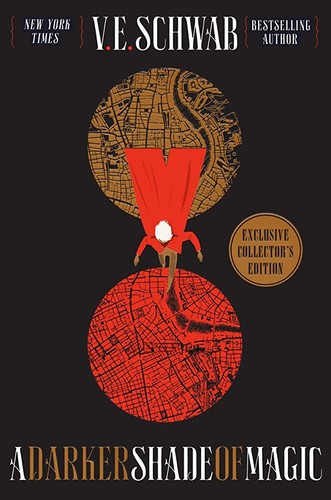
Compared to A Darker Shade of Magic, which has a similar fantasy premise but a lighter tone, The Hundred Thousand Kingdoms is much heavier politically. Which approach do you find more interesting, and why?
- 8.
The enslaved gods cannot disobey orders but retain their own will and perspective. How does the novel use this tension to complicate the morality of those who give the orders?
- 9.
By the end of the novel, is Yeine a liberator, a victim, or something else? Does the novel's structure let you answer that question cleanly?
- 10.
Jemisin said the trilogy came from her thinking about race and power in America. How explicitly do you read those themes in the text, and does knowing that context change how you read it?
- 11.
The world-building here is myth-heavy and non-linear. Did it feel immersive or confusing? What would have helped orient you early?
- 12.
If you read the full trilogy, do the second and third books change how you understand this one? If you didn't, did the ending of this book feel complete?
Themes
Frequently asked questions
-
Is The Hundred Thousand Kingdoms worth reading?
Yes, especially if you want fantasy that takes politics seriously. It's denser and more demanding than most commercial fantasy — the narration is unusual and the world-building is not explained up front — but the payoff is substantial for readers willing to work with it.
-
Do I need to read the trilogy in order?
The books follow different protagonists and can be read somewhat independently, but reading in order enriches the experience. The first book establishes the world and mythology that the later books build on.
-
What makes this book different from standard epic fantasy?
Jemisin centers colonialism, race, and inherited power as the actual story rather than backdrop. The enslaved gods literalize a political argument. The narrator is unreliable in ways that are thematically meaningful. It's much closer to literary fiction in its ambitions than to commercial epic fantasy.
-
Who shouldn't read The Hundred Thousand Kingdoms?
Readers who want clear world-building up front, a reliable narrator, and a straightforward good-versus-evil structure. The novel is deliberately disorienting and morally complicated. If you're looking for escapist adventure, this will frustrate you.
-
How does it compare to Jemisin's Broken Earth trilogy?
The Broken Earth trilogy is generally considered her masterwork and is more technically adventurous. The Hundred Thousand Kingdoms is more conventional in structure but still exceptional. If you're new to Jemisin, starting here is reasonable; if you want her best work, go to The Fifth Season.