The Way of the Shepherd by Kevin Leman and William Pentak is a 2004 business book about leadership, servant leadership, people management. Effective leadership starts with knowing the condition of your people — not the aggregate state of the team but the specific situation of each individual.
Summary
The Way of the Shepherd is a short leadership parable by Kevin Leman and William Pentak that uses the metaphor of shepherding to articulate seven principles of people leadership. Like most business parables, it follows a single protagonist — in this case a graduate student who apprentices with a retired executive who turns out to apply ancient shepherd practices to modern management. The principles are drawn from a close reading of Psalm 23, interpreted as a leadership text rather than a religious one.
The seven principles cover: knowing the condition of your flock (active, personal awareness of what each team member needs), discovering the shape of your sheep (understanding individual strengths and vulnerabilities), helping your flock feel safe (creating an environment of psychological security), the staff of direction (providing guidance through clear expectations and structure), the rod of correction (accountability through honest, timely feedback), and leading to green pastures (connecting the work to purpose and growth). The final principle is about the shepherd's character itself — the idea that the person leading is at least as important as the techniques used.
The book's strength is its accessibility. The shepherd metaphor is simple enough to internalize and specific enough to apply. The parable format makes it readable in a single sitting, and the seven principles are memorable in a way that many denser management frameworks are not. Its acknowledged weakness is the religious undertone that is never entirely absent from the Psalm 23 framing; secular readers may find it more distracting than the authors intend.
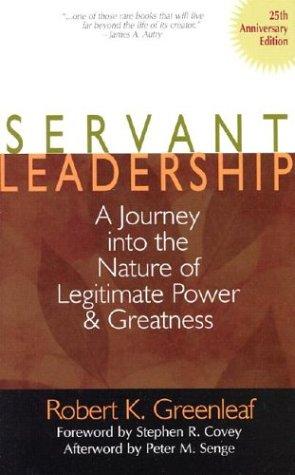
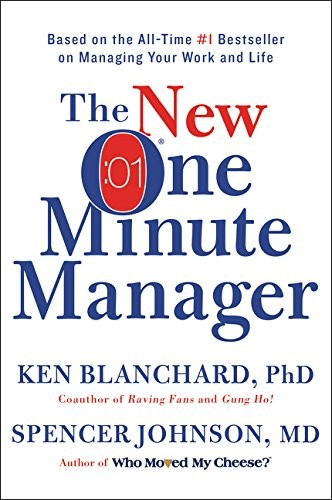
The Way of the Shepherd fits a tradition of short parables about leadership that includes The One Minute Manager and Servant Leadership. It is most useful for frontline and mid-level managers who want a simple framework they can apply immediately, particularly around the principle of knowing your people individually rather than managing them as an undifferentiated group. That insight — that effective leadership requires individual attention at scale — is genuinely underappreciated in most management training.
Talk to The Way of the Shepherd like its author wrote you back.
Get the ideas that fit your life — not generic summaries.
- Chat with the book
- Audiobook-style main ideas
- Adapts to your life and goals
- Helps you take action
Key takeaways
- 1.
Effective leadership starts with knowing the condition of your people — not the aggregate state of the team but the specific situation of each individual.
- 2.
Understanding each person's unique strengths, vulnerabilities, and motivations — the 'shape of your sheep' — is the precondition for useful coaching and feedback.
- 3.
Psychological safety is not an abstract concept but a daily outcome of specific leader behaviors: consistency, transparency, and following through on commitments.
- 4.
Structure and clear expectations are a form of care, not constraint. People perform better when they know what is expected and receive honest, timely feedback.
- 5.
Accountability and compassion work together in effective leadership. Correcting someone is an act of care when done honestly and without personal attack.
- 6.
Connecting work to purpose and growth is the leader's responsibility. People who understand why their work matters are more engaged and more resilient under pressure.
- 7.
The character of the leader matters as much as the techniques. Trust is earned through who the leader is over time, not only by what they do in specific moments.
Discussion questions
Use these on your own, with a book club, or as chat starters in Superbook. Book club version, ready to copy or print →
- 1.
The first principle is knowing the condition of your flock. For each person on your team, could you describe their current state — professionally and personally — with enough specificity to be useful?
- 2.
The shepherd metaphor implies a power imbalance: the shepherd leads, the sheep follow. Is that an accurate model for how you think about your relationship with your team?
- 3.
Leman and Pentak's principles are drawn from Psalm 23. Does the religious framing add or detract from the leadership argument for you?
- 4.
The principle of discovering the shape of your sheep is about individual strengths and vulnerabilities. How does your current management practice make room for that individual understanding?
- 5.
The staff and the rod represent guidance and correction. Are you more comfortable with one than the other? What effect does that preference have on your team?
- 6.
The book argues that accountability is a form of care. Think of a time when honest, timely correction helped someone on your team. What made it useful rather than damaging?
- 7.
Leading to green pastures means connecting work to purpose. How explicitly do you articulate why the work your team does matters? How do you know whether it lands?
- 8.
Short parables like this one make leadership look simple. What's missing from the shepherd metaphor that matters in your actual work context?
- 9.
If you asked your team to rate you on each of the seven principles, where would the biggest gap between your self-perception and their rating be?
- 10.
The book argues the leader's character is the foundation of everything else. What aspects of your own character do you think most directly shape your team's experience of working for you?
- 11.
Many people have experienced both a manager who knew them as individuals and one who treated them as interchangeable. What was the difference in your performance and engagement under each?
Themes
Frequently asked questions
-
What is The Way of the Shepherd about?
It uses the metaphor of shepherding — drawn from Psalm 23 — to articulate seven principles of people leadership: knowing your team's condition, understanding individual differences, building safety, providing structure, giving honest feedback, connecting work to purpose, and leading through character.
-
Do you need to be religious to benefit from this book?
No, though the Psalm 23 framing is present throughout and some readers find it more prominent than the authors may have intended. The principles themselves are secular and apply to any people management context.
-
How long is The Way of the Shepherd?
About 130 pages — most readers finish it in one to two hours. The parable format and short chapters make it easy to read in a single sitting or use as a discussion resource with a management team.
-
Who should read this book?
Frontline and mid-level managers who want a simple, memorable framework for people management. Also useful in faith-based organizations where the Psalm 23 framing resonates. Less useful for senior leaders who need strategic breadth rather than interpersonal technique.
-
What is the most useful principle in the book?
Knowing the condition of your flock — the discipline of actively understanding each team member's current state, not managing the group as a unit. Most managers know this matters but don't build practices to do it consistently. The book makes a clear case for why individual attention at scale is worth the investment.