The Women by Kristin Hannah is a 2024 historical fiction book about women and war, invisible service, trauma and homecoming. Approximately 265,000 American women served in the Vietnam War era, the majority as nurses. The Women argues that their near-total erasure from public memory is a form of ongoing injury.
Summary
In 1966, twenty-year-old Frances McGrath joins the Army Nurse Corps after her brother ships out to Vietnam. The novel follows her across three years of service in a combat field hospital and then through the far longer, more diffuse war she fights after coming home — against an America that doesn't know what to do with its women veterans, doesn't consider them veterans at all, and offers them none of the visible grief or recognition it manages (however inadequately) for men.
Hannah's subject here is specifically the erasure of women from the Vietnam narrative. The women who served — nurses, medical personnel, intelligence analysts — came home to a country that had no category for what they'd done or what they'd survived. They weren't eligible for veterans' benefits initially, weren't welcomed into VFW posts, and found that even the anti-war movement that might have welcomed their witness didn't know where to put them. Hannah dramatizes that double erasure — the war's cost, and the cultural refusal to acknowledge it — through Frankie and the women she serves with and comes home to.
The novel is Hannah's most politically explicit. She has been careful in previous books to let politics emerge from character rather than argument, but here she lets the argument drive the structure. This is both a strength and a constraint: the historical injustice is real and worth dramatizing, but it occasionally tips the novel from fiction into testimony. The prose is Hannah's usual emotional directness, which serves the subject well here — this is not a story that benefits from detachment.
The Women arrived as Hannah's most commercially anticipated novel in years, debuting at number one. Its readers will largely be people who already love Hannah and find her emotional register reliable. Readers new to her work will find it a strong entry point; readers after formal literary ambition should look elsewhere. For what it sets out to do — make visible the invisible service of women in Vietnam — it succeeds.
Talk to The Women like its author wrote you back.
Get the ideas that fit your life — not generic summaries.
- Chat with the book
- Audiobook-style main ideas
- Adapts to your life and goals
- Helps you take action
Key takeaways
- 1.
Approximately 265,000 American women served in the Vietnam War era, the majority as nurses. The Women argues that their near-total erasure from public memory is a form of ongoing injury.
- 2.
Frankie's war doesn't end when she comes home. Hannah is precise about PTSD before it was named, about how the symptoms were dismissed, misdiagnosed, and attributed to female weakness rather than wartime experience.
- 3.
The anti-war movement's inability to incorporate women veterans is one of the novel's most pointed observations — the people who should have welcomed their witness didn't know how to see them.
- 4.
Hannah structures the novel in three acts: preparation, service, and homecoming. The homecoming section is the longest and, arguably, the hardest.
- 5.
The friendship among the nurses parallels the friendships in Hannah's other novels — female bonds formed under extreme conditions that outlast the conditions and carry their own form of loyalty.
- 6.
The novel is explicit about the VA's historical treatment of women veterans: exclusion from benefits, from recognition, from the very identity of 'veteran.' Hannah is clearly documenting as much as dramatizing.
- 7.
Frankie's family, particularly her father, represents the American silence around the war — people who supported the initial service and then didn't know what to do with the damage it produced.
- 8.
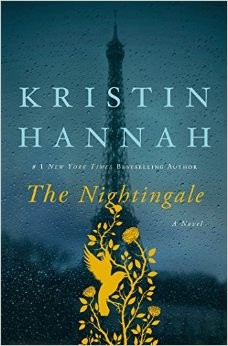
The Women is the most direct extension of the argument Hannah made in The Nightingale: that women's war contributions are structurally written out of the record, and that fiction can restore them.
Discussion questions
Use these on your own, with a book club, or as chat starters in Superbook. Book club version, ready to copy or print →
- 1.
Hannah opens with the epigraph 'Women have always been the strong ones of the world.' How does the novel work to prove, complicate, or qualify that claim over its length?
- 2.
Frankie's decision to enlist is partly about following her brother. How does the novel trace the evolution from that impulse to her own sense of purpose and identity as a nurse?
- 3.
The anti-war movement doesn't welcome women veterans the way Frankie might have hoped. How does the novel handle that irony — that the people opposing the war also failed these women?
- 4.
PTSD in Vietnam veterans has been extensively written about, mostly focusing on men. How does Hannah differentiate Frankie's experience, and does the differentiation feel specific or generic?
- 5.
Hannah explicitly connects The Women to The Nightingale. Both are about women's war service being erased from public memory. Does making the argument twice make it more powerful or more repetitive?
- 6.
The homecoming section is the longest and most painful. Why does Hannah spend more time on what came after the war than on the war itself?
- 7.
Frankie's father represents a specific kind of American silence — patriotic support followed by inability to acknowledge damage. Do you find him culpable, understandable, or both?
- 8.
The novel is set in a specific historical moment but written clearly for a contemporary audience. Where does the contemporary awareness feel like a strength — and where does it feel like anachronism?
- 9.
The women nurses form bonds that parallel combat unit bonds among men. How does the novel treat the question of whether those bonds are the same, different, or simply unrecognized as comparable?
- 10.
Women Vietnam veterans were not recognized in the original Vietnam Veterans Memorial. How does the novel use that historical fact, and does drama serve history better than pure documentation would?
- 11.
What did you not know about women's Vietnam service before reading this novel? Did the fiction change how you think about it — and if so, how?
Themes
Frequently asked questions
-
Is The Women based on a true story?
The characters are fictional, but the history is real. Approximately 265,000 women served in the Vietnam War era. The systematic exclusion of women veterans from recognition, VA benefits, and the public memory of the war is documented history. Hannah drew on extensive research and interviews with veterans.
-
Do I need to read The Nightingale first?
No — The Women stands entirely alone. But if you've read The Nightingale, you'll recognize Hannah's recurring project: making visible the women history wrote out of a war. Reading them together sharpens that argument.
-
Is The Women very long?
Yes, around 480 pages. Hannah's recent novels have grown longer as her commercial position has grown secure enough to allow it. The pacing is brisk for its length, but readers looking for a shorter entry into her work might start with The Nightingale.
-
Is this a good book for a book club?
Very good. The historical subject is substantive, the female characters invite comparison and debate, and the homecoming section produces strong reactions that differ among readers. The political argument is explicit enough to generate real disagreement.
-
Who shouldn't read this?
Readers who find explicit war-trauma narratives difficult — particularly around medical scenarios and combat nursing — should approach with care. The novel doesn't shy from the physical reality of a field hospital. Also readers who prefer restraint over emotional directness, or who find Hannah's prose too open.