Ubik by Philip K. Dick is a 1969 science fiction book about reality and illusion, corporate capitalism, death and entropy. Reality in Ubik is not given but administered — whoever controls the environment controls what counts as real, a premise Dick treats as both horror and dark comedy.
Summary
Set in a near-future 1992 where psychic mercenaries and anti-psi agents compete for corporate contracts, Ubik opens as a routine job goes catastrophically wrong. Joe Chip, a debt-ridden technician who works for Runciter Associates, finds himself stranded on the moon after a bombing that may or may not have killed his boss Glen Runciter. Back on Earth, the survivors discover that reality is decaying around them — products regress to earlier forms, money becomes obsolete currencies, and people start dying in inexplicable ways. Someone or something is unraveling the world.
The book is fundamentally about entropy: the way things run down, deteriorate, and eventually stop. Dick uses a consumer-goods landscape — spray cans, cigarettes, coffee machines — as his central metaphor. Ubik, the mysterious product whose advertisements open each chapter and whose can appears at moments of crisis, becomes a kind of grace note against the unraveling. What the novel is really asking is whether anything is real, whether the selves we inhabit are stable, and who controls the environment we call reality. The corporation here is not a background detail but the primary organizing structure of existence.
Dick's prose is deliberately pulpy and fast, which disguises how precisely constructed the novel is. The mystery deepens rather than resolves as you read; clues are planted early and pay off in ways that feel genuinely surprising. The ending refuses easy comfort. Unlike many paranoid SF novels that reveal the curtain and then stop, Ubik keeps pulling curtains aside until you're not sure there's a stage at all.
Readers who love puzzle-box fiction, unreliable reality, and dark humor will find this one of Dick's most satisfying novels. It rewards rereading — the first chapter reads completely differently once you know where it ends. Those looking for emotional warmth or character interiority will find less here; Dick's people are vivid types more than psychological portraits. As a portrait of corporate life as ontological trap, it has aged into something that feels uncomfortably current.
Talk to Ubik like its author wrote you back.
Get the ideas that fit your life — not generic summaries.
- Chat with the book
- Audiobook-style main ideas
- Adapts to your life and goals
- Helps you take action
Key takeaways
- 1.
Reality in Ubik is not given but administered — whoever controls the environment controls what counts as real, a premise Dick treats as both horror and dark comedy.
- 2.
Entropy is the novel's real antagonist. The decay of objects and people is not random but seems directed, purposeful, aimed at the characters with something like malice.
- 3.
Ubik the product is never fully explained. Its spray-can appearances at moments of crisis suggest salvation without ever confirming it, which is precisely the point.
- 4.
The corporation as existential container: Runciter Associates doesn't just employ people, it defines the conditions under which they can exist at all.
- 5.
Joe Chip is defined partly by his inability to pay for anything. The economy is so granular it charges for basic access to everyday objects. Dick was writing satire, but it reads like prediction.
- 6.
Half-life — the novel's term for a kind of post-death consciousness — blurs the line between living and dead in ways that make the status of every character uncertain by the final act.
- 7.
The novel's structure mirrors its themes: just as the characters can't be sure which layer of reality they're in, the reader can't be sure either, and Dick offers no rescue.
- 8.
Ubik is Dick's most compressed statement of his recurring obsession: the question of who or what is running the simulation, and whether the question can ever be answered from inside it.
Discussion questions
Use these on your own, with a book club, or as chat starters in Superbook. Book club version, ready to copy or print →
- 1.
Runciter's message on coins and other surfaces — does it prove he survived the blast, or does it suggest something more disturbing about the nature of reality the novel sets up?
- 2.
Joe Chip is perpetually in debt and can barely afford to leave his apartment. How does Dick use financial precarity as a lens for examining who has access to reality itself?
- 3.
The chapter epigraphs advertise Ubik as a consumer product that gets increasingly absurd. What is Dick doing with these ads — mockery, prophecy, something else?
- 4.
By the end, no single explanation covers all the events in the novel. Is that a flaw in construction, or is the unresolvability intentional and earned?
- 5.
Half-life is presented as a posthumous state where the dying person's consciousness slowly decays. How does this concept change what it means to be a person in the world of the novel?
- 6.
Several characters die in ways that seem staged or too convenient. Did you find yourself suspecting any of the survivors of being a planted agent, and if so, which ones?
- 7.
The setting — 1992 as imagined in 1969 — is a future where psychic powers are bureaucratized and commercialized. What does Dick gain by treating the paranormal as a corporate service?
- 8.
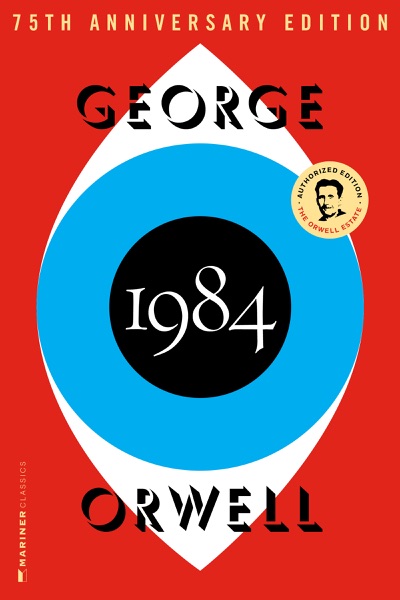
Compare Ubik to 1984: both involve a reality that is controlled and distorted by an external power. Which novel's version of that premise feels more disturbing to you, and why?
- 9.
Ubik the spray can intervenes in the entropy but never fully stops it. Does the ending suggest genuine salvation, or only a temporary reprieve?
- 10.
Dick's female characters in this period are often criticized as underdeveloped. How do Pat Conley and the other women in Ubik fit or push against that reading?
- 11.
The novel was written during Vietnam and the height of consumer culture anxiety. How much does knowing the historical moment change what you take from it?
- 12.
If you had to argue that Ubik is ultimately optimistic — that there is something that resists entropy — what would your case be? Could you make it?
Themes
Frequently asked questions
-
Is Ubik a good entry point for Philip K. Dick?
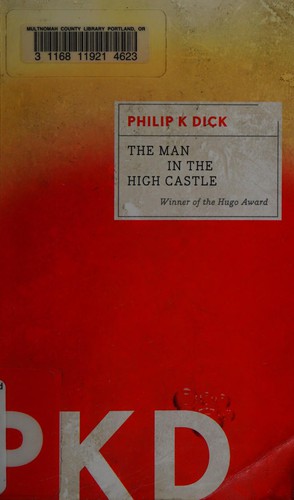
It's one of his most structurally tight and thematically rich novels, but it's not the easiest entry. Do Androids Dream of Electric Sheep? or The Man in the High Castle may be gentler starting points. That said, Ubik rewards patience and is widely considered his best work.
-
Is Ubik hard to follow?
The first half is fast and readable; the second half intentionally disorienting. Dick scrambles the narrative logic as reality in the novel degrades. Reading with a tolerance for ambiguity helps — this is a book that resists full explanation by design.
-
What is Ubik actually about, without spoilers?
A group of psychic workers survives a disaster and finds their grip on reality dissolving in increasingly terrifying ways. A mysterious product called Ubik seems to offer some kind of protection. The novel asks, without fully answering, who is in control of the world the characters inhabit.
-
Why is Ubik considered a classic?
It distills Dick's central preoccupations — reality as construct, corporate capitalism as existential trap, entropy as metaphysical force — into a fast, funny, genuinely unsettling package. Its influence on later SF and on films like The Matrix is hard to overstate.
-
Is there an adaptation of Ubik?
A film adaptation has been in development for decades — Jean-Luc Godard was briefly attached in the 1970s — but no completed film exists. The novel has influenced countless works without being directly adapted.