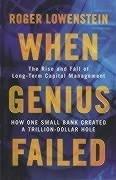
When Genius Failed by Roger Lowenstein is a 2000 economics book about financial risk, hubris, hedge funds. Models built on historical data cannot account for events outside that history. LTCM's models were calibrated to normal markets, and 1998 was not a normal market.
Summary
When Genius Failed is Roger Lowenstein's account of Long-Term Capital Management, the hedge fund that almost took down the global financial system in 1998. LTCM was founded by John Meriwether, a Salomon Brothers bond trader, and staffed with two Nobel Prize-winning economists — Myron Scholes and Robert Merton — whose options-pricing work underpinned modern derivatives theory. The fund used enormous leverage to exploit tiny pricing inefficiencies in bond markets, earned spectacular returns in its early years, and then lost nearly $4 billion in a matter of weeks when Russia defaulted on its debt and the trades that were supposed to be uncorrelated all moved against them simultaneously.
Lowenstein tells the story chronologically, beginning with Meriwether's career at Salomon and the intellectual culture that produced LTCM's models. The fund's models were built on historical data and assumed that markets would behave as they normally do. They did not account well for the possibility that correlations break down in a crisis, that liquidity dries up, or that being right about a trade matters nothing if you are forced to liquidate before the trade converges. LTCM was not wrong about the trades in a theoretical sense; it was wrong about how much leverage a strategy could sustain when everything went against it at once.
The Federal Reserve orchestrated a private-sector bailout in 1998, gathering LTCM's creditors to avoid a disorderly unwinding that threatened to cascade through global markets. The episode became a case study in systemic risk and the limits of quantitative models — lessons that were partially forgotten before the 2008 financial crisis made them urgent again.
Lowenstein writes as a journalist with the ability to make complex derivatives comprehensible without oversimplifying. The book rewards two kinds of readers: those who want a gripping narrative about financial hubris, and those who want to understand why sophisticated models fail. The answer to the latter is consistent and uncomfortable: models built on historical data cannot account for events outside that history, and leverage transforms small errors into catastrophes.
Talk to When Genius Failed like its author wrote you back.
Get the ideas that fit your life — not generic summaries.
- Chat with the book
- Audiobook-style main ideas
- Adapts to your life and goals
- Helps you take action
Key takeaways
- 1.
Models built on historical data cannot account for events outside that history. LTCM's models were calibrated to normal markets, and 1998 was not a normal market.
- 2.
Leverage amplifies both gains and losses. LTCM was leveraged 25:1 at its peak; this turned a modest loss rate into a catastrophic capital wipeout in weeks.
- 3.
Correlations that look stable in normal markets often collapse in crises. LTCM's supposedly uncorrelated trades all moved against the fund simultaneously when Russia defaulted.
- 4.
Being right about a trade and surviving a trade are two different things. LTCM's positions eventually converged — after its forced liquidation had eliminated the upside.
- 5.
Hubris is a financial risk. LTCM's partners were so confident in their models that they returned investor capital in 1997 and raised leverage further. That decision was fatal.
- 6.
Systemic risk is distinct from individual firm risk. LTCM's failure threatened counterparties and markets well beyond the fund itself, which is why the Federal Reserve intervened.
- 7.
Liquidity risk is underpriced during good times. LTCM assumed it could always sell positions if needed; in the crisis, it could not find buyers at any price.
- 8.
Nobel Prize-winning theory and actual market behavior diverge in extreme conditions. The models Scholes and Merton built worked until they didn't, and when they didn't, the consequences were enormous.
Discussion questions
Use these on your own, with a book club, or as chat starters in Superbook. Book club version, ready to copy or print →
- 1.
LTCM's models were built by some of the smartest people in finance. Does their failure make you more or less trusting of complex quantitative models in markets?
- 2.
Lowenstein describes the fund's partners as genuinely brilliant but also genuinely arrogant. How much of LTCM's collapse was intellectual failure versus character failure?
- 3.
The fund returned investor capital in 1997 to increase leverage and keep profits within the partnership. How do you evaluate that decision in hindsight?
- 4.
LTCM's trades were 'right' in the long run — positions converged after the fund collapsed. How should an investor think about the difference between being correct and being solvent?
- 5.
The Federal Reserve organized a bailout of a private hedge fund to protect the financial system. Was that the right decision? What are the arguments on each side?
- 6.
Correlation breakdown — trades that looked independent all moving together in a crisis — is a recurring theme in financial disasters. How does that pattern affect how you think about diversification?
- 7.
The partners at LTCM had enormous personal wealth tied up in the fund. Does skin-in-the-game prevent bad decisions, or did it not help here?
- 8.
The lessons of LTCM were partially forgotten by 2008. Why do financial institutions repeat similar mistakes across generations?
- 9.
Lowenstein is skeptical that quantitative models can capture the full range of market behavior. How much faith do you have in the models your own financial institutions use?
- 10.
LTCM attracted billions in capital from major banks partly because of the reputation of its founders. How do you evaluate the credentials of people managing your money?
- 11.
The fund's collapse nearly triggered a global financial crisis. What mechanisms should exist to prevent individual firm failures from becoming systemic events?
- 12.
If you had been an investor in LTCM in 1997 — watching extraordinary returns — would you have asked to withdraw? What would it have taken?
Themes
Frequently asked questions
-
What is When Genius Failed about?
It's the story of Long-Term Capital Management, a hedge fund staffed by Nobel Prize-winning economists that earned spectacular returns in the mid-1990s and then collapsed in 1998 after leveraged trades in government bonds went wrong following Russia's debt default. The Federal Reserve organized a private bailout to prevent global market contagion.
-
Is When Genius Failed worth reading?
Yes, especially for anyone who wants to understand how sophisticated financial models can fail catastrophically. Lowenstein makes complex derivatives understandable and tells a gripping story about financial hubris. It holds up as essential reading after 2008 and beyond.
-
How long does it take to read When Genius Failed?
Around five to six hours. Lowenstein is a clean, fast-moving narrative writer, and the story has real tension even if you know how it ends.
-
Do I need to understand derivatives to read this book?
No. Lowenstein explains the financial mechanisms clearly enough that readers without a finance background can follow the argument. The book is more about hubris and risk management than about technical finance.
-
What is the main lesson of When Genius Failed?
That leverage amplifies errors into catastrophes, that models built on historical data fail in unprecedented conditions, and that confidence in a model's correctness is not the same as being able to survive long enough to be proven right.
Similar books
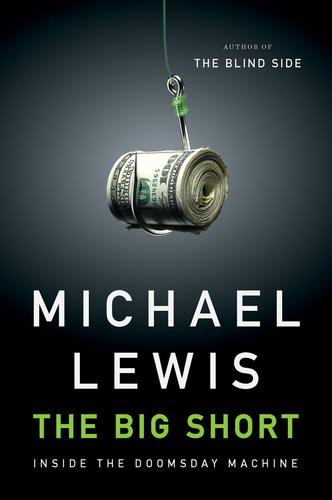
The Big Short: Inside the Doomsday Machine
Michael Lewis

Thinking in Bets: Making Smarter Decisions When You Don't Have All the Facts
Annie Duke
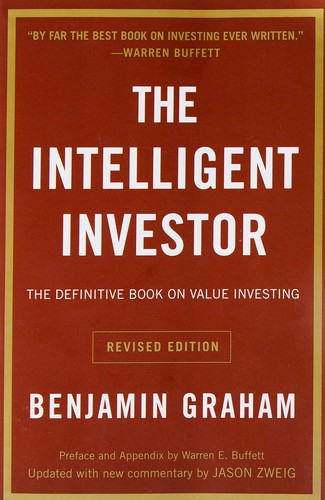
The Intelligent Investor
Benjamin Graham
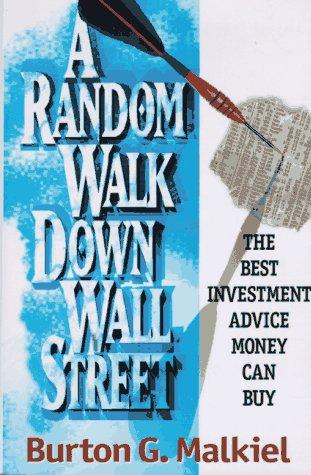
A Random Walk Down Wall Street
Burton G. Malkiel
