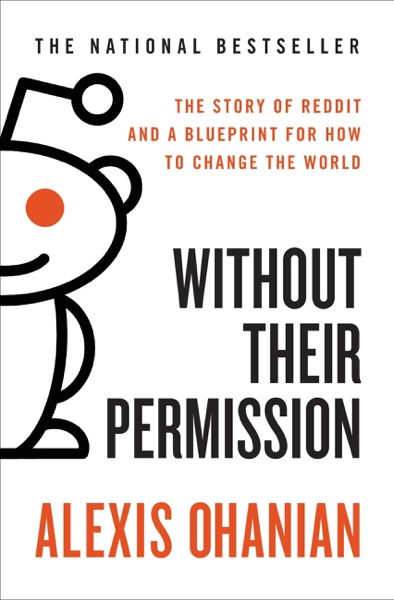
Without Their Permission by Alexis Ohanian is a 2013 business book about entrepreneurship, internet culture, startups. The internet has eliminated most traditional barriers to starting a company. The main obstacles left are psychological: the fear of trying and failing publicly.
Summary
Alexis Ohanian cofounded Reddit in 2005 as a 22-year-old college student and sold it to Condé Nast two years later. Without Their Permission, published in 2013, is part memoir, part manifesto about what he believes the internet has made possible: the ability to build companies, movements, and communities without asking anyone for permission. The title is the thesis.
The book's central argument is that the barriers to entrepreneurship have collapsed. Where it once required capital, connections, and institutional backing to start something significant, the internet has flattened those requirements. Ohanian's own story is the primary case study: he and Steve Huffman pitched Y Combinator without a product, built Reddit in a few weeks, and grew it into one of the largest websites in the world largely by accident and community-building. The founding story is entertaining and told with unusual candor about how much was improvised.
Beyond Reddit, Ohanian devotes considerable space to his subsequent work: investing through Initialized Capital, advocacy for internet freedom (particularly during the SOPA/PIPA battles, where Reddit's blackout helped defeat the legislation), and his belief that America produces the best entrepreneurs because it genuinely rewards people who don't ask for permission. This section is more ideological than operational. Ohanian believes deeply in the internet as a democratizing force and is explicit about it.
The book is at its best when it's concrete — the Reddit origin story, the mechanics of launching a startup, the description of working at Y Combinator with Paul Graham — and less convincing when it tries to generalize those experiences into universal advice. The tone is enthusiastic throughout, occasionally tipping into the inspirational register that Ohanian himself might identify as empty if he encountered it elsewhere. For readers who were building on the internet in the mid-2000s, the cultural texture is accurate and evocative. For those approaching it now, the book serves as a snapshot of a particular moment of genuine optimism about what the open web could become.
Talk to Without Their Permission like its author wrote you back.
Get the ideas that fit your life — not generic summaries.
- Chat with the book
- Audiobook-style main ideas
- Adapts to your life and goals
- Helps you take action
Key takeaways
- 1.
The internet has eliminated most traditional barriers to starting a company. The main obstacles left are psychological: the fear of trying and failing publicly.
- 2.
Community is a product feature. Reddit's growth came not from engineering but from cultivating early users who felt genuine ownership over what they'd built together.
- 3.
Y Combinator's model — small batches, intense mentorship, rapid iteration — works because it forces founders to talk to users and build something people actually want.
- 4.
Internet freedom battles have concrete stakes. SOPA/PIPA would have enabled censorship of entire domains; coordinated civic pressure stopped them.
- 5.
The best startup ideas often look bad on a slide. Reddit seemed like a simple link aggregator. The question is whether people come back, not whether the idea sounds impressive.
- 6.
Small teams move faster and are forced to build things that matter, rather than things that keep people employed.
- 7.
Being foreign to an industry can be an advantage: you don't know what's not supposed to work, so you try it anyway.
Discussion questions
Use these on your own, with a book club, or as chat starters in Superbook. Book club version, ready to copy or print →
- 1.
Ohanian argues the internet has made permission unnecessary. What barriers to starting something have you actually encountered that weren't eliminated by that change?
- 2.
Reddit grew through community ownership. Which online communities have you been part of that felt genuinely owned by participants, and what made that possible?
- 3.
The founding story of Reddit involves significant improvisation and luck. How do you separate what was genuinely strategic from what was post-hoc rationalization?
- 4.
Ohanian's advocacy during SOPA/PIPA is presented as obvious. What internet freedom issues today deserve more civic attention than they're getting?
- 5.
The book is explicitly optimistic about American entrepreneurship. Does that framing hold up, and what does it leave out?
- 6.
Ohanian sold Reddit to Condé Nast and later helped buy it back. What does that arc suggest about the tensions between building communities and building companies?
- 7.
The Y Combinator model appears in many entrepreneurship books. What does it actually teach that couldn't be learned elsewhere?
- 8.
Ohanian cofounded Reddit at 22 without knowing what he was doing. What's the relationship between naivety and boldness in early-stage entrepreneurship?
- 9.
The book was written in 2013. Which of its predictions or assumptions about the internet have aged well, and which look naive from where we are now?
- 10.
Without Their Permission is a phrase that could describe both rebellion and recklessness. Where's the line?
- 11.
Who doesn't have permission to start things even with the internet? What genuine structural barriers remain that the book glosses over?
Themes
Frequently asked questions
-
Is Without Their Permission worth reading?
For aspiring founders and people curious about how Reddit got started, yes. It's an honest and entertaining origin story. As a general entrepreneurship guide, it's thinner — the principles are real but lightly developed.
-
Is this a memoir or a business book?
Both. About half is Ohanian's personal story — growing up, cofounding Reddit, early Y Combinator — and half is advice and advocacy on internet entrepreneurship and freedom. The memoir sections are the stronger half.
-
How does this compare to other founder memoirs?
More earnest than most. Ohanian doesn't disguise his enthusiasm or pretend to more strategic intent than he had. It reads less polished than Shoe Dog or The Hard Thing About Hard Things, which makes it feel more honest about the randomness of early-stage success.
-
Who should read this book?
College students or early-career people wondering whether to start something, fans of Reddit's history, and anyone interested in how internet communities actually form. Less useful for people already deep in startup culture who have read widely in the genre.
-
What's the most actionable idea in the book?
Don't wait for permission or ideal conditions. Ohanian's actual example is that he and Huffman launched Reddit in weeks with no product vision, and figured out what it should be by watching how people used it. The speed of iteration mattered more than the quality of the initial plan.
Similar books
Zero to One: Notes on Startups, or How to Build the Future
Peter Thiel
The Lean Startup
Eric Ries
Shoe Dog: A Memoir by the Creator of Nike
Phil Knight
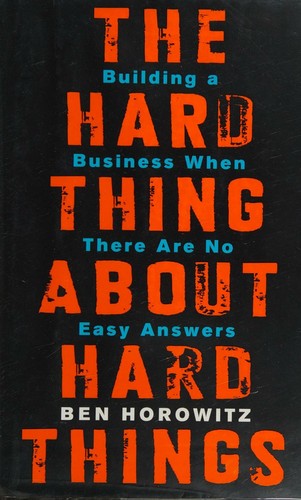
The Hard Thing About Hard Things
Ben Horowitz
