1984 by George Orwell is a 1949 philosophy book about totalitarianism, surveillance, language and power. Doublethink — holding two contradictory beliefs and believing both — is not a bug in authoritarian ideology but a feature. The contradiction exhausts the capacity for coherent resistance.
Summary
Nineteen Eighty-Four is George Orwell's 1949 novel about a future England called Airstrip One, governed by the totalitarian Party under the figurehead Big Brother. The Party controls all information, all language, and all recorded history. Winston Smith, a low-ranking Party functionary, spends his days rewriting old newspaper articles to bring them in line with the Party's current position. He is a functionary of the Ministry of Truth, which exists to produce lies, just as the Ministry of Love exists to produce torture and the Ministry of Peace conducts perpetual war.
The novel is structured in three parts. The first establishes the world and Winston's tentative, terrified rebellion — keeping a diary, allowing himself to think. The second follows his affair with Julia and their shared, doomed attempt to build a private life inside the surveillance state. They contact O'Brien, who appears to be a secret agent of the Brotherhood, the mythical resistance organization. The third part, in the Ministry of Love, is among the most disturbing in twentieth-century literature: the systematic disassembly of Winston's personality until he genuinely loves Big Brother.
Orwell's intellectual contribution is the concept of doublethink — the ability to hold two contradictory beliefs simultaneously and to know that they are contradictory, and to believe both — and Newspeak, a language being systematically reduced to make thoughtcrime literally impossible. The appendix on Newspeak, written in the past tense as if the Party has already fallen, is one of the more interesting of Orwell's formal choices. These are not just fictional devices; they are analyses of how authoritarian regimes actually work, drawn from Orwell's observations of Stalinist show trials and the Spanish Civil War.
The novel remains unsettling because Orwell understood that the most durable authoritarian systems do not merely suppress opposition — they reshape the desire to oppose. Winston does not simply lose; he changes. The book's power comes from its refusal to provide even the cold comfort of martyrdom. It is a warning, not a horror story, and the difference matters.
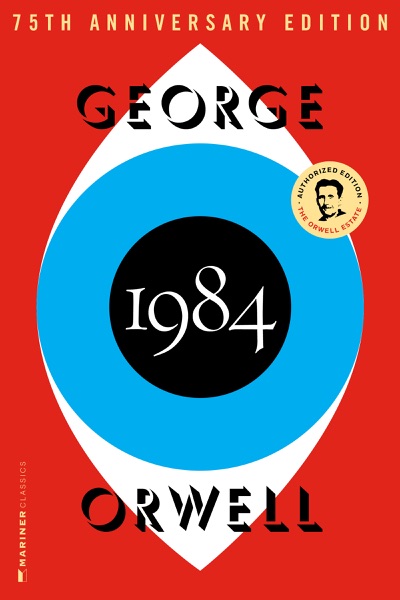
Talk to 1984 like its author wrote you back.
Get the ideas that fit your life — not generic summaries.
- Chat with the book
- Audiobook-style main ideas
- Adapts to your life and goals
- Helps you take action
Key takeaways
- 1.
Doublethink — holding two contradictory beliefs and believing both — is not a bug in authoritarian ideology but a feature. The contradiction exhausts the capacity for coherent resistance.
- 2.
Newspeak reduces the language available for thought. Orwell argues that controlling vocabulary is a more reliable way to control thought than surveillance alone.
- 3.
The Party's goal is not compliance but genuine love. O'Brien's project with Winston is not to defeat him but to transform him until he cannot want anything other than what the Party wants.
- 4.
Perpetual war — with shifting enemies — serves the Party by consuming resources, maintaining scarcity, and giving the proles a legitimate channel for aggression that might otherwise turn inward.
- 5.
The proles constitute the majority and are largely left alone because the Party understands they pose no threat without organized political consciousness.
- 6.
Orwell modeled the Ministry of Truth on the BBC's World Service, where he worked. He had firsthand experience of how propaganda organizations manage information.
- 7.
Room 101 — where you confront whatever you most fear — is the Party's final argument: the self can be dissolved from the inside by activating its deepest terrors.
- 8.
The appendix on Newspeak, written in the past tense, implies the Party eventually fell. Orwell plants this ambiguity deliberately, refusing the reader a clear message about whether resistance is possible.
Discussion questions
Use these on your own, with a book club, or as chat starters in Superbook. Book club version, ready to copy or print →
- 1.
Orwell wrote the novel as a warning about existing tendencies rather than a prediction. Which elements of the world he describes feel most recognizable in current institutions or media environments?
- 2.
Winston's rebellion begins as thought — a private diary he knows will get him killed. What does Orwell think about the relationship between private thought and political action?
- 3.
Julia represents a different form of resistance than Winston's: apolitical, embodied, private. Who does Orwell seem to think is more realistic, and is he right?
- 4.
Doublethink is presented as a conscious technique, not a confusion. Can you think of examples of doublethink in contemporary public discourse, where contradictions are held deliberately rather than from ignorance?
- 5.
The proles are left alone because they have no political consciousness. Is Orwell pessimistic about ordinary people, or is he making a specific point about how political consciousness is suppressed?
- 6.
O'Brien's explanation of the Party's motives — power for its own sake, not for any goal — is chilling. Does it feel psychologically plausible, or is it too pure a form of evil to be realistic?
- 7.
The appendix is written in the past tense, suggesting the Party eventually failed. How does that choice change your reading of the novel? Is it consoling or does it make the story darker?
- 8.
Newspeak's project of eliminating vocabulary for dissent maps onto real debates about political language. Which contemporary language debates remind you most of Orwell's concerns?
- 9.
Winston's love for Julia and his love for O'Brien are both used against him. What does Orwell think relationships are in an authoritarian state — an asset or a vulnerability?
- 10.
The torture in the Ministry of Love is aimed at genuine transformation, not confession or compliance. Does that make it more or less imaginable than more conventional brutality?
- 11.
Orwell said he wrote 1984 partly to expose Stalinist tendencies on the left as well as fascist tendencies on the right. Does reading it that way change anything in how you read the novel?
- 12.
What does the novel say about hope? Is there a version of the story that Orwell thinks could end differently, or is the outcome determined from the beginning?
Themes
Frequently asked questions
-
Is 1984 still worth reading?
Yes. The novel's core insights about how authoritarian systems sustain themselves — through language, doublethink, and the transformation of desire rather than mere suppression — remain as sharp as they were in 1949. Its relevance increases and decreases with the political moment, but it never becomes obsolete.
-
How long does it take to read 1984?
About six hours at average pace for the 300-page novel. The pacing is uneven — the first two parts are tense but readable; Part Three, in the Ministry of Love, is difficult in a different way and some readers find it necessary to read slowly.
-
Is 1984 a political novel or a literary one?
Both, deliberately. Orwell said he had tried to fuse political purpose and artistic purpose into a whole. The novel works as a story — Winston and Julia are real characters, the world is viscerally rendered — and also as an extended argument. The two reinforce each other.
-
Who should read 1984?
Anyone who thinks seriously about political power, language, and resistance. It is required in many school curricula, but it reads differently as an adult than it does at sixteen. Students of media, surveillance, propaganda, and authoritarian history will find it especially resonant.
-
What is the relationship between 1984 and Brave New World?
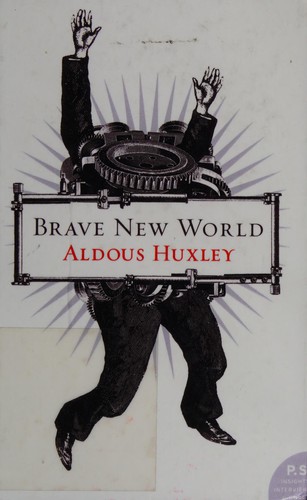
The two are often paired as twin dystopian visions. Huxley's Brave New World imagines control through pleasure and comfort; Orwell's 1984 imagines control through pain and surveillance. Postman argued that Huxley was right; Orwell feared the latter would apply to less affluent societies. Both remain useful.