Are We Smart Enough to Know How Smart Animals Are? by Frans de Waal is a 2016 science book about animal cognition, evolution, intelligence. Anthropocentrism has systematically biased animal cognition research. Tests designed to detect what animals can't do tell us little about what they can do in their own contexts.
Summary
Frans de Waal's central argument is that we've spent most of the last century asking the wrong questions about animal intelligence. We designed tests to reveal what animals lack — the capacity to do what humans do — rather than to reveal what they actually do in their own ecological and social contexts. The result was a science that systematically underestimated every species it studied, from crows to chimpanzees to octopuses.
De Waal, a primatologist at Emory University, draws on decades of fieldwork and lab research to show that animal cognition is not a single ladder with humans at the top but a wide array of specialized abilities shaped by survival needs. Elephants demonstrate remarkable memory for other individuals and empathy for dying members of their group. Crows fashion tools they've never seen used by others. Chimpanzees pass social information through generations without human intervention. A cleaner wrasse fish passes a version of the mirror self-recognition test — a benchmark psychologists once thought reserved for the great apes.
The book is partly a scientific argument and partly a history of how anthropocentrism distorted the field. De Waal traces the influence of behaviorism, which held that attributing inner states to animals was unscientific, and of the arbitrary standard that tool use, language, or culture were uniquely human until proven otherwise in each case. He names this "anthropodenial" — the refusal to see human-like attributes in other species, the mirror image of naive anthropomorphism.
What makes the book persuasive is the accumulation of specific experiments and observations. De Waal never simply asserts that animals are smart; he describes the evidence carefully and honestly acknowledges where it is disputed. The conclusion is not that animals are small, furry humans, but that intelligence itself comes in many shapes, and that recognizing those shapes requires us to ask questions from inside each animal's umwelt — its particular sensory and social world — rather than measuring it against our own.
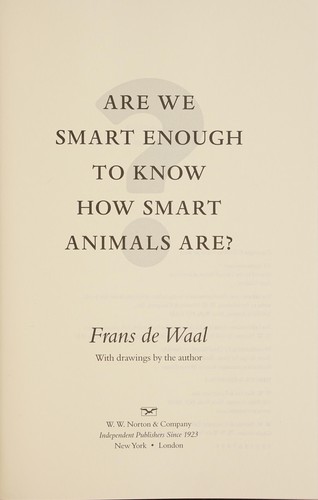
Talk to Are We Smart Enough to Know How Smart Animals Are? like its author wrote you back.
Get the ideas that fit your life — not generic summaries.
- Chat with the book
- Audiobook-style main ideas
- Adapts to your life and goals
- Helps you take action
Key takeaways
- 1.
Anthropocentrism has systematically biased animal cognition research. Tests designed to detect what animals can't do tell us little about what they can do in their own contexts.
- 2.
Intelligence is not a ladder but a wide bush. Different species have evolved different cognitive specializations suited to their ecological and social needs.
- 3.
Anthropodenial — the refusal to attribute mental states to animals — is as distorting as naive anthropomorphism. Both block accurate observation.
- 4.
Each animal lives in its own umwelt, a species-specific sensory and cognitive world. Valid cognition research must start from that world, not from human benchmarks.
- 5.
Tool use, culture, and empathy have all been documented in non-human species, repeatedly overturning claims of human uniqueness.
- 6.
Chimpanzees can recognize faces in photographs, plan for future needs, understand basic causality, and transmit learned behaviors across generations.
- 7.
The mirror self-recognition test is not a universal measure of self-awareness; animals that fail the visual test may pass equivalent tests in their primary sense modality.
- 8.
De Waal's own research on primate fairness shows that capuchin monkeys reject unequal rewards, suggesting the evolutionary roots of human notions of justice.
Discussion questions
Use these on your own, with a book club, or as chat starters in Superbook. Book club version, ready to copy or print →
- 1.
De Waal argues that we ask animals to prove their intelligence on human terms. What would it look like to design a cognitive test around a dog's or crow's own natural strengths?
- 2.
The concept of umwelt suggests every animal experiences a different version of reality. How does that challenge the way you think about the inner lives of pets or animals in the wild?
- 3.
What's an assumption about animal cognition you held before reading this that the book forced you to reconsider?
- 4.
De Waal distinguishes anthropodenial from anthropomorphism. Which error do you think is more common in everyday life, and which is more damaging scientifically?
- 5.
The book describes culture in chimpanzees — learned behaviors passed down through groups. How should that change how we think about what makes human culture special?
- 6.
De Waal criticizes the behaviorist insistence on avoiding inner-state language for animals. When is that caution scientifically warranted, and when does it become an obstacle?
- 7.
Elephants apparently grieve their dead and show distress at the skeletons of strangers. What moral obligations, if any, does that kind of evidence create?
- 8.
The mirror test is a poor measure of self-awareness in animals that rely on smell or sound. What does this suggest about the limits of any single intelligence benchmark — including IQ in humans?
- 9.
De Waal's capuchin fairness experiments show animals rejecting unequal treatment. What do you think that evidence tells us about the origins of human morality?
- 10.
If intelligence takes so many different shapes across species, what's the best argument for preserving any particular species beyond its immediate utility to humans?
- 11.
Think of an animal you live around or observe regularly. What question about its inner life could you ask that would be fair to that animal's own sensory world?
- 12.
De Waal spent decades being dismissed for attributing social complexity to primates. What does that history suggest about how scientific consensus can lag behind evidence?
Themes
Frequently asked questions
-
Is Are We Smart Enough to Know How Smart Animals Are? worth reading?
Yes, especially if you're interested in animal behavior, evolutionary biology, or the philosophy of mind. De Waal writes clearly, his specific examples are memorable, and the historical critique of behaviorism is compelling. The book is occasionally repetitive in its central argument, but the evidence it accumulates is genuinely surprising.
-
How long does it take to read this book?
Roughly six to seven hours at average reading pace. It's dense with case studies rather than with theory, so it moves faster than its length suggests if you're engaged by the examples.
-
What is the main argument of the book?
That animal cognition research has been systematically distorted by human-centric assumptions, and that when you design tests suited to each animal's natural abilities and social context, evidence of complex cognition appears across a wide range of species.
-
Who should read this book?
Anyone curious about animal minds, evolution, or the history of science will find it rewarding. It's also useful for people interested in cognitive science or moral philosophy, since de Waal's evidence directly touches questions about consciousness, culture, and the foundations of ethics.
-
What's the most surprising finding in the book?
Probably the evidence that some fish pass a modified version of the mirror self-recognition test, and that crows can solve multi-step tool-use problems that stump young children. Both cases involve species that researchers had long dismissed as cognitively simple.
Similar books
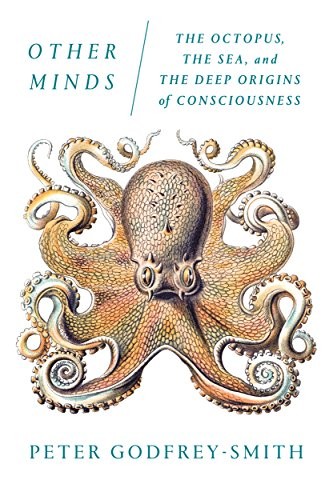
Other Minds: The Octopus, the Sea, and the Deep Origins of Consciousness
Peter Godfrey-Smith
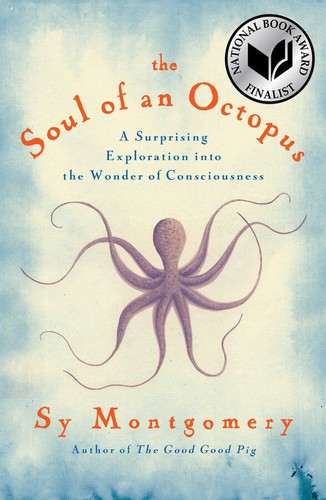
The Soul of an Octopus: A Surprising Exploration into the Wonder of Consciousness
Sy Montgomery
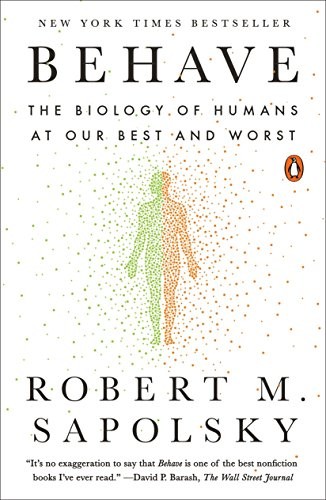
Behave: The Biology of Humans at Our Best and Worst
Robert M. Sapolsky
The Selfish Gene
Richard Dawkins
