Science · Similar reads
Books like Chaos: Making a New Science
The best books like Chaos: Making a New Science are The Information: A History, a Theory, a Flood, The Elegant Universe, and A Short History of Nearly Everything. Chaos: Making a New Science by James Gleick is about chaos theory, complexity, systems. If that's what drew you in, here are 12 books that share its DNA — each summarized on Superbook, and ready to chat with in the app.
- The Information: A History, a Theory, a Flood
01
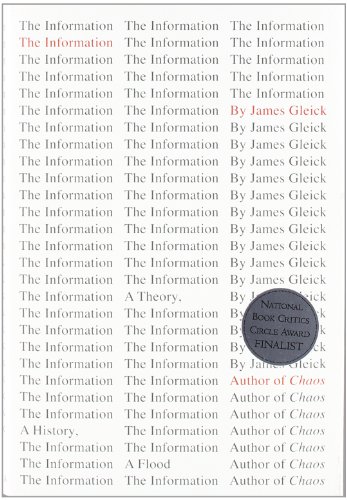
The Information: A History, a Theory, a Flood
James Gleick · Science
The Information traces the history of information — as a concept, a technology, and a way of understanding the universe — from the talking drums of West Africa through the telegraph, the printing press, the telephone, and into the digital age.
A kindred science read.
Read the summary → - The Elegant Universe

02
Brian Greene · Science
The Elegant Universe is Brian Greene's attempt to bring string theory — one of the most mathematically demanding ideas in modern physics — within reach of general readers.
A kindred science read.
Read the summary → - A Short History of Nearly Everything
03
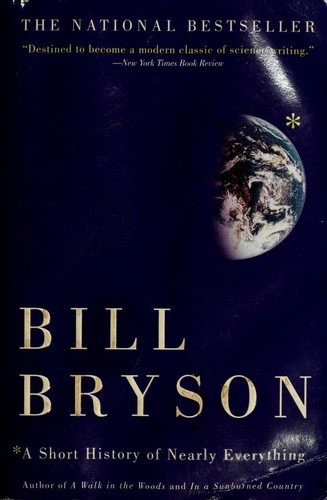
A Short History of Nearly Everything
Bill Bryson · Science
A Short History of Nearly Everything is Bill Bryson's attempt to understand the scientific story of everything — from the Big Bang to the emergence of modern humans — by spending three years talking to scientists and reading science history.
A kindred science read.
Read the summary →
- The Second Machine Age
04
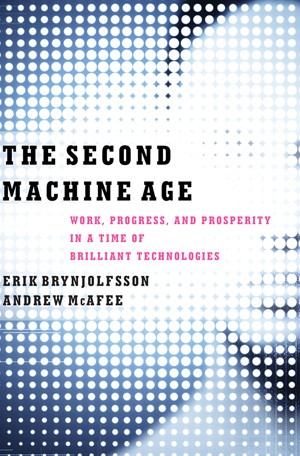
Erik Brynjolfsson and Andrew McAfee · Economics
The Second Machine Age is Erik Brynjolfsson and Andrew McAfee's argument that digital technology has entered a qualitatively new phase — one in which machines can perform cognitive tasks previously reserved for humans, creating economic disruption and opportunity simultaneously.
A kindred science read.
Read the summary → - Genius: The Life and Science of Richard Feynman
05
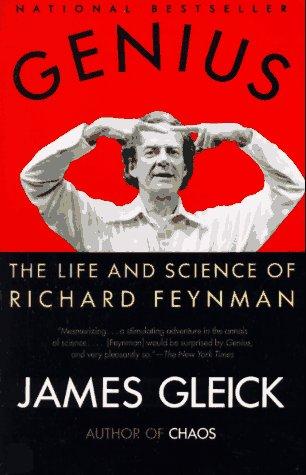
Genius: The Life and Science of Richard Feynman
James Gleick · Biography
Genius is James Gleick's biography of Richard Feynman, the Nobel Prize-winning physicist who developed quantum electrodynamics, cracked safes at Los Alamos, played bongo drums in bars, and became the twentieth century's most celebrated scientific personality.
A kindred science read.
Read the summary → - The Checklist Manifesto
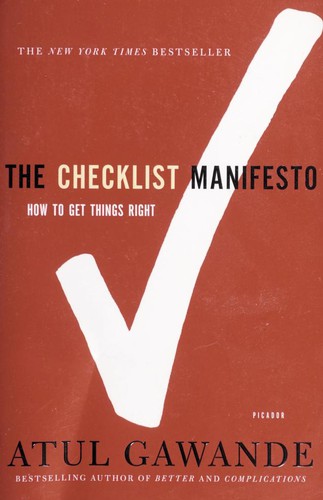
06
Atul Gawande · Health
The Checklist Manifesto is Atul Gawande's argument that the single most underused tool for preventing catastrophic failure in complex fields is also the simplest: a well-designed checklist.
Shares complexity and systems with Chaos: Making a New Science.
Read the summary → - Climbing Mount Improbable
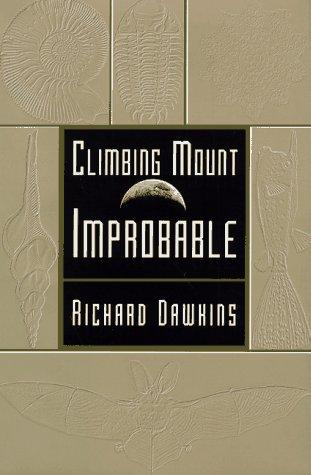
07
Richard Dawkins · Science
Climbing Mount Improbable is Richard Dawkins's response to the persistent intuition that complex biological structures — the vertebrate eye, insect wings, spider webs — are too improbable to have evolved by chance.
Both dig into complexity.
Read the summary → - Deep Learning
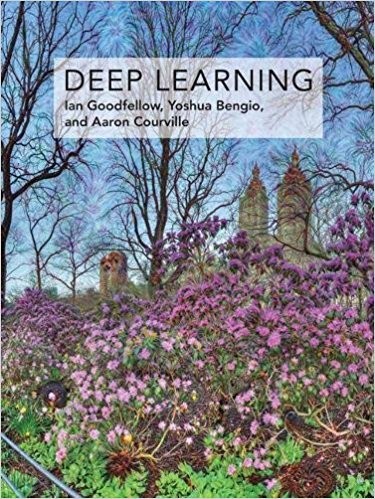
08
Ian Goodfellow, Yoshua Bengio, and Aaron Courville · Science
Deep Learning by Ian Goodfellow, Yoshua Bengio, and Aaron Courville is the standard graduate-level textbook on the mathematical and computational foundations of deep neural networks.
Both dig into mathematics.
Read the summary → - Fermat's Enigma
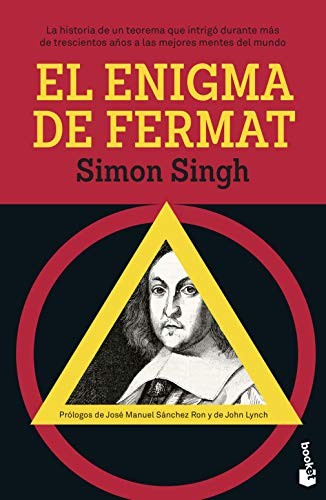
09
Simon Singh · Science
In 1637, Pierre de Fermat scrawled a note in the margin of a mathematics book claiming to have found a proof that no three positive integers can satisfy the equation a^n + b^n = c^n for any integer value of n greater than 2 — but that the margin was too narrow to contain it.
Both dig into mathematics.
Read the summary → - Finding the Mother Tree: Discovering the Wisdom of the Forest
10
Finding the Mother Tree: Discovering the Wisdom of the Forest
Suzanne Simard · Science
Suzanne Simard is the forest ecologist who discovered that trees communicate and share resources through underground mycorrhizal fungal networks — the research that gave rise to the concept of the "mother tree" and, at several removes, Peter Wohlleben's popular writing on the subject.
Both dig into scientific discovery.
Read the summary → - How Not to Be Wrong: The Power of Mathematical Thinking
11
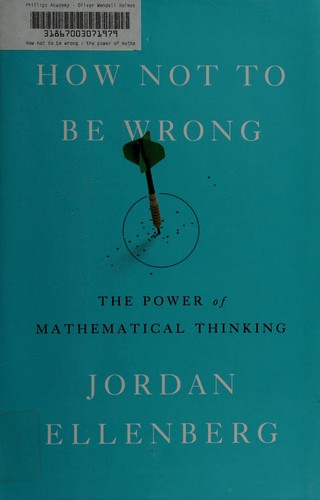
How Not to Be Wrong: The Power of Mathematical Thinking
Jordan Ellenberg · Science
Jordan Ellenberg is a research mathematician who writes as if mathematics is something you would want to think about over dinner.
Both dig into mathematics.
Read the summary → - Is God a Mathematician?
12
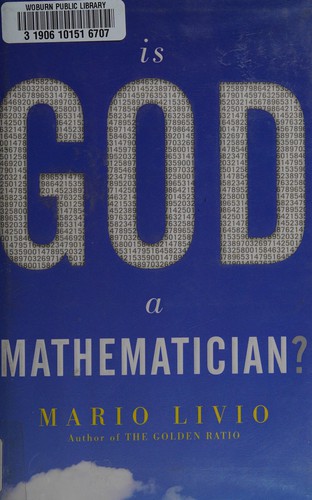
Mario Livio · Science
Mario Livio is an astrophysicist who has spent decades studying galaxies and supernovae, and who has been persistently haunted by a question that comes up whenever mathematics meets physics: why does abstract math, invented centuries before anyone knew it would be needed, keep turning out to perfectly describe physical reality?
Both dig into mathematics.
Read the summary →
Books like Chaos: Making a New Science: quick answers
What are the best books like Chaos: Making a New Science?
The best books like Chaos: Making a New Science by James Gleick are The Information: A History, a Theory, a Flood by James Gleick, The Elegant Universe by Brian Greene, A Short History of Nearly Everything by Bill Bryson, The Second Machine Age by Erik Brynjolfsson and Andrew McAfee, Genius: The Life and Science of Richard Feynman by James Gleick, plus 7 more below. Each was chosen for themes it shares with Chaos: Making a New Science, such as chaos theory, complexity, systems.
What should I read after Chaos: Making a New Science?
A natural next read after Chaos: Making a New Science is The Information: A History, a Theory, a Flood by James Gleick. A kindred science read. Other strong choices are The Elegant Universe by Brian Greene, A Short History of Nearly Everything by Bill Bryson, The Second Machine Age by Erik Brynjolfsson and Andrew McAfee.
What books are similar to Chaos: Making a New Science by James Gleick?
Chaos: Making a New Science centers on chaos theory, complexity, systems. Books with a similar feel include The Information: A History, a Theory, a Flood by James Gleick, The Elegant Universe by Brian Greene, A Short History of Nearly Everything by Bill Bryson, The Second Machine Age by Erik Brynjolfsson and Andrew McAfee, Genius: The Life and Science of Richard Feynman by James Gleick, The Checklist Manifesto by Atul Gawande — all free to read and chat with on Superbook.
