Contagious: Why Things Catch On by Jonah Berger is a 2013 business book about marketing, word of mouth, viral growth. Word of mouth is not random — it follows predictable patterns organized around six principles: Social Currency, Triggers, Emotion, Public visibility, Practical Value, and Stories (STEPPS).
Summary
Contagious is Jonah Berger's analysis of why certain products, ideas, and stories spread through word of mouth while others, equally good or better, remain obscure. Berger is a marketing professor at Wharton, and the book draws on his own research and a wide range of cases to isolate the principles that make things shareable. The central argument is that word of mouth is not random — it follows predictable patterns, and understanding those patterns lets you engineer contagious content and products.
Berger organizes his findings into six principles, packaged as the acronym STEPPS. Social Currency is the tendency to share things that make us look good — people share content that signals intelligence, taste, or insider knowledge. Triggers are environmental cues that keep an idea top of mind — the more your product is associated with common, recurring cues, the more often people will think of it and mention it. Emotion drives sharing — not just positive emotions but high-arousal ones like awe, anxiety, and humor. Public visibility matters because people imitate what they can observe. Practical Value drives sharing because people share genuinely useful information. Stories are the vehicle through which most information travels socially, and embedding your message in a narrative makes it more shareable and more memorable.
Each chapter opens with a puzzling case — why did a $100 cheesesteak become a phenomenon, why does a blender brand have millions of YouTube subscribers — and unpacks it through the STEPPS framework. The prose is accessible and the examples are well-chosen. Some of the chapters feel more immediately actionable (Triggers, Practical Value) than others (Social Currency requires more creativity to apply).
The honest limitation: Contagious describes the conditions that enable sharing but can't guarantee virality. The framework is more useful for generating ideas than for predicting outcomes, and the social media landscape has shifted considerably since the book's 2013 publication date.

Talk to Contagious: Why Things Catch On like its author wrote you back.
Get the ideas that fit your life — not generic summaries.
- Chat with the book
- Audiobook-style main ideas
- Adapts to your life and goals
- Helps you take action
Key takeaways
- 1.
Word of mouth is not random — it follows predictable patterns organized around six principles: Social Currency, Triggers, Emotion, Public visibility, Practical Value, and Stories (STEPPS).
- 2.
Social Currency: people share things that make them look good, feel smart, or signal insider status. Building social currency into your product or message makes it more shareable.
- 3.
Triggers are environmental cues that keep your product top of mind. The more often people encounter your trigger in daily life, the more often they think of and mention your product.
- 4.
High-arousal emotions — awe, excitement, anxiety, humor — drive sharing more than low-arousal emotions like contentment or sadness. Bland content is not shared even if it is positive.
- 5.
Public visibility allows social imitation. When people can see others using a product or behavior, they are more likely to adopt it themselves.
- 6.
Practical Value — genuinely useful information or features — is shared because people naturally want to help others. Remarkable utility spreads without requiring emotional persuasion.
- 7.
Stories carry information. People rarely share facts directly; they share stories, and messages embedded in compelling narratives travel further and are remembered longer.
- 8.
Virality is rarely accidental. The companies behind the most shared products and messages designed for shareability from the start, often by engineering one or more STEPPS principles into the product itself.
Discussion questions
Use these on your own, with a book club, or as chat starters in Superbook. Book club version, ready to copy or print →
- 1.
Which of the STEPPS principles do you see most underused by companies in an industry you know well? What would it look like if they applied it deliberately?
- 2.
Berger argues that triggers — environmental cues — are more powerful drivers of word of mouth than traditional advertising. What triggers does a product you love have, and how did they develop?
- 3.
Can a boring or functional product be engineered for word of mouth? What would it take to make a payroll software or industrial supply company contagious?
- 4.
High-arousal emotions drive sharing more than low-arousal ones. Does that mean negative emotions are sometimes useful in marketing? Where's the line?
- 5.
Berger distinguishes between sharing that is driven by the message and sharing that is driven by the messenger. Which matters more, and how does a brand influence the latter?
- 6.
The book was published in 2013, before TikTok and before the current creator economy. Which of the STEPPS principles are more powerful now, and which are less relevant?
- 7.
What's the difference between something that is engineered to go viral and something that earns organic word of mouth? Does the distinction matter to consumers?
- 8.
Think of something you shared recently — an article, a product recommendation, a story. Which of the six principles explains why you shared it?
- 9.
Berger says embedding your message in a story makes it more shareable and memorable. What are the constraints on that approach when the message is complex or technical?
- 10.
Social Currency relies on exclusivity and inside knowledge. Is that strategy inherently self-limiting, or can it scale?
- 11.
What's a product or idea you've seen that had strong word of mouth but failed commercially anyway? What does that tell you about the limits of contagiousness?
Themes
Frequently asked questions
-
Is Contagious worth reading for marketers?
Yes. The STEPPS framework is one of the clearest, most empirically grounded frameworks for thinking about word of mouth. It is more useful as a checklist for generating ideas than as a prediction engine, but it applies across product, content, and campaign design.
-
What is the STEPPS framework?
Six principles that drive word of mouth: Social Currency (we share things that make us look good), Triggers (environmental cues), Emotion (high-arousal feelings drive sharing), Public (visibility enables imitation), Practical Value (useful information gets shared), and Stories (narratives carry messages farther).
-
How long does Contagious take to read?
Around four to five hours. The chapters are well-organized and the case studies make it fast. Each chapter introduces one STEPPS principle with multiple examples before explaining the underlying mechanism.
-
Does the Contagious framework apply to B2B marketing?
Yes, though some principles require translation. Practical Value and Triggers apply very cleanly. Social Currency in B2B often manifests as thought leadership or industry credibility rather than consumer-style status signaling.
-
How does Contagious compare to The Tipping Point?
The Tipping Point focuses on how social networks spread ideas — connectors, mavens, and salespeople. Contagious focuses on what properties of ideas make them inherently shareable. They are complementary frameworks addressing different levers of virality.
Similar books
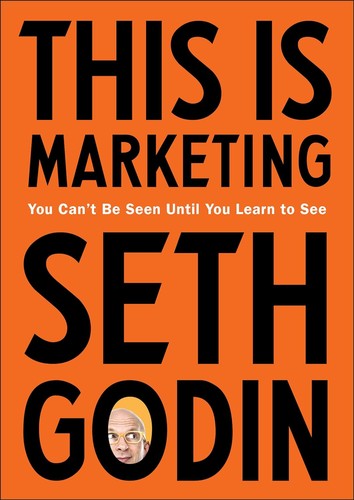
This Is Marketing: You Can't Be Seen Until You Learn to See
Seth Godin
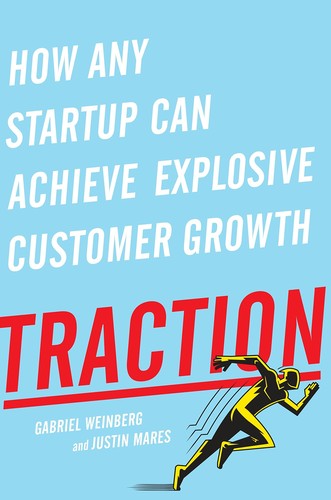
Traction: How Any Startup Can Achieve Explosive Customer Growth
Gabriel Weinberg and Justin Mares
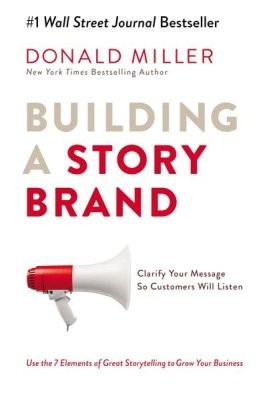
Building a StoryBrand
Donald Miller
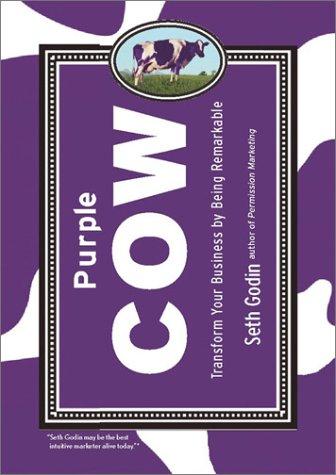
Purple Cow: Transform Your Business by Being Remarkable
Seth Godin
