Death on the Nile by Agatha Christie is a 1937 mystery book about jealousy and obsession, justice and retribution, love and deception. Christie's most enduring technique is misdirection by transparency: the most obvious suspect and the most obvious motive are placed in the foreground to draw attention away from the real solution.
Summary
A luxury Nile cruise becomes the setting for one of Agatha Christie's most accomplished locked-room puzzles. Linnet Ridgeway — young, fabulously wealthy, seemingly destined for happiness — travels through Egypt on her honeymoon with a husband who was, until recently, engaged to her best friend. Jacqueline de Bellefort, that jilted friend, follows the couple everywhere, making no secret of her grievance. When Linnet turns up shot, the obvious suspect is the wrong one — or so Hercule Poirot suspects from the moment he meets the assembled passengers on the S.S. Karnak.
What the novel is actually about is how love curdled by envy becomes something murderous and precise. Christie builds a portrait of obsession long before she stages the crime, and the book's genuine tension lies not in who did it but in the question of what people will do when the life they imagined is taken from them by someone they trusted. There are at least half a dozen plausible suspects, each carrying a secret, each with a history with Linnet that gives motive. Christie manages them with a craftsman's economy.
What makes Death on the Nile distinctive is the elegance of its construction and the bittersweet moral texture of its resolution. The Egyptian setting is used as more than backdrop: the ancient landscape — tombs, temples, the slow river — adds a fatalist weight to the proceedings. Christie's plotting here is among her tightest, with the solution both surprising and completely fair. Every significant detail is placed in view; readers who look carefully will find the answer hiding in plain sight.
Those who love intricate puzzle mysteries, atmospheric settings, and Christie's particular brand of forensic psychology will find this among her best. Readers expecting emotional depth in their characters may find the thinness of interiority frustrating — Christie's people are functional types who serve the plot's architecture, not fully rounded figures. The real pleasure is in the mechanism itself, which is as elegantly devious as anything she wrote.
Talk to Death on the Nile like its author wrote you back.
Get the ideas that fit your life — not generic summaries.
- Chat with the book
- Audiobook-style main ideas
- Adapts to your life and goals
- Helps you take action
Key takeaways
- 1.
Christie's most enduring technique is misdirection by transparency: the most obvious suspect and the most obvious motive are placed in the foreground to draw attention away from the real solution.
- 2.
Jealousy, in this novel, is not a momentary feeling but a sustained, organized force — it requires planning, patience, and a cold kind of logic that Christie finds genuinely frightening.
- 3.
The Nile setting does real work: the enclosed world of a cruise ship (like the Orient Express) forces Christie's characters into proximity that accelerates revelation.
- 4.
Poirot is at his most human here — he understands the emotional mechanics of the crime in advance but cannot prevent it, which gives the novel an unusual shade of melancholy.
- 5.
Christie is precise about class and money. Linnet's wealth is treated as both protection and liability; it attracts the obsession that destroys her.
- 6.
The novel rewards rereading: once you know the solution, the audacity of the setup becomes visible, and several scenes take on an entirely different meaning.
- 7.
Christie's moral universe is consistent: crime does not pay, but the punishment here is not simply legal — it is existential, and that distinction matters.
- 8.
The ensemble cast functions like a pressure cooker: every passenger has a secret, and the secrets interact in ways that force the final reveal.
Discussion questions
Use these on your own, with a book club, or as chat starters in Superbook. Book club version, ready to copy or print →
- 1.
Jacqueline de Bellefort is positioned as a sympathetic figure for most of the book. At what point, if any, did your sympathy run out?
- 2.
Christie makes Linnet wealthy and universally envied but also genuinely kind at points. Does the novel want us to mourn her, or does it treat her more as a plot mechanism?
- 3.
Poirot understands what is about to happen but cannot stop it. Is that a failure on his part, or is it the novel's honest acknowledgment of the limits of intelligence against obsession?
- 4.
The Egyptian setting — temples, tombs, the eternal river — creates a fatalist backdrop. Did that atmosphere change how you read the crime and its resolution?
- 5.
Death on the Nile and Murder on the Orient Express both use a confined setting with multiple suspects. Which construction do you find more satisfying, and why?
- 6.
Several characters are carrying secrets unrelated to the murder. How does Christie use those false trails — as frustrating distractions, or as something that illuminates character?
- 7.
The resolution involves a pact between two people. Did you find that believable given what the novel shows us about each of them?
- 8.
Christie's characters are functional types rather than rounded people. Is that a limitation or a feature — does psychological thinness make the puzzle cleaner?
- 9.
Money and privilege insulate Linnet until they don't. Is the novel making an argument about whether the wealthy can be truly protected, or is it simply plot mechanism?
- 10.
Compared to In Cold Blood, which also studies the psychology of premeditated murder, where does Christie's approach land harder — the crime itself, or the aftermath?
- 11.
The title signals that death is coming. Does knowing the setting in advance change the way you read the first third of the novel?
- 12.
How does Christie balance giving Poirot knowledge that the reader doesn't share? Is it ever cheating, or does the novel earn every misdirection?
Themes
Frequently asked questions
-
Is Death on the Nile worth reading?
Yes, especially if you enjoy intricate puzzle mysteries. It has one of Christie's most elegant constructions — the solution is completely fair, hiding in plain sight, and the Egyptian setting gives it more atmosphere than most of her work. If you're new to Christie, it's a strong starting point alongside Murder on the Orient Express.
-
Do I need to read other Poirot books first?
No. Christie designed each novel to stand alone, and Poirot's character is explained sufficiently within the book. Death on the Nile works as a standalone, though familiarity with Poirot's methods from other novels adds a layer of appreciation.
-
Is there a film adaptation?
Yes. There are several. The 1978 film with Peter Ustinov as Poirot is the most famous classic version. Kenneth Branagh directed and starred in a 2022 adaptation that takes significant liberties with the source material. The 1970s David Suchet BBC series also covered it.
-
Who shouldn't read Death on the Nile?
Readers who need psychological depth and emotional complexity from their fiction may find Christie's characters frustratingly thin. She builds types, not people. If plot mechanism leaves you cold and you need interiority, this isn't the right book.
-
What makes this different from Murder on the Orient Express?
Orient Express is more audacious in its solution and more overtly moral. Death on the Nile is more emotionally complex in its setup — the love triangle gives it a human texture the train novel largely foregoes. Both are essential Christie, but they reward different things.
Similar books
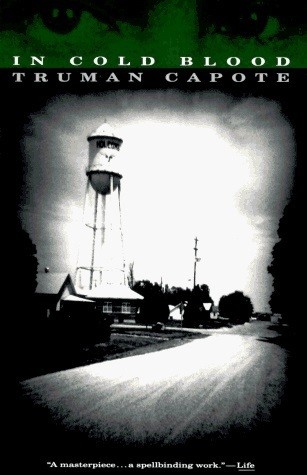
In Cold Blood
Truman Capote
The Confidence Game: Why We Fall for It Every Time
Maria Konnikova
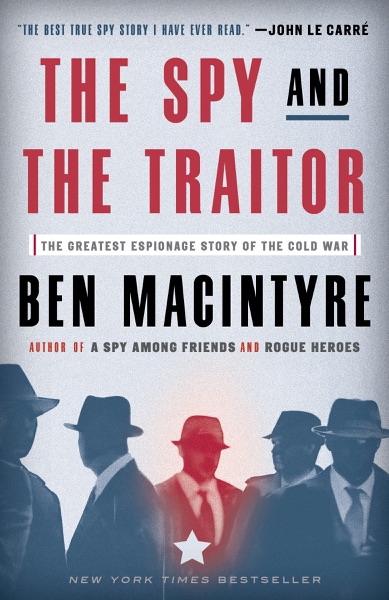
The Spy and the Traitor: The Greatest Espionage Story of the Cold War
Ben Macintyre

The Devil in the White City
Erik Larson
