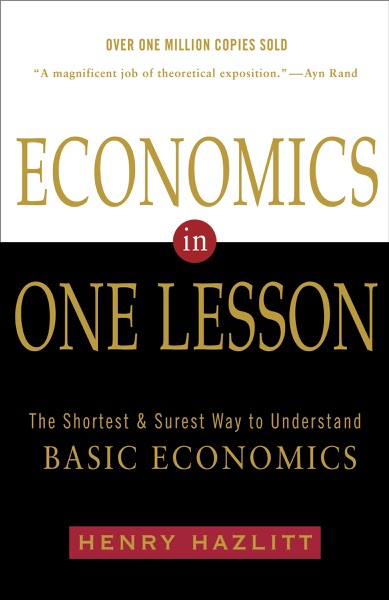
Economics in One Lesson by Henry Hazlitt is a 1946 economics book about unintended consequences, seen vs. unseen, free markets. The one lesson: the art of economics is considering the effects of any policy on all groups, not just the immediately visible ones, and over time, not just immediately.
Summary
Henry Hazlitt wrote Economics in One Lesson in 1946, based on a single insight he credited to the nineteenth-century French economist Frédéric Bastiat: the difference between a good economist and a bad economist is that the good economist considers the effects of a policy on all groups, not just the immediately visible beneficiaries, and over the long run, not just the immediate term. The broken window fallacy — the idea that destroying a window creates economic benefit because someone must pay the glazier — is Bastiat's central example, and Hazlitt extends it across two dozen policy domains.
The structure of the book is simple and consistent. Each chapter presents a policy — tariffs, price controls, rent regulation, minimum wages, public works spending, subsidies to particular industries — and applies the same lens: who benefits visibly and immediately, and what are the unseen costs? The glazier gains, but the shoemaker who would have been paid instead does not. The union member who wins a higher wage gains, but the worker who cannot find employment at the higher wage does not. The domestic steel industry protected by a tariff gains, but the consumers and industries that pay more for steel do not.
The book's enduring influence is partly its accessibility and partly the elegance of its central argument. Hazlitt was a journalist rather than an academic economist, and the prose is crisp and uncluttered. For readers encountering economic reasoning for the first time, the seen/unseen framework is genuinely clarifying, and many of the policy analyses remain relevant.
The book's limitations are also evident. Written in 1946, it engages primarily with the economic debates of the New Deal era and does not address the full range of conditions under which markets fail. Externalities, public goods, information asymmetries, and systemic financial risk receive little attention. Hazlitt's framework is powerful for exposing one class of economic error but does not constitute a complete account of when market intervention is warranted. Readers who absorb only this lesson are better equipped to spot one kind of mistake while potentially missing others.
Talk to Economics in One Lesson like its author wrote you back.
Get the ideas that fit your life — not generic summaries.
- Chat with the book
- Audiobook-style main ideas
- Adapts to your life and goals
- Helps you take action
Key takeaways
- 1.
The one lesson: the art of economics is considering the effects of any policy on all groups, not just the immediately visible ones, and over time, not just immediately.
- 2.
The broken window fallacy: destruction does not create wealth. The money spent on repair is money not spent on something that would have been created instead.
- 3.
Tariffs protect the seen jobs in favored industries while destroying the unseen jobs elsewhere and raising prices for consumers.
- 4.
Public works programs do not create net employment; they redirect labor and capital from private uses that the government has taxed or borrowed away.
- 5.
Price ceilings create shortages; price floors create surpluses. Both disrupt the information function of prices and produce consequences the policy intended to prevent.
- 6.
Minimum wages price out the least productive workers from employment; the unemployment they cause among the most vulnerable workers is the unseen cost.
- 7.
Saving, not spending, is the foundation of capital formation, and capital formation is what raises productivity and wages over time.
- 8.
Every special benefit conferred on one group by government policy is a cost spread across all other groups, often invisibly through prices or reduced opportunity.
Discussion questions
Use these on your own, with a book club, or as chat starters in Superbook. Book club version, ready to copy or print →
- 1.
Apply the seen/unseen framework to a current policy debate. What are the visible benefits, and what costs or forgone alternatives are less visible?
- 2.
Hazlitt argues public works don't create net employment. How does this analysis hold up during a recession, when some private resources are genuinely idle?
- 3.
The broken window fallacy is compelling in simple cases. Does it apply equally well to more complex situations, like government investment in basic research or infrastructure?
- 4.
Hazlitt's analysis of tariffs was written before global supply chains existed. Does the argument become more or less powerful in a world of complex international production?
- 5.
The minimum wage chapter has been tested empirically far more since 1946. What does the evidence on employment effects suggest about the strength of his analysis?
- 6.
How does Hazlitt's treatment of saving and capital formation compare to Keynesian arguments about the paradox of thrift?
- 7.
The book was written against the backdrop of New Deal interventionism. How much of it reads as a product of that specific debate rather than as timeless economics?
- 8.
Hazlitt focuses on misallocations caused by intervention. What kinds of market failures — monopoly, externalities, information asymmetries — does his framework struggle to address?
- 9.
The seen/unseen argument is powerful against bad policy analysis. Is it also powerful enough to tell you when intervention is justified, or only when it is unjustified?
- 10.
Hazlitt is a journalist who learned economics by reading. Does that background show in the book, and is it a strength or a weakness?
- 11.
Which chapter did you find most persuasive? Which did you find least persuasive, and why?
- 12.
The book has been widely recommended as an introduction to free-market economics. What would you recommend reading alongside it to get a fuller picture?
Themes
Frequently asked questions
-
What is Economics in One Lesson about?
It is Hazlitt's application of a single insight — that economic analysis must consider all affected groups and long-run consequences, not just immediate and visible effects — to a range of policy questions including tariffs, minimum wages, price controls, and public spending.
-
How long does it take to read Economics in One Lesson?
About three to four hours. The book is around 200 pages, the chapters are short and focused, and the writing is plain and direct. It is one of the shorter introductions to market economics available.
-
Is Economics in One Lesson still relevant?
The core analytical framework — look for unseen effects — is as relevant as ever. Some specific policy discussions reflect debates from 1946 rather than 2025. Readers should be aware of the book's scope: it is a powerful argument against a particular class of economic mistake, not a comprehensive economics education.
-
Who should read Economics in One Lesson?
Anyone curious about how economists evaluate policy proposals, particularly people who want a brief and readable introduction to market economics. It pairs well with Bastiat's The Law and with more comprehensive introductions like Sowell's Basic Economics.
-
What is the broken window fallacy?
The idea that destruction creates economic benefit because it creates work for those who repair it. Hazlitt, following Bastiat, argues this is fallacious: the money spent on repair is money not spent on something new, so destruction destroys net wealth rather than creating it. The fallacy is widely applicable to arguments that disasters or wars stimulate economies.
Similar books
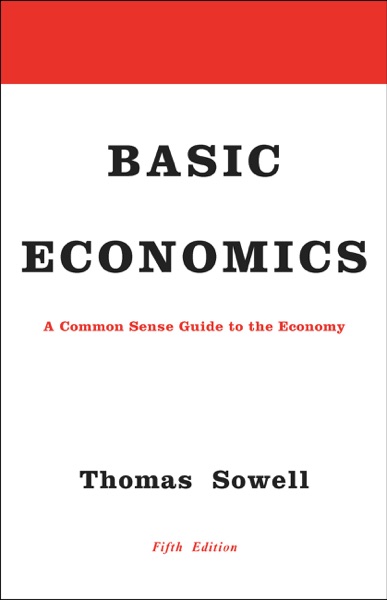
Basic Economics: A Common Sense Guide to the Economy
Thomas Sowell
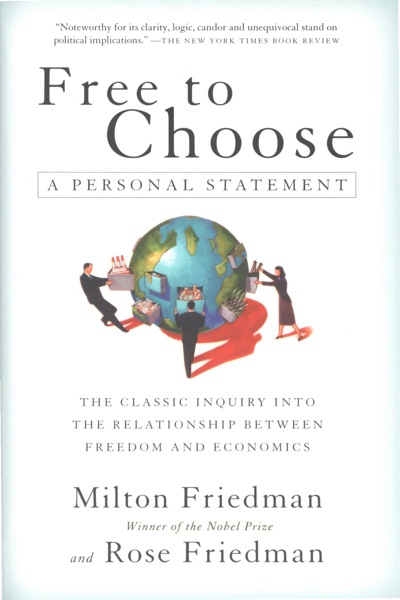
Free to Choose: A Personal Statement
Milton Friedman and Rose Friedman
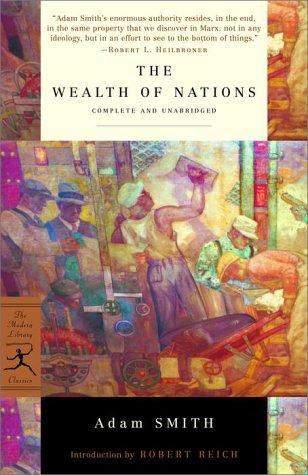
The Wealth of Nations
Adam Smith
Why Nations Fail: The Origins of Power, Prosperity, and Poverty
Daron Acemoglu and James A. Robinson
