Economics · Similar reads
Books like Freakonomics
The best books like Freakonomics are Thinking, Fast and Slow, Predictably Irrational, and Nudge: Improving Decisions About Health, Wealth, and Happiness. Freakonomics by Steven D. Levitt and Stephen J. Dubner is about incentives, hidden information, data analysis. If that's what drew you in, here are 12 books that share its DNA — each summarized on Superbook, and ready to chat with in the app.
- Thinking, Fast and Slow
01
Daniel Kahneman · Psychology
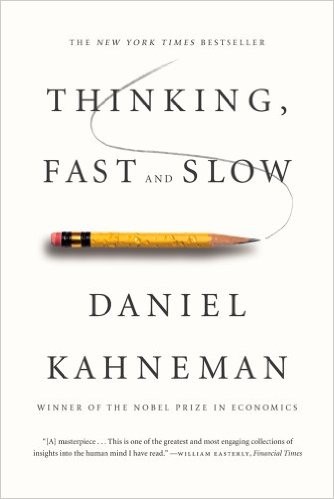
Thinking, Fast and Slow is Daniel Kahneman's account of the two cognitive systems that govern human thought.
Kahneman maps the two systems of thought and the biases behind them, the machinery underneath the irrational behaviour Freakonomics keeps catching in the act.
Read the summary → - Predictably Irrational
02
Dan Ariely · Psychology
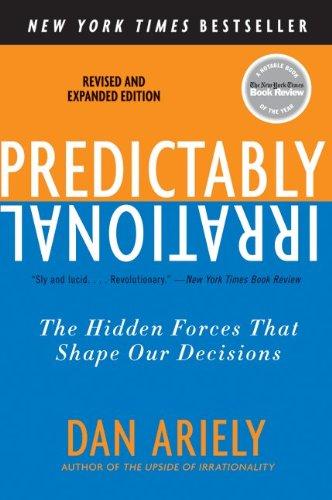
Predictably Irrational is Dan Ariely's examination of how humans make decisions that are consistently, systematically irrational — not random or arbitrary, but irrational in ways that follow patterns.
Ariely runs playful experiments to show our irrationality is systematic, not random, the same clever-study, surprising-result method Levitt loves.
Read the summary → - Nudge: Improving Decisions About Health, Wealth, and Happiness
03
Nudge: Improving Decisions About Health, Wealth, and Happiness
Richard H. Thaler and Cass R. Sunstein · Economics
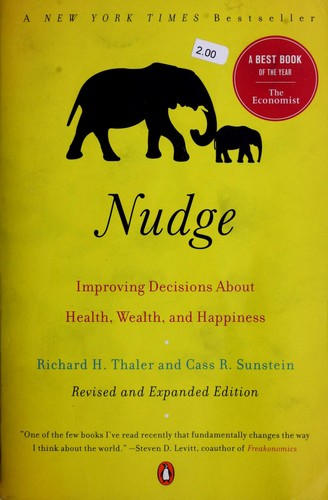
Nudge is Richard Thaler and Cass Sunstein's argument that the way choices are presented — the default option, the order of items, the framing of a question — powerfully shapes what people decide, often more than their own stated preferences.
Freakonomics diagnoses how incentives bend behaviour; Nudge engineers them, designing the small default choices that quietly steer the decisions we make.
Read the summary →
- Outliers: The Story of Success
04
Outliers: The Story of Success
Malcolm Gladwell · Psychology
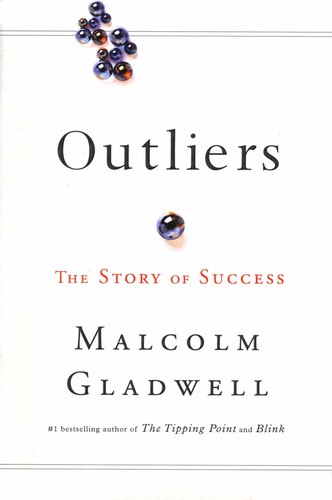
Outliers is Malcolm Gladwell's argument that exceptional success is less a product of individual genius or drive than it is of hidden advantages, timing, and accumulated opportunity.
Gladwell is Freakonomics' closest stylistic cousin: one counterintuitive thesis per chapter, told as a story, hunting the hidden causes of who really succeeds.
Read the summary → - Moneyball: The Art of Winning an Unfair Game
05
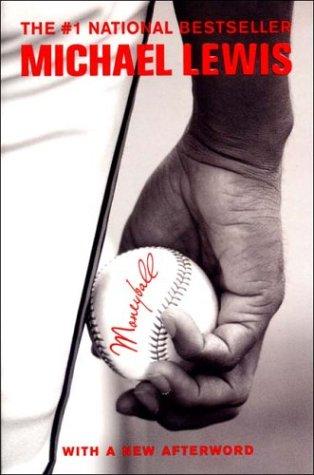
Moneyball: The Art of Winning an Unfair Game
Michael Lewis · Business
Moneyball is Michael Lewis's account of how Billy Beane, general manager of the Oakland Athletics, used statistical analysis to compete against teams with payrolls three times larger.
The purest Freakonomics move in the wild, a stat nobody valued overturning a century of baseball's expert conventional wisdom.
Read the summary → - The Big Short: Inside the Doomsday Machine
06
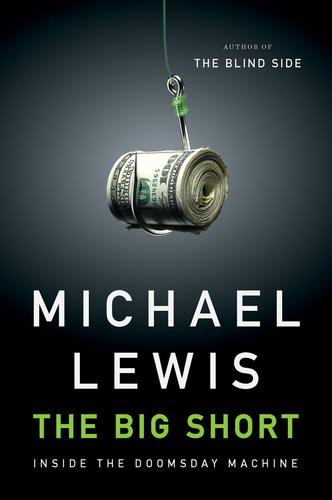
The Big Short: Inside the Doomsday Machine
Michael Lewis · Economics
The Big Short is Michael Lewis's account of the 2008 financial crisis as seen through the eyes of a handful of contrarians who saw the collapse coming, bet against the American housing market, and were right.
Lewis follows the few who read the housing market's hidden data correctly while everyone else looked away: incentives, bad information, and the crowd being wrong.
Read the summary → - The Black Swan: The Impact of the Highly Improbable
07
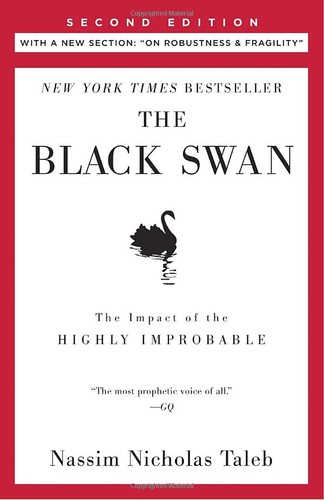
The Black Swan: The Impact of the Highly Improbable
Nassim Nicholas Taleb · Science
The Black Swan is Nassim Nicholas Taleb's argument that the most consequential events in history — financial crashes, technological breakthroughs, wars, pandemics — are not predictable outliers but structurally unpredictable ones.
Taleb's combative cousin to Freakonomics, on why the rare, unmodelled event runs the world and why the experts confidently miss it.
Read the summary → - The Undoing Project
08
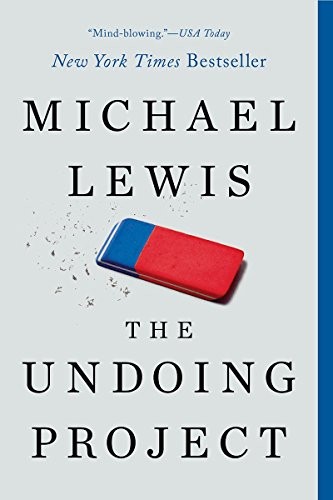
Michael Lewis · Psychology
Michael Lewis came to this subject sideways.
The Kahneman-and-Tversky origin story behind behavioural economics itself, where the ideas Freakonomics popularised actually came from.
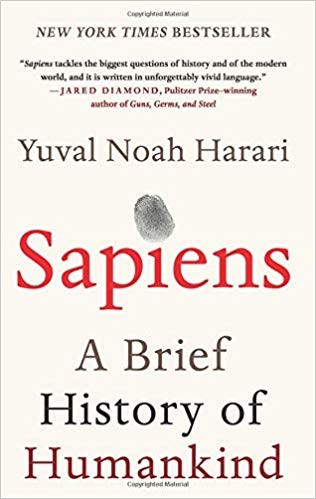
Read the summary → - Sapiens: A Brief History of Humankind
09
Sapiens: A Brief History of Humankind
Yuval Noah Harari · History
Sapiens traces the full arc of human history from the emergence of Homo sapiens in Africa roughly 70,000 years ago to the present.
Harari points the question-everything-you-assume lens at all of human history, delivering the same big, chapter-by-chapter reframes.
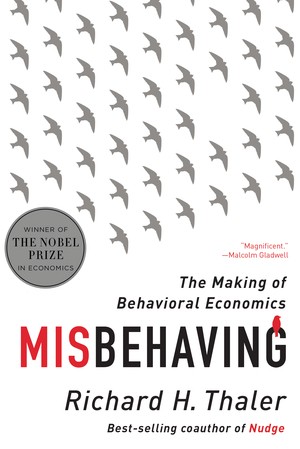
Read the summary → - Misbehaving: The Making of Behavioral Economics
10
Misbehaving: The Making of Behavioral Economics
Richard H. Thaler · Psychology
Richard Thaler is one of the founders of behavioral economics, the field that took the anomalies in standard economic theory seriously rather than dismissing them as noise.
Thaler's inside account of building behavioural economics, full of the small anomalies that break the rational-actor model Freakonomics enjoys puncturing.
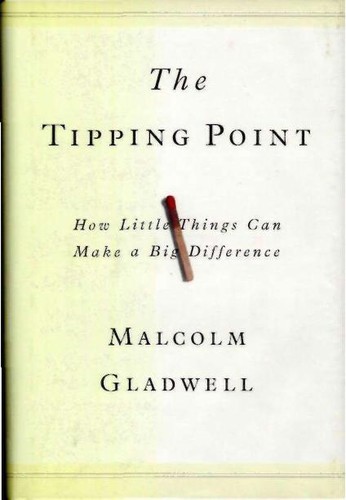
Read the summary → - The Tipping Point
11
Malcolm Gladwell · Psychology
The Tipping Point is Malcolm Gladwell's argument that social change happens in sudden, dramatic ways — the same way a virus tips into an epidemic — and that understanding the mechanics of those tipping moments lets you engineer them.
Gladwell on how tiny causes tip into big social epidemics, the hidden side of everything applied to how behaviour spreads.
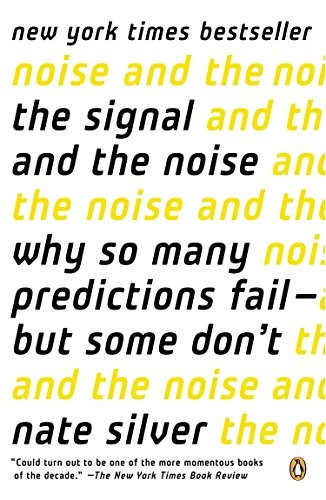
Read the summary → - The Signal and the Noise
12
Nate Silver · Science
Nate Silver made his reputation predicting baseball statistics and then political elections.
Nate Silver on telling real patterns from noise in data, the discipline that separates a genuine Freakonomics insight from a spurious correlation.
Read the summary →
Books like Freakonomics: quick answers
What are the best books like Freakonomics?
The best books like Freakonomics by Steven D. Levitt and Stephen J. Dubner are Thinking, Fast and Slow by Daniel Kahneman, Predictably Irrational by Dan Ariely, Nudge: Improving Decisions About Health, Wealth, and Happiness by Richard H. Thaler and Cass R. Sunstein, Outliers: The Story of Success by Malcolm Gladwell, Moneyball: The Art of Winning an Unfair Game by Michael Lewis, plus 7 more below. Each was chosen for themes it shares with Freakonomics, such as incentives, hidden information, data analysis.
What should I read after Freakonomics?
A natural next read after Freakonomics is Thinking, Fast and Slow by Daniel Kahneman. Kahneman maps the two systems of thought and the biases behind them, the machinery underneath the irrational behaviour Freakonomics keeps catching in the act. Other strong choices are Predictably Irrational by Dan Ariely, Nudge: Improving Decisions About Health, Wealth, and Happiness by Richard H. Thaler and Cass R. Sunstein, Outliers: The Story of Success by Malcolm Gladwell.
What books are similar to Freakonomics by Steven D. Levitt and Stephen J. Dubner?
Freakonomics centers on incentives, hidden information, data analysis. Books with a similar feel include Thinking, Fast and Slow by Daniel Kahneman, Predictably Irrational by Dan Ariely, Nudge: Improving Decisions About Health, Wealth, and Happiness by Richard H. Thaler and Cass R. Sunstein, Outliers: The Story of Success by Malcolm Gladwell, Moneyball: The Art of Winning an Unfair Game by Michael Lewis, The Big Short: Inside the Doomsday Machine by Michael Lewis — all free to read and chat with on Superbook.
