Science · Similar reads
Books like How Not to Be Wrong: The Power of Mathematical Thinking
The best books like How Not to Be Wrong: The Power of Mathematical Thinking are Thinking, Fast and Slow, The Signal and the Noise, and The Art of Statistics: How to Learn from Data. How Not to Be Wrong: The Power of Mathematical Thinking by Jordan Ellenberg is about mathematics, logic, probability. If that's what drew you in, here are 12 books that share its DNA — each summarized on Superbook, and ready to chat with in the app.
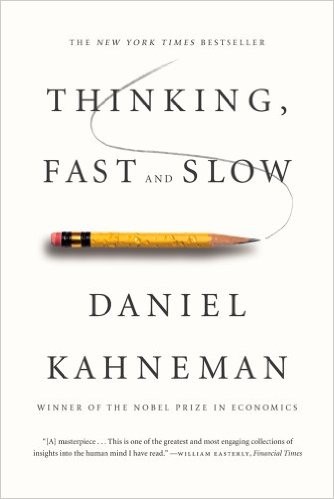
- Thinking, Fast and Slow
01
Daniel Kahneman · Psychology
Thinking, Fast and Slow is Daniel Kahneman's account of the two cognitive systems that govern human thought.
A kindred science read.
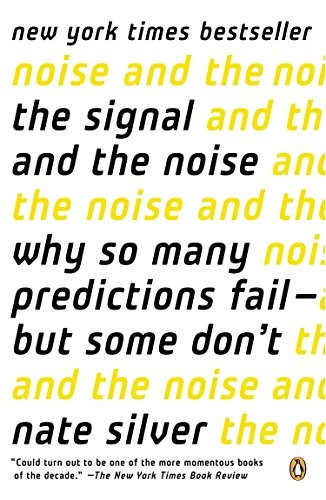
Read the summary → - The Signal and the Noise
02
Nate Silver · Science
Nate Silver made his reputation predicting baseball statistics and then political elections.
Both dig into probability.
Read the summary → - The Art of Statistics: How to Learn from Data
03
The Art of Statistics: How to Learn from Data
David Spiegelhalter · Science
David Spiegelhalter is one of Britain's most prominent statisticians, and this book is his attempt to translate statistical thinking for a general audience without dumbing it down.
Both dig into critical thinking.
Read the summary →
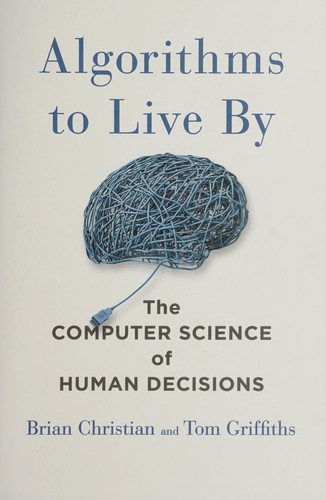
- Algorithms to Live By: The Computer Science of Human Decisions
04
Algorithms to Live By: The Computer Science of Human Decisions
Brian Christian and Tom Griffiths · Psychology
Brian Christian is a writer and Tom Griffiths is a cognitive scientist, and together they argue that computer science has worked out rigorous solutions to many of the problems humans face every day — when to stop searching for a better option, how to manage your schedule, how to sort your memory — and that these solutions are both interesting and useful.
A kindred science read.
Read the summary → - Our Mathematical Universe
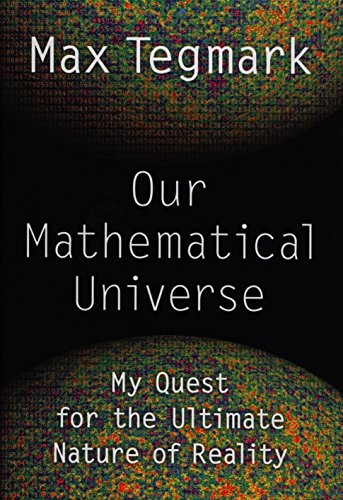
05
Max Tegmark · Science
Our Mathematical Universe is Max Tegmark's argument for what he calls the Mathematical Universe Hypothesis: the bold claim that the universe is not merely described by mathematics but is a mathematical structure.
Both dig into mathematics.
Read the summary → - A Rulebook for Arguments
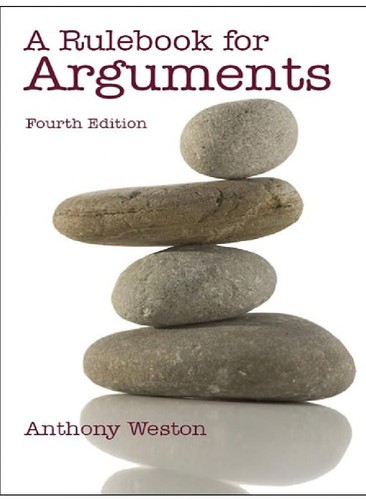
06
Anthony Weston · Philosophy
A Rulebook for Arguments is Anthony Weston's slim, widely assigned handbook on how to build and judge arguments.
Shares logic and critical thinking with How Not to Be Wrong: The Power of Mathematical Thinking.
Read the summary → - Mathematics: Its Content, Methods and Meaning
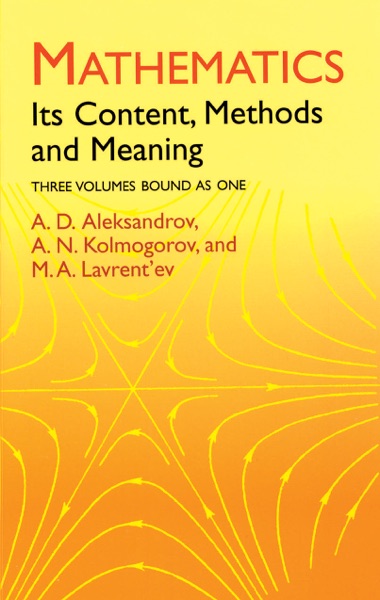
07
Mathematics: Its Content, Methods and Meaning
Aleksandrov, Kolmogorov & Lavrent'ev · Science
Mathematics: Its Content, Methods and Meaning is a three-volume survey of mathematics compiled by a group of eminent Soviet mathematicians, originally published in Russian in 1956 and translated into English by the American Mathematical Society in 1963.
Shares mathematics and logic with How Not to Be Wrong: The Power of Mathematical Thinking.
Read the summary → - Against the Gods: The Remarkable Story of Risk
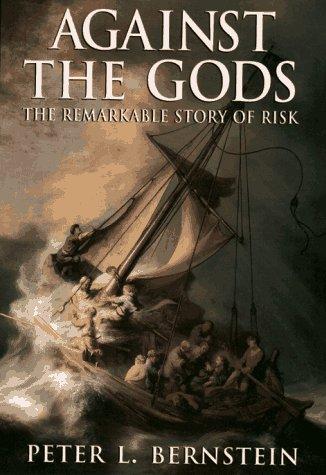
08
Against the Gods: The Remarkable Story of Risk
Peter L. Bernstein · History
Against the Gods is Peter Bernstein's intellectual history of how humanity learned to measure, quantify, and manage risk — a story he traces from ancient gambling in the Mediterranean through the development of modern probability theory, statistics, and financial derivatives.
Shares mathematics and probability with How Not to Be Wrong: The Power of Mathematical Thinking.
Read the summary → - The Great Mental Models

09
Shane Parrish · Self-help
The Great Mental Models is the first volume in Shane Parrish's series drawn from his Farnam Street blog, which he built into one of the most widely read sites on thinking and decision-making.
Shares critical thinking and reasoning with How Not to Be Wrong: The Power of Mathematical Thinking.
Read the summary → - Chaos: Making a New Science
10
James Gleick · Science
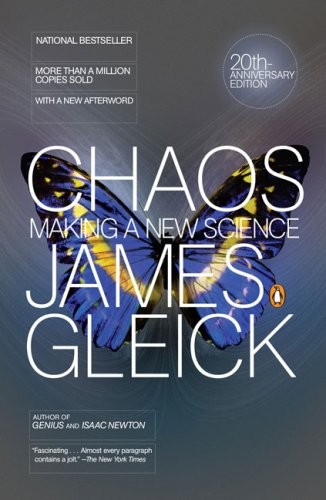
Chaos: Making a New Science, published in 1987, tells the story of how a loose network of scientists working across meteorology, mathematics, biology, and physics in the 1960s and 1970s developed chaos theory — the study of systems that are deterministic but unpredictable because tiny differences in initial conditions produce wildly different outcomes.
Both dig into mathematics.
Read the summary → - Deep Learning
11
Ian Goodfellow, Yoshua Bengio, and Aaron Courville · Science
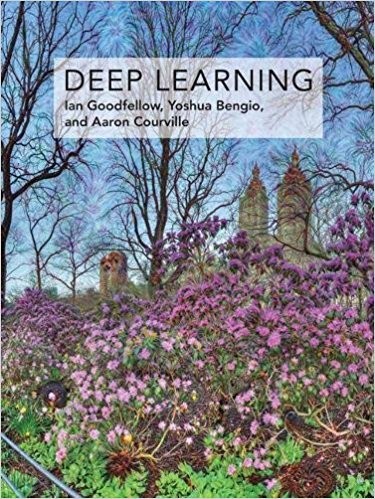
Deep Learning by Ian Goodfellow, Yoshua Bengio, and Aaron Courville is the standard graduate-level textbook on the mathematical and computational foundations of deep neural networks.
Both dig into mathematics.
Read the summary → - Fermat's Enigma

12
Simon Singh · Science
In 1637, Pierre de Fermat scrawled a note in the margin of a mathematics book claiming to have found a proof that no three positive integers can satisfy the equation a^n + b^n = c^n for any integer value of n greater than 2 — but that the margin was too narrow to contain it.
Both dig into mathematics.
Read the summary →
Books like How Not to Be Wrong: The Power of Mathematical Thinking: quick answers
What are the best books like How Not to Be Wrong: The Power of Mathematical Thinking?
The best books like How Not to Be Wrong: The Power of Mathematical Thinking by Jordan Ellenberg are Thinking, Fast and Slow by Daniel Kahneman, The Signal and the Noise by Nate Silver, The Art of Statistics: How to Learn from Data by David Spiegelhalter, Algorithms to Live By: The Computer Science of Human Decisions by Brian Christian and Tom Griffiths, Our Mathematical Universe by Max Tegmark, plus 7 more below. Each was chosen for themes it shares with How Not to Be Wrong: The Power of Mathematical Thinking, such as mathematics, logic, probability.
What should I read after How Not to Be Wrong: The Power of Mathematical Thinking?
A natural next read after How Not to Be Wrong: The Power of Mathematical Thinking is Thinking, Fast and Slow by Daniel Kahneman. A kindred science read. Other strong choices are The Signal and the Noise by Nate Silver, The Art of Statistics: How to Learn from Data by David Spiegelhalter, Algorithms to Live By: The Computer Science of Human Decisions by Brian Christian and Tom Griffiths.
What books are similar to How Not to Be Wrong: The Power of Mathematical Thinking by Jordan Ellenberg?
How Not to Be Wrong: The Power of Mathematical Thinking centers on mathematics, logic, probability. Books with a similar feel include Thinking, Fast and Slow by Daniel Kahneman, The Signal and the Noise by Nate Silver, The Art of Statistics: How to Learn from Data by David Spiegelhalter, Algorithms to Live By: The Computer Science of Human Decisions by Brian Christian and Tom Griffiths, Our Mathematical Universe by Max Tegmark, A Rulebook for Arguments by Anthony Weston — all free to read and chat with on Superbook.
