Just Babies: The Origins of Good and Evil by Paul Bloom is a 2013 psychology book about moral development, human nature, empathy. Infants have a genuine moral sense. By six months, babies prefer agents who help others over those who hinder them, suggesting moral evaluation precedes language and explicit teaching.
Summary
Paul Bloom's central question is how much morality is innate versus learned. Using research from his Yale infant cognition lab and from developmental psychology more broadly, Just Babies argues that babies come into the world with a surprisingly rich set of moral intuitions: a preference for helpful over harmful agents, a rudimentary sense of fairness, some capacity for empathy, and the beginnings of in-group/out-group discrimination. The moral life doesn't start from a blank slate.
The evidence is striking. Infants as young as six months prefer puppets who help others over those who hinder them. They show upset at unequal distributions of resources. They respond to the distress of others with something that looks behaviorally like empathy. This work challenges both the Hobbes view (humans are naturally selfish) and the Rousseau view (humans are naturally good until corrupted by civilization). The more accurate picture, Bloom argues, is that humans are naturally something in between: capable of genuine concern for others but only within a limited circle, prone to fairness but only in ways that often favor themselves, empathic but selective about whose suffering actually registers.
The bulk of the book is an account of what the innate moral kit contains, what it conspicuously lacks, and how culture, reason, and deliberate moral effort extend it. The innate kit gets us to basic prosocial behavior toward people we recognize as similar. What it doesn't get us to is concern for distant strangers, the willingness to extend fairness to outgroups, or the capacity to curb tribalism. Those extensions, Bloom argues, require reason — which is why he is skeptical of empathy as the primary driver of moral progress.
Bloom writes with characteristic clarity and wit, and the infant cognition research makes for genuinely surprising reading. The book is more descriptive than prescriptive — it doesn't tell you how to raise a moral child or build a more ethical society in any systematic way. But as a diagnosis of where human moral psychology starts and what it can and cannot do on its own, it is one of the more honest books in this literature.
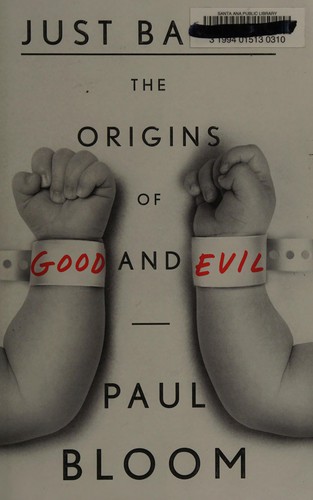
Talk to Just Babies: The Origins of Good and Evil like its author wrote you back.
Get the ideas that fit your life — not generic summaries.
- Chat with the book
- Audiobook-style main ideas
- Adapts to your life and goals
- Helps you take action
Key takeaways
- 1.
Infants have a genuine moral sense. By six months, babies prefer agents who help others over those who hinder them, suggesting moral evaluation precedes language and explicit teaching.
- 2.
The innate moral kit is limited by scope. We are naturally more prosocial toward familiar, similar people and instinctively more suspicious of the unfamiliar or different.
- 3.
Fairness intuitions appear early, but they are not impartial. Infants and children show a strong preference for equal distributions, but in practice often interpret fairness in ways that favor their own group.
- 4.
Empathy is real and evolutionarily ancient, but it is selective and unreliable as a moral guide. It is triggered most strongly by single, visible, proximate individuals and largely fails for statistical victims or distant outgroups.
- 5.
Reason, not empathy, is the engine of moral progress. Extending concern beyond one's natural circle — to strangers, future generations, animals — requires deliberate cognitive effort, not emotional expansion.
- 6.
The nature-versus-nurture framing is wrong. Morality involves both strong innate tendencies and significant cultural shaping. The question is which innate tendencies culture amplifies or inhibits.
- 7.
In-group favoritism and out-group suspicion are among the most robust findings in infant and adult moral psychology. They are not taught; they emerge early and persist unless actively counteracted.
- 8.
Disgust is a moral emotion with ancient evolutionary roots in pathogen avoidance, but it is easily extended to social groups, behaviors, and ideas where it has no biological relevance. Much moral condemnation is driven by disgust rather than harm assessment.
Discussion questions
Use these on your own, with a book club, or as chat starters in Superbook. Book club version, ready to copy or print →
- 1.
Bloom argues that the moral sense babies have is genuine but narrow. Looking at your own moral responses, how much of your empathy and fairness extends to people outside your immediate social circle?
- 2.
The preference for helpful over harmful agents appears before language. Does that finding change how you think about the relationship between reasoning and moral intuition in your own ethical judgments?
- 3.
Bloom claims reason, not empathy, is the engine of moral progress. Is that convincing? Can you think of cases where emotional expansion — not reasoning — drove someone to extend moral concern?
- 4.
In-group favoritism is described as innate rather than taught. What institutions or practices in your life most actively counteract that instinct? How effective do you think they are?
- 5.
The book suggests empathy is an unreliable guide because it responds to identifiable individuals and not statistical victims. How does knowing that change how you think about charitable giving or policy support?
- 6.
Disgust is shown to extend easily from biological to social domains. Can you identify a moral judgment you hold that on reflection might be more disgust-based than harm-based?
- 7.
Bloom is skeptical that we can extend our natural empathy to cover everyone equally. Is that a counsel of despair, or a realistic constraint that should shape how we design moral education and institutions?
- 8.
The infant research relies on looking-time and reach studies rather than verbal reports. How much confidence do you have in those methods as evidence for genuine moral evaluation versus mere preference?
- 9.
If the innate moral sense is both genuinely present and genuinely limited, what does that imply about which moral questions we should prioritize teaching versus which ones we can rely on instinct to handle?
- 10.
Bloom writes that humans are neither naturally good nor naturally bad, but something more specific. What is your own default assumption about human nature, and has this book shifted it?
- 11.
The research on infant fairness shows preferences for equal distributions, but in practice children enforce fairness in ways that favor their own group. At what age does this tension between fairness principle and in-group favoritism resolve in your experience, if it does?
- 12.
If you accepted Bloom's view that empathy is morally unreliable, what would you change about how you make decisions about who to help?
Themes
Frequently asked questions
-
What is Just Babies about?
It is about the origins of human morality — specifically, what moral intuitions babies are born with, what those instincts can and cannot do on their own, and why extending morality beyond our natural circle requires reason rather than just deeper empathy.
-
Is Just Babies worth reading?
Yes, especially for readers interested in moral psychology and infant cognition. The research findings are genuinely surprising and the writing is accessible. Bloom's argument about empathy's limits is worth engaging with even if you ultimately disagree.
-
How does Just Babies relate to Paul Bloom's Against Empathy?
Just Babies describes the evidence for innate moral instincts including empathy. Against Empathy extends the argument about empathy's limitations into a direct case against it as a primary moral guide. Reading Just Babies first gives the empirical groundwork for the later book's normative argument.
-
Who should read Just Babies?
Parents, educators, and anyone who thinks seriously about how moral character develops. Also useful for people who want a scientifically grounded account of human nature that doesn't reduce to either optimism or cynicism.
-
What is the most surprising finding in Just Babies?
That six-month-old infants prefer helping agents over hindering agents when watching puppet shows — before they have language, explicit moral teaching, or developed social reasoning. This suggests moral evaluation is built into early cognition, not installed by socialization.
Similar books
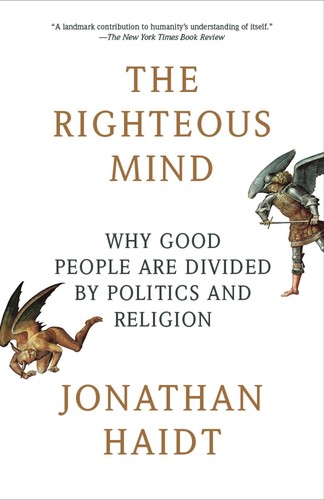
The Righteous Mind: Why Good People Are Divided by Politics and Religion
Jonathan Haidt
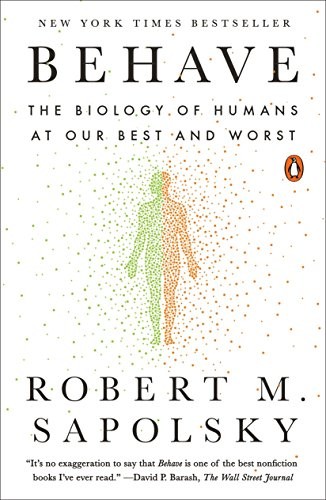
Behave: The Biology of Humans at Our Best and Worst
Robert M. Sapolsky
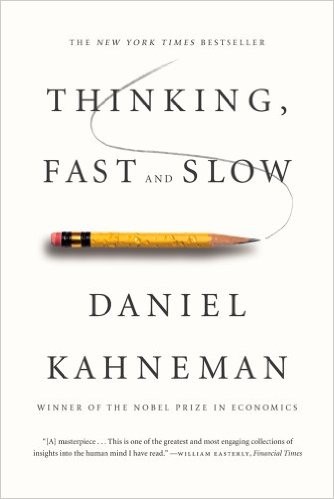
Thinking, Fast and Slow
Daniel Kahneman
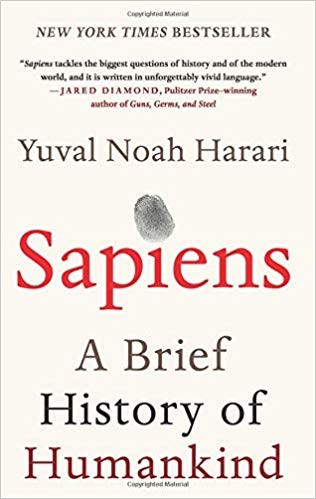
Sapiens: A Brief History of Humankind
Yuval Noah Harari
