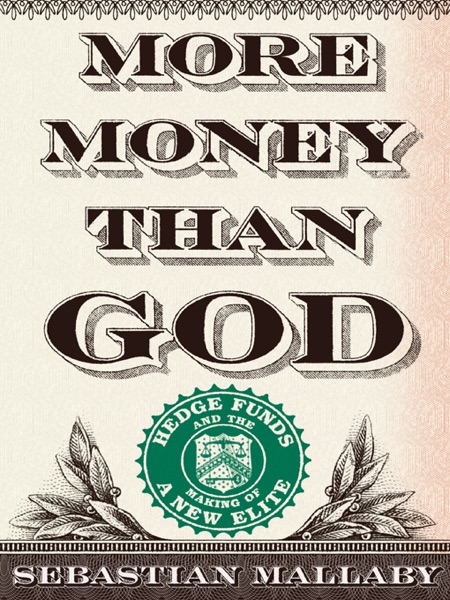
More Money Than God by Sebastian Mallaby is a 2010 economics book about hedge funds, financial history, risk. Alfred Winslow Jones invented the hedge fund structure in 1949 — leveraged long positions offset by short sales, plus a performance fee — and most of what followed is variation on that original design.
Summary
Sebastian Mallaby's history of hedge funds begins with Alfred Winslow Jones, who in 1949 invented the basic structure that still defines the industry: borrow money to buy what you think will go up, sell short what you think will go down, take a 20 percent cut of the profits. The book traces the industry from that origin through George Soros breaking the Bank of England in 1992, through Julian Robertson's Tiger Management, through the Long-Term Capital Management collapse of 1998, to the crisis of 2008 and beyond.
The central argument is counterintuitive. Mallaby's contention is that hedge funds — despite their opacity, their fees, and their occasional spectacular blowups — have generally been a stabilizing force in financial markets, not a destabilizing one. They make markets more efficient by trading against mispricing. They tend to be short when markets are euphoric and long when everyone else has fled. The firms that survived across decades did so by being right about things that consensus opinion had wrong, not by riding leverage into a bubble.
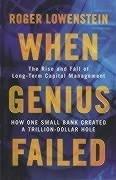
The book is strongest as character study. Soros is drawn with real complexity — intellectually brilliant, philosophically serious, and willing to take positions of such size that they could move the markets he was betting on. Robertson ran Tiger with the obsessiveness of a sports coach. Paul Tudor Jones and Michael Steinhardt get full chapters. Mallaby interviewed most of the major figures, which gives the narrative an intimacy that financial histories often lack. The LTCM chapter, covering a $125 billion collapse driven by Nobel laureates who had solved risk mathematically and then met an event outside their model, is particularly good.
The book has limits. It was completed before the full implications of algorithmic and high-frequency trading became clear, and some of its conclusions about hedge fund stability look different in light of developments since 2010. But as a historical account of how the industry evolved, who built it, and what the operating philosophy of the best practitioners actually was, it remains the definitive single volume.
Talk to More Money Than God like its author wrote you back.
Get the ideas that fit your life — not generic summaries.
- Chat with the book
- Audiobook-style main ideas
- Adapts to your life and goals
- Helps you take action
Key takeaways
- 1.
Alfred Winslow Jones invented the hedge fund structure in 1949 — leveraged long positions offset by short sales, plus a performance fee — and most of what followed is variation on that original design.
- 2.
The best hedge funds make markets more efficient by taking the other side of crowd behavior. They buy when everyone is selling and short when everyone is buying, which tends toward stability rather than instability.
- 3.
George Soros's reflexivity theory holds that market prices influence the fundamentals they are supposed to reflect — creating feedback loops that standard efficient-market models ignore.
- 4.
LTCM's collapse in 1998 illustrates the specific danger of extreme leverage combined with models that treat historical correlations as stable. The fund was right about most of its positions but couldn't survive the liquidity crisis that preceded their resolution.
- 5.
Performance fees align manager incentives with investor returns in theory, but the two-and-twenty structure creates an asymmetry: managers capture upside but investors bear the downside of total fund failure.
- 6.
The most durable hedge fund managers — Soros, Robertson, Simons — had idiosyncratic intellectual frameworks that deviated from both academic finance and Wall Street consensus. Their edge was usually epistemic, not just informational.
- 7.
Julian Robertson's Tiger Management combined stock-picking obsessiveness with a mentor culture that trained a generation of "Tiger cubs" who went on to run major funds of their own.
- 8.
Hedge funds did not cause the 2008 crisis; the major drivers were banks and mortgage originators outside the hedge fund structure. Many hedge funds profited by recognizing and betting against the bubble.
Discussion questions
Use these on your own, with a book club, or as chat starters in Superbook. Book club version, ready to copy or print →
- 1.
Mallaby argues hedge funds generally stabilize markets rather than destabilize them. Does that claim match your prior assumptions about the industry? What evidence would change your view?
- 2.
George Soros made a billion dollars in a single day by betting against the British pound. Is that kind of trade socially productive, destructive, or simply neutral?
- 3.
The LTCM story features two Nobel laureates whose model was mathematically sophisticated and empirically well-supported, and who still blew up catastrophically. What does that suggest about the limits of formal models in finance?
- 4.
The performance fee structure (20 percent of profits) is defended as aligning manager and investor interests. What are the ways it misaligns them, and what would a better structure look like?
- 5.
Reflexivity — the idea that beliefs about markets affect the fundamentals those markets reflect — is Soros's central contribution. Can you think of a recent example where this feedback loop was visible?
- 6.
Mallaby profiles a series of men (almost exclusively men) with extreme, obsessive personalities. Is that personality type a cause of their success, a byproduct of it, or a coincidence?
- 7.
Tiger Management and Soros's Quantum Fund both collapsed or contracted sharply after long periods of dominance. What does their decline suggest about the sustainability of any investment edge?
- 8.
Hedge funds are largely inaccessible to retail investors because of regulatory minimums. Is that restriction a reasonable consumer protection or an unjustified barrier that keeps the best returns for the wealthy?
- 9.
Jim Simons's Renaissance Technologies uses quantitative models that its operators themselves don't fully understand. Does it matter whether a profitable strategy has a human-comprehensible explanation?
- 10.
The book was published in 2010. Which of Mallaby's conclusions do you think have aged well, and which have been complicated by developments since then?
- 11.
What would you take from the best practitioners Mallaby profiles and apply to investment decisions you make, even at a much smaller scale?
Themes
Frequently asked questions
-
Is More Money Than God worth reading?
Yes, especially if you want a well-researched narrative history of how the hedge fund industry developed. The character studies are genuinely engaging and Mallaby's argument — that the industry is less sinister than its reputation — is argued carefully enough to be worth considering even if you disagree.
-
How does this book compare to The Big Short?
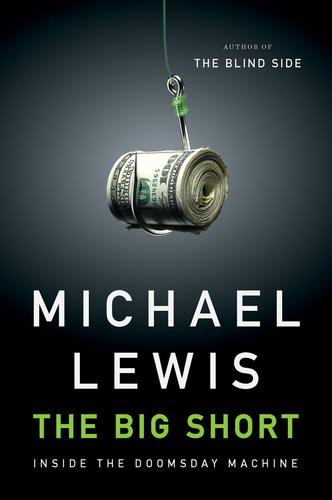
The Big Short is focused on one episode (the 2008 crisis) and is more journalistic and character-driven. More Money Than God is broader — sixty years of history — and more analytical. Both are compelling; this one requires more patience.
-
What is the main argument of More Money Than God?
That hedge funds, despite their opacity and high fees, are generally a stabilizing force in financial markets because they trade against mispricing and crowd behavior. The counterexamples — LTCM especially — are acknowledged, but Mallaby argues they are exceptions.
-
Who should read this book?
People working in finance or interested in financial history, investors who want to understand the industry beyond its reputation, and readers drawn to the psychology of extreme risk-taking. It's accessible to general readers with patience for financial detail.
-
How long does it take to read?
About seven to eight hours. The chapters vary in density — the character profiles are fast; the passages on financial mechanics are slower. The LTCM chapter in particular rewards careful reading.