Sleep Smarter by Shawn Stevenson is a 2014 health book about sleep, recovery, circadian rhythm. Light exposure is the primary regulator of circadian rhythm. Evening exposure to artificial blue light suppresses melatonin production and delays sleep onset, often by one to two hours.
Summary
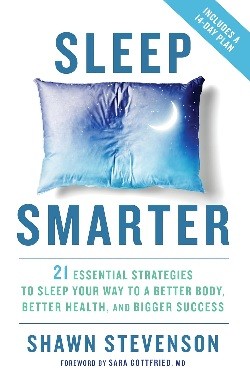
Sleep Smarter is Shawn Stevenson's practical guide to improving sleep quality. Stevenson, a fitness and nutrition podcaster who reversed his own serious health problems partly through addressing sleep, wrote the book as a collection of evidence-backed and experiential strategies for getting more and better rest. The book is structured as a twenty-one-day program of sleep improvements, each chapter adding a new practice or addressing a common sleep-disrupting habit.
The book covers a wide range of factors that influence sleep: light exposure and its effect on melatonin production, the importance of sleeping in a cool and dark environment, the timing of caffeine and alcohol consumption, the relationship between exercise and sleep quality, the role of nutrition in supporting sleep hormones, and the psychological dimensions of sleep anxiety. Stevenson draws on research from sleep science as well as his clinical and coaching experience.
Several of the book's arguments are particularly well-supported. The case for reducing artificial light exposure in the evenings — especially blue-spectrum light from screens — is grounded in solid circadian biology. The section on sleep environment temperature aligns with research on core body temperature and sleep onset. The importance of consistent sleep timing, even on weekends, reflects what sleep researchers call sleep regularity as a key predictor of health outcomes.
The book's weaknesses are characteristic of the wellness genre. Stevenson is enthusiastic in ways that sometimes outrun the evidence, and a few recommendations rest more on plausibility than demonstrated efficacy. The twenty-one-day structure can feel formulaic, and the tone occasionally tips from informative to promotional. Still, the practical interventions are mostly low-cost and low-risk, and many readers report meaningful improvements simply from addressing light, temperature, and timing. As introductions to sleep optimization go, Sleep Smarter is accessible and actionable.
Talk to Sleep Smarter like its author wrote you back.
Get the ideas that fit your life — not generic summaries.
- Chat with the book
- Audiobook-style main ideas
- Adapts to your life and goals
- Helps you take action
Key takeaways
- 1.
Light exposure is the primary regulator of circadian rhythm. Evening exposure to artificial blue light suppresses melatonin production and delays sleep onset, often by one to two hours.
- 2.
Core body temperature needs to drop for sleep to begin. A cooler bedroom — around 65 to 68 degrees Fahrenheit — facilitates this and consistently improves sleep quality in research settings.
- 3.
Caffeine has a half-life of five to six hours in most adults. Consuming it after midday keeps measurable levels in the bloodstream at bedtime, degrading sleep even when people feel they can fall asleep normally.
- 4.
Consistent sleep and wake times, even on weekends, stabilize the circadian rhythm. Social jetlag — inconsistent timing on weekends — has measurable negative effects on metabolic and cardiovascular health.
- 5.
Exercise improves sleep quality, particularly deep slow-wave sleep, but intense training too close to bedtime can delay sleep onset by raising core temperature and cortisol.
- 6.
Alcohol reduces REM sleep. It may help people fall asleep faster but it fragments sleep in the second half of the night, leaving users less rested even after a full night's duration.
- 7.
Magnesium and other nutrients play roles in the production of GABA and melatonin. Deficiencies, common in Western diets, can contribute to sleep difficulties.
- 8.
The sleep environment matters more than most people acknowledge. Darkness, quiet, temperature, and air quality all affect sleep architecture in ways that are straightforward to address.
Discussion questions
Use these on your own, with a book club, or as chat starters in Superbook. Book club version, ready to copy or print →
- 1.
Stevenson describes his own health deterioration as a catalyst for taking sleep seriously. Is there a threshold of suffering that typically precedes genuine lifestyle change, or is it possible to act before crisis?
- 2.
The book argues that light exposure is the single biggest controllable factor in sleep quality. How much of your current light environment — phone use, overhead lighting, bedroom conditions — did you design intentionally?
- 3.
Caffeine's long half-life means afternoon coffee affects sleep you may not connect to it. How would you run an experiment to test whether caffeine is affecting your own sleep?
- 4.
Social jetlag — the mismatch between weekday and weekend sleep timing — accumulates like regular jetlag. What would you have to give up to maintain consistent sleep timing seven days a week?
- 5.
Stevenson recommends getting morning sunlight within thirty minutes of waking. How feasible is that for your current life, and what would make it more possible?
- 6.
The book connects sleep quality to weight regulation, cognitive function, athletic performance, and mental health. Which of those connections surprised you most?
- 7.
Alcohol's effect on sleep is well-documented but rarely discussed in conversations about drinking. Does knowing it suppresses REM sleep change how you think about evening alcohol consumption?
- 8.
Many of the book's recommendations are low-cost — dark curtains, earlier caffeine cutoff, cooler bedroom. What has stopped you from already implementing the ones you've known about?
- 9.
Sleep anxiety — worrying about not sleeping well — is itself a cause of poor sleep. How would you approach someone whose main sleep problem is the fear of not sleeping?
- 10.
The book was written for individual optimization. But sleep is also a social and structural issue — shift workers, caregivers, and people in noisy neighborhoods face constraints individuals can't solve alone. How much of Stevenson's framework applies across different life circumstances?
- 11.
If you ran Stevenson's twenty-one-day protocol seriously, which week-one changes would feel easy and which would require real sacrifice?
Themes
Frequently asked questions
-
Is Sleep Smarter backed by science?
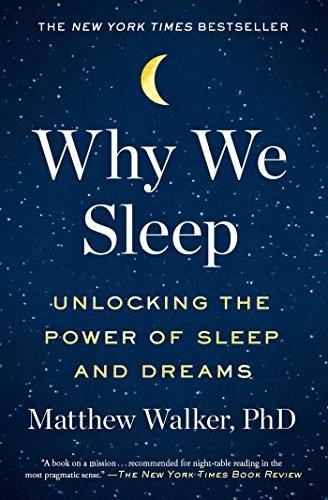
Much of it is. The core recommendations around light, temperature, caffeine timing, and sleep regularity align well with published sleep research. Some sections lean more on anecdote and wellness convention. Stevenson is not a sleep researcher, so readers should cross-check the more specific claims against dedicated sources like Why We Sleep.
-
How long does it take to read Sleep Smarter?
Around three to four hours. It's structured as a twenty-one-day program with one chapter per day, so it's designed to be read over three weeks rather than in a sitting — though most readers do read it straight through.
-
What is the single most impactful change from Sleep Smarter?
Based on reader reports and the underlying science, reducing artificial light exposure in the two hours before bed — particularly from screens — is the most impactful single change. It directly affects melatonin production and sleep onset.
-
Is Sleep Smarter better than Why We Sleep?
They serve different purposes. Why We Sleep by Matthew Walker is a more rigorous science-based account of why sleep matters. Sleep Smarter is more practical and action-oriented. Reading Walker first and using Stevenson for implementation works well.
-
Who should read Sleep Smarter?
People who know they sleep poorly and want practical, concrete strategies rather than an explanation of sleep science. It's most useful for readers who are willing to experiment with their environment and habits and measure the results.