Breath: The New Science of a Lost Art by James Nestor is a 2020 science book about breathing, human physiology, health optimization. Most people breathe too fast, through their mouths, taking shallow chest breaths. This pattern chronically lowers CO2 levels and makes oxygen delivery to tissues less efficient.
Summary
Breath is James Nestor's investigation into one of the most basic and overlooked aspects of human health: how we inhale and exhale. Nestor spent a decade reporting on pulmonology labs, free-diving records, ancient yogic texts, and Stanford clinical trials to reach a conclusion that sounds almost absurd: most people in the modern world are breathing wrong, and the consequences run from bad sleep to crooked teeth to anxiety disorders.
The book moves between Nestor's own experiments — including a Stanford study where researchers blocked his nose with silicone plugs for ten days to document the effects of mouth-breathing — and a wide cast of researchers, athletes, and practitioners who have spent careers studying breath. He traces how mouth-breathing became normalized through industrialization and processed food, how it reshaped the human skull and airway over generations, and why nasal breathing, slower exhalation, and breath retention have measurable effects on blood pressure, heart rate variability, and CO2 tolerance. The core physiological claim: most of us over-breathe, taking too many shallow breaths per minute, chronically expelling CO2 before tissues can absorb oxygen efficiently.
The second half shifts toward intervention. Nestor works through specific techniques: the Bohr effect, box breathing, the Buteyko method, Tummo, Sudarshan Kriya, and extended exhalations. Some are grounded in peer-reviewed research; others are supported mainly by practitioner testimony and Nestor's own self-experimentation. He is careful to note when the science is thin, which makes the more rigorous findings feel more credible. The practical prescription is surprisingly simple: breathe through your nose, slow the rate to around six breaths per minute, extend the exhale. These aren't exotic protocols — they're adjustments anyone can test in an afternoon.
Nestor writes like a science journalist rather than a wellness advocate, which keeps the book grounded when the material gets esoteric. He is candid about the limits of available research and avoids promising transformation. The result is a book that is genuinely surprising — not because the ideas are radical, but because something this fundamental has been so thoroughly ignored by mainstream medicine. The weaknesses are real: self-experimentation is not a clinical trial, and some chapters lean harder on anecdote than data. But for anyone who has ever snored, slept poorly, or dealt with chronic stress, Breath asks a question worth taking seriously.
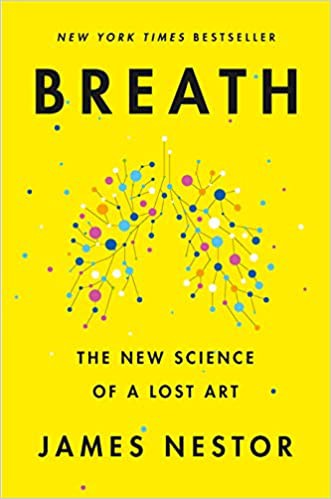
Talk to Breath: The New Science of a Lost Art like its author wrote you back.
Get the ideas that fit your life — not generic summaries.
- Chat with the book
- Audiobook-style main ideas
- Adapts to your life and goals
- Helps you take action
Key takeaways
- 1.
Most people breathe too fast, through their mouths, taking shallow chest breaths. This pattern chronically lowers CO2 levels and makes oxygen delivery to tissues less efficient.
- 2.
Nasal breathing filters air, humidifies it, and produces nitric oxide, which dilates blood vessels and has antimicrobial properties. Mouth-breathing provides none of these benefits.
- 3.
The Bohr effect explains why CO2 matters: hemoglobin releases oxygen to tissues only in the presence of sufficient carbon dioxide. Breathing less, paradoxically, can deliver more oxygen.
- 4.
Modern diets of soft, processed foods have shrunk the human jaw and airway over generations. Crooked teeth and sleep apnea are, in part, evolutionary artifacts of this dietary shift.
- 5.
A breathing rate of around six breaths per minute — roughly 5.5 seconds in and 5.5 seconds out — aligns with heart rate variability patterns linked to improved cardiovascular and autonomic function.
- 6.
The Buteyko method, developed by a Soviet physician in the 1950s, reduces breathing volume and has clinical evidence behind it for asthma. It remains largely outside mainstream Western practice.
- 7.
Breath-hold training raises CO2 tolerance, which translates into calmer responses to stress, less air hunger, and better sleep for many practitioners.
- 8.
Ancient cultures developed breathing practices — pranayama, Tummo, Sudarshan Kriya — that map onto the same physiological levers modern researchers have begun studying. The overlap is more than coincidence.
Discussion questions
Use these on your own, with a book club, or as chat starters in Superbook. Book club version, ready to copy or print →
- 1.
Nestor argues that breathing is something most people do wrong their entire lives without knowing it. Did reading the book change how you paid attention to your own breath during the day?
- 2.
The Stanford nose-plugging experiment was extreme, but it produced dramatic results in ten days. What does that suggest about how sensitive the body is to changes in breathing pattern?
- 3.
Nestor traces jaw shrinkage and airway narrowing to modern diets. If this is accurate, what does it imply for how we think about 'normal' health baselines — are we comparing to a degraded average?
- 4.
The book gives a lot of space to self-experimentation. How much weight do you give to Nestor's personal experience versus the clinical studies he cites?
- 5.
Several of the breathing techniques in the book come from spiritual or religious traditions. Does their origin affect whether you'd try them? Should it?
- 6.
Nestor describes breathing researchers who work outside mainstream medicine and have faced institutional skepticism for decades. How do you decide when a marginalized idea deserves more attention versus when skepticism is warranted?
- 7.
The core prescription — slower, nasal, fewer breaths — is simple enough to test at no cost. Have you tried it, and if so, what did you notice?
- 8.
Mouth-breathing during sleep is associated with snoring, sleep apnea, and poor sleep quality. If you or someone you know has these problems, does the book change how you think about the cause?
- 9.
Nestor argues that anxiety and breath are bidirectionally linked — that changing the breath changes the emotional state. Is that a physiological claim, a psychological one, or both?
- 10.
The Buteyko method has clinical trials supporting it for asthma, yet it remains almost unknown to most patients. What does that gap suggest about how medical knowledge spreads?
- 11.
Which of the breathing techniques Nestor describes would you most want to try, and which would you dismiss? What criteria are you using?
- 12.
Breath sits at the intersection of ancient practice and modern science. Do you find that framing persuasive, or does it blur an important line between the two?
Themes
Frequently asked questions
-
Is Breath by James Nestor worth reading?
Yes, especially if you have any issues with sleep, snoring, anxiety, or asthma — or if you've simply never thought about how you breathe. Nestor writes clearly, acknowledges where the science is preliminary, and the core findings are well-sourced. Readers without health concerns may find the second half repetitive, but the first half is almost universally surprising.
-
How long does it take to read Breath?
Around four to five hours at average reading pace for the 280-page book. The chapters are short and the writing moves quickly. Most readers finish in two to three sittings.
-
What is the main takeaway from Breath?
Breathe through your nose, slow your breathing rate to around six breaths per minute, and extend your exhalations. These adjustments have measurable effects on CO2 tolerance, heart rate variability, and sleep quality. The bigger claim is that modern life has degraded how humans breathe, and that correcting it has outsized returns for health.
-
Who should read Breath?
People dealing with sleep apnea, snoring, asthma, or chronic stress will find the most direct application. It's also useful for endurance athletes, meditators, and anyone curious about why ancient breathing practices have survived for thousands of years. Readers looking for a strict clinical review may want to supplement with primary sources.
-
Does Breath have solid science behind it?
Partly. The research on nasal breathing, CO2 physiology, and breathing rate is well-established. The sections on Tummo, Sudarshan Kriya, and some historical claims rely more on anecdote and practitioner testimony. Nestor is generally transparent about which is which, which makes the stronger sections more credible by contrast.
-
How is Breath different from Why We Sleep?
Both books argue that a basic biological function — breathing, sleeping — has been badly neglected by modern medicine and modern life. Why We Sleep is more heavily research-backed and more alarming in tone. Breath is more exploratory and personal, with more self-experimentation and historical breadth. They pair well together.
Similar books
Why We Sleep
Matthew Walker
Outlive: The Science and Art of Longevity
Peter Attia
The Body Keeps the Score
Bessel van der Kolk
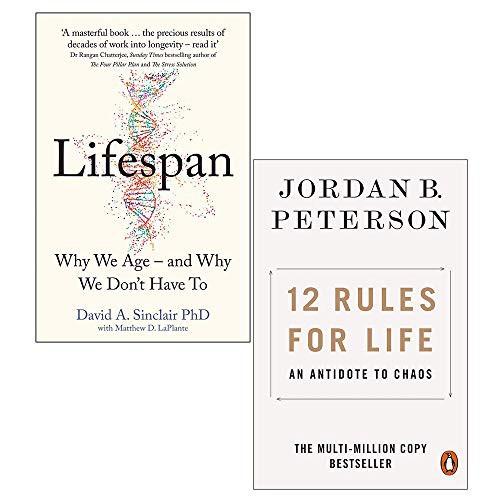
Lifespan: Why We Age—and Why We Don't Have To
David A. Sinclair
