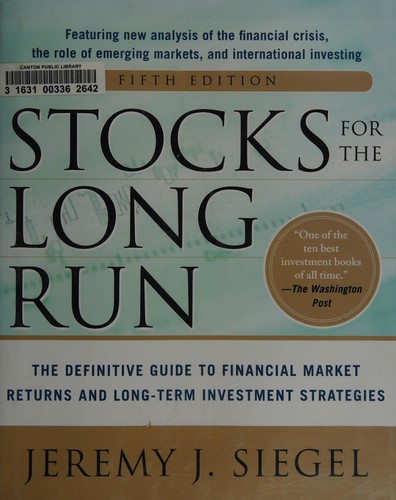
Stocks for the Long Run by Jeremy J. Siegel is a 1994 economics book about stock market history, long-term investing, asset allocation. Over every 20- to 30-year period in US history, stocks have outperformed bonds, gold, and cash on an inflation-adjusted basis. Time horizon is the most important variable in risk management.
Summary
Stocks for the Long Run is Jeremy Siegel's comprehensive empirical case for equities as the dominant long-term asset class. The Wharton finance professor assembled nearly 200 years of US market data to argue that stocks — despite their volatility over any short horizon — have produced superior inflation-adjusted returns compared to bonds, gold, and cash over every 30-year period in American history. The first edition appeared in 1994 and has been updated through multiple editions as Siegel incorporated new data and responded to critics.
The book's central finding is blunt: the real return on stocks has averaged roughly 6.5 to 7 percent per year over two centuries, a figure that has remained remarkably stable across periods of war, deflation, inflation, financial crisis, and political turmoil. Bonds and Treasury bills have historically underperformed stocks on a real basis over long periods, despite being perceived as safer. Siegel's conclusion is that for investors with long horizons — 20 years or more — equities are not merely acceptable but are the lowest-risk way to maintain purchasing power.
Beyond the central thesis, the book covers stock valuation, the impact of taxes and inflation on different asset classes, international diversification, sector investing, and the historical behavior of the stock market during economic crises. Later editions address factors investing, the equity risk premium debate, and how globalization has changed the calculus for US investors. It is a reference as much as a narrative, and many readers treat it as such.
The limitation is the reliance on US historical data. Critics note that US market performance over two centuries may reflect survivorship bias — the US happened to be the dominant economy; other countries' markets did not always recover from setbacks. Siegel addresses this challenge in later editions but does not fully resolve it. The book is most useful as a historical grounding for why long-term equity investing has earned its reputation, rather than a guarantee about what future returns will be.
Talk to Stocks for the Long Run like its author wrote you back.
Get the ideas that fit your life — not generic summaries.
- Chat with the book
- Audiobook-style main ideas
- Adapts to your life and goals
- Helps you take action
Key takeaways
- 1.
Over every 20- to 30-year period in US history, stocks have outperformed bonds, gold, and cash on an inflation-adjusted basis. Time horizon is the most important variable in risk management.
- 2.
The real return on US equities has averaged roughly 6.5 to 7 percent per year over nearly two centuries, a figure stable enough that Siegel calls it the Siegel constant.
- 3.
Short-term stock volatility is high, but long-term return volatility is lower than bonds. Holding stocks for 20 years reduces real return variance below that of bonds held for the same period.
- 4.
Inflation is the silent tax that destroys the real returns of bonds and cash over long periods. Equities provide inflation protection that fixed-income instruments generally do not.
- 5.
Valuation matters for near-term returns. Buying stocks at high P/E ratios historically produces lower subsequent returns; buying at low P/E ratios produces higher ones. But timing these cycles is unreliable.
- 6.
International diversification adds return potential and reduces home-country concentration risk, though correlations across markets rise during global crises.
- 7.
Dividends have historically accounted for a large fraction of total stock market return. High-dividend strategies have outperformed in some historical periods.
- 8.
The equity risk premium — the extra return stocks earn over bonds — has been large enough historically to justify the volatility for investors who can sustain their positions through bear markets.
Discussion questions
Use these on your own, with a book club, or as chat starters in Superbook. Book club version, ready to copy or print →
- 1.
Siegel's data covers nearly 200 years of US market history. How much weight do you give historical returns when thinking about your own investment future?
- 2.
The US may be a survivorship bias case — the country that happened to dominate the global economy. How does that possibility affect how you use Siegel's data?
- 3.
The book argues that long-horizon investors face less real risk in equities than in bonds. Does that argument change how you think about your own asset allocation?
- 4.
Siegel defines risk primarily as real purchasing power loss over time, not short-term volatility. Do you agree with that definition? How do you define risk for your own portfolio?
- 5.
The stock market has lost 30 to 50 percent of its value several times in the past century and always recovered. How confident are you that you would hold equities through a 40 percent decline rather than selling?
- 6.
Siegel's constant — a 6.5 to 7 percent real return on equities — has held for 200 years. Do you believe it will hold for the next 50? What would have to change for it not to?
- 7.
The book was first published in 1994, before the dot-com bubble and the 2008 financial crisis. Did those events change the core thesis, or were they well within the range of historical volatility the book describes?
- 8.
Inflation erodes bonds but equities provide a hedge. How are you personally thinking about inflation risk in your current portfolio?
- 9.
Siegel covers sector investing and argues that some sectors (e.g. energy, healthcare) have historically outperformed. How do you think about sector tilts in a largely passive portfolio?
- 10.
The book makes a case for a high equity allocation relative to conventional wisdom. If you increased your stock allocation by 10 percentage points, what would that mean for your sleep at night?
- 11.
International diversification is one of Siegel's recommendations in later editions. How much of your equity exposure is currently outside your home country?
- 12.
Siegel is an academic economist making an empirical case. How do you weigh his statistical arguments against your own emotional reactions to market moves?
Themes
Frequently asked questions
-
What is Stocks for the Long Run about?
It's an empirical case, built on nearly 200 years of US market data, that equities are the best long-term asset class for investors with long time horizons. The book covers stock market history, asset allocation, valuation, and why inflation erodes bonds and cash in ways stocks do not.
-
Is Stocks for the Long Run worth reading?
Yes, for serious investors who want a rigorous historical grounding for equity investing. It's more academic than books like The Psychology of Money or A Random Walk Down Wall Street and rewards careful reading rather than casual skimming.
-
How long does it take to read Stocks for the Long Run?
Around seven to eight hours for the full book, which runs over 400 pages in later editions. The data-heavy chapters slow reading. Many investors read it in sections rather than cover to cover.
-
What is Siegel's main recommendation?
Hold a large allocation in diversified equities, stay invested through volatility, and maintain a long time horizon. He is not a stock-picker; his case is for broad equity exposure rather than individual selection.
-
Does the book account for the possibility that US returns are historically exceptional?
Siegel addresses this in later editions, acknowledging that the US has been unusually successful among national economies, but argues that the equity risk premium is structural across developed markets, not unique to the US.
Similar books
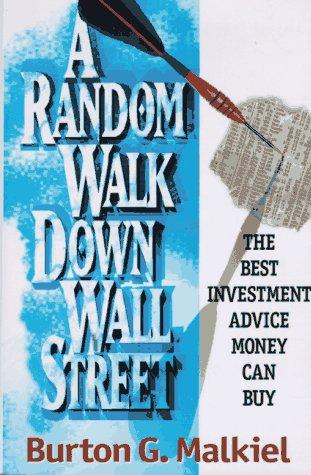
A Random Walk Down Wall Street
Burton G. Malkiel
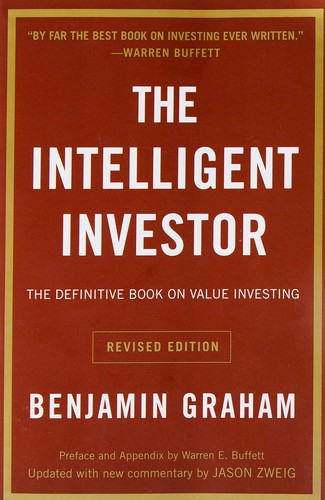
The Intelligent Investor
Benjamin Graham
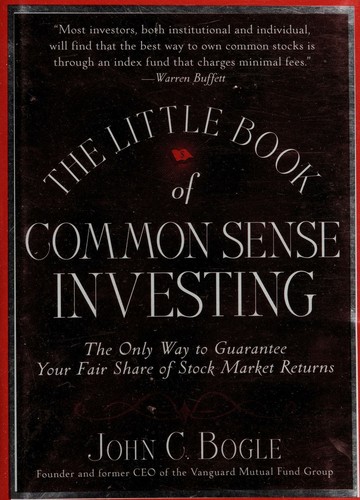
The Little Book of Common Sense Investing
John C. Bogle
Common Stocks and Uncommon Profits
Philip A. Fisher
