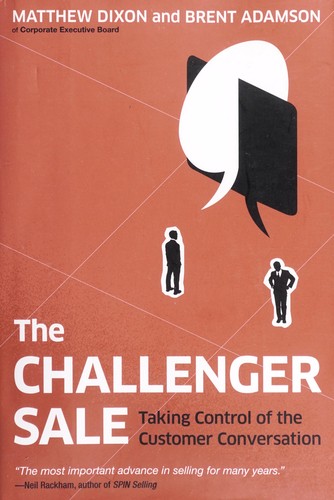
The Challenger Sale by Matthew Dixon and Brent Adamson is a 2011 business book about sales, b2b, customer relationships. The best B2B salespeople in complex selling environments are Challengers — not Relationship Builders. Relationship Builders are actually the lowest-performing profile in difficult sales conditions.
Summary
The Challenger Sale is Dixon and Adamson's research-backed challenge to the most deeply held assumption in B2B sales: that the best salespeople are Relationship Builders who develop trust through accommodation and responsiveness. Their study of six thousand sales reps across multiple industries found the opposite — in complex B2B sales, Relationship Builders are the lowest-performing profile, and Challengers — salespeople who teach, tailor, and take control of the sales conversation — are the highest.
The research identified five distinct sales rep profiles: the Relationship Builder, the Hard Worker, the Lone Wolf, the Reactive Problem Solver, and the Challenger. In average economic conditions, these profiles perform similarly. In difficult selling environments — complex solutions, long sales cycles, multiple stakeholders — Challengers dramatically outperform all others, accounting for nearly 40 percent of high performers. Relationship Builders, by contrast, are significantly underrepresented among top performers and overrepresented among low ones.
The Challenger profile is defined by three behaviors: teaching customers something new about their own business that creates value and builds credibility, tailoring the message to specific stakeholders' economic drivers and personal goals, and taking control of the sales conversation — including price negotiations and purchasing decisions — rather than accommodating every customer demand. Challengers lead with insight, not service. They introduce customers to problems customers didn't know they had, reframe the problem in ways that favor the seller's solution, and construct a buying vision that makes alternatives less attractive.
The honest caveat: the Challenger model works best for complex, high-value B2B solutions where customers genuinely need to be educated. In transactional sales, commodity markets, or situations where buyers arrive fully informed, the Challenger approach adds less value. The book also acknowledges that Challengers are harder to develop and manage than Relationship Builders, and that the approach can alienate buyers if done poorly.
Talk to The Challenger Sale like its author wrote you back.
Get the ideas that fit your life — not generic summaries.
- Chat with the book
- Audiobook-style main ideas
- Adapts to your life and goals
- Helps you take action
Key takeaways
- 1.
The best B2B salespeople in complex selling environments are Challengers — not Relationship Builders. Relationship Builders are actually the lowest-performing profile in difficult sales conditions.
- 2.
The five sales rep profiles: Relationship Builder, Hard Worker, Lone Wolf, Reactive Problem Solver, and Challenger. Challengers are 40 percent of high performers in complex B2B sales.
- 3.
Challengers teach: they bring customers a new perspective on their own business that creates value, challenges assumptions, and builds credibility. The insight leads to the solution.
- 4.
Challengers tailor: they adapt their message to the specific economic drivers and personal goals of each stakeholder in the buying decision, not just the main contact.
- 5.
Challengers take control: they steer the sales conversation and the buying process rather than accommodating every customer preference or request for concessions.
- 6.
The Challenger insight model: reframe the problem to make the customer feel tension about the status quo, introduce a new way of thinking about it that favors your solution, and present your solution as the logical resolution of that tension.
- 7.
Customers are most receptive to Challenger-style teaching when they feel the insight is genuinely novel and relevant to their business — not a pitch disguised as education.
- 8.
Commercial teaching — the core of the Challenger approach — requires that the insight lead back to something you uniquely offer. Insight that doesn't differentiate you is marketing, not a Challenger play.
Discussion questions
Use these on your own, with a book club, or as chat starters in Superbook. Book club version, ready to copy or print →
- 1.
Dixon and Adamson say Relationship Builders underperform in complex B2B sales. Why do companies continue to hire and reward that profile if the data argues against it?
- 2.
Have you seen a Challenger salesperson in action? What did the conversation feel like from the buyer's side?
- 3.
Commercial teaching requires bringing customers a reframing of their business situation. How do you develop insights that are novel enough to be valuable but not so contrarian that they lose credibility?
- 4.
The Challenger approach requires taking control of the conversation. How do you distinguish taking control productively from being arrogant or ignoring the customer's actual needs?
- 5.
In what selling environments does the Relationship Builder profile still win? When is accommodation and responsiveness the right strategy?
- 6.
Tailoring the message to each stakeholder requires deep knowledge of each person's role and incentives. How do you gather that information during a complex sale?
- 7.
The book argues that customers have arrived more informed than ever before. How does that change what a salesperson must offer to be valuable in the conversation?
- 8.
What is commercial teaching, and how is it different from a feature presentation or a case study? Where have you seen the line get blurry?
- 9.
Companies that implement the Challenger model often find it hard to coach. What makes developing Challenger behaviors in a sales team particularly difficult?
- 10.
How does the Challenger model interact with account management for existing customers? Does the same approach work when you're defending a renewal versus winning new business?
- 11.
Where does the Challenger approach break down — in what types of deals or customers does it produce worse outcomes than a more relationship-oriented approach?
Themes
Frequently asked questions
-
Is The Challenger Sale based on real research?
Yes. The book draws on a study of roughly six thousand sales reps across multiple industries, conducted through the Corporate Executive Board. The methodology and findings were published before the book and have been replicated in other contexts, though the research conditions and sample characteristics affect how generalizable the results are.
-
Does The Challenger Sale apply to all sales roles?
The findings are most robust for complex, high-value B2B sales with multiple stakeholders and long decision cycles. In transactional, commodity, or inbound-led sales environments, the Challenger profile confers less advantage.
-
What is the Challenger insight model?
Reframe the customer's situation to create tension around the status quo, introduce a new perspective that positions your solution as the natural resolution, and resist accommodating requests that undermine the sales process. The insight should lead back to something you uniquely offer.
-
How do you develop Challenger behaviors in a sales team?
The book recommends starting with commercial teaching: work with subject-matter experts to develop genuine customer insights, train salespeople to deliver them conversationally rather than as presentations, and then build in the tailoring and control behaviors progressively. It is harder and slower than training Relationship Builder behaviors.
-
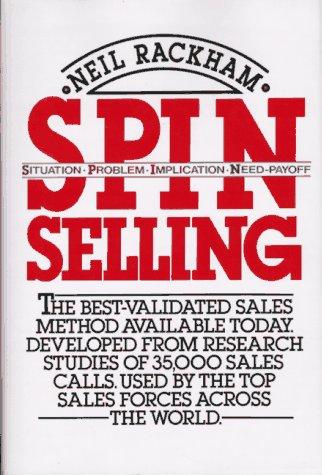
What is the difference between The Challenger Sale and SPIN Selling?
SPIN Selling focuses on asking the right questions to surface customer needs that your solution addresses. The Challenger Sale focuses on leading with a novel perspective rather than discovering existing needs. They are complementary but structurally different approaches to the same problem of creating customer conviction.