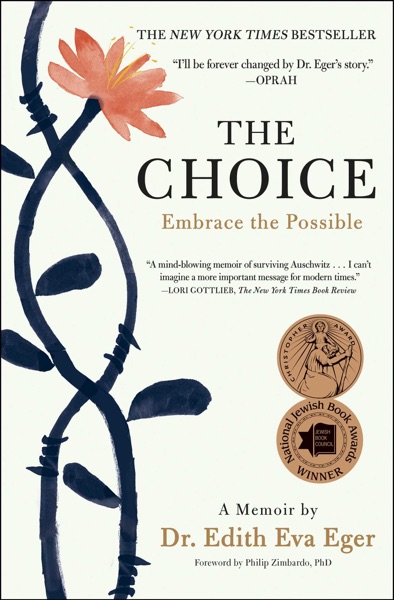
The Choice by Edith Eva Eger is a 2017 memoir book about holocaust survival, trauma and healing, freedom. The choice Eger describes is not the choice of circumstances but the choice of inner response. In Auschwitz, with no external freedom, she maintained an inner life — dancing in her mind for Mengele — that no captor could reach.
Summary
Edith Eva Eger was sixteen years old when she arrived at Auschwitz-Birkenau in May 1944. On the selection platform, Josef Mengele asked if the young girl beside her was her mother or sister. Eger said "mother." Her mother was sent to the gas chamber immediately. Eger survived, along with her sister Magda, through a combination of luck, physical endurance, and a capacity for inner freedom she later came to understand as the defining fact of her life.
The Choice is structured in three parts. The first covers her girlhood in Košice, Czechoslovakia, her early love of ballet and dreams of becoming a professional dancer, her first love, and the German occupation that ended all of it. The second covers Auschwitz, the death marches that followed liberation, and the years of silence and numbness that Eger carried into her emigration to America. The third, and in some ways the most valuable, covers her training as a psychologist — she completed her PhD at age fifty — and her decades of clinical work helping others process trauma. It is here that the title becomes most clearly her subject: the choice to remain a victim or to become a survivor, to carry the prison inside or to unlock it.
Eger is clear-eyed about her own recovery. She did not find peace quickly or easily. She returned to Auschwitz with her daughter in 1980, over three decades after liberation, and found herself unable to enter the former camp until she understood that the work was hers to do. She writes about her own shame, her suppression of the past, and her resistance to the psychological work she was doing professionally but not personally.
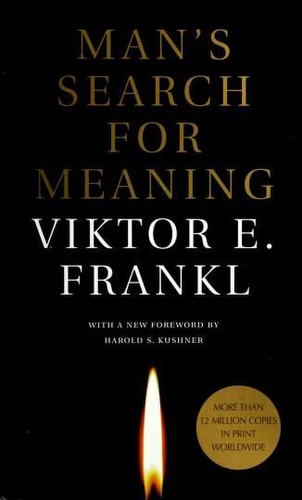
The clinical insights woven through the memoir are accessible but substantive. Eger draws on Victor Frankl, with whom she had a personal relationship, and on her own experience to argue that the most damaging imprisonment is the one we construct inside ourselves — through self-blame, resentment, and the refusal to grieve. The book's generosity is that it treats these traps as understandable and universal, not as pathology peculiar to extreme trauma. Readers without anything resembling Eger's history have found it illuminating about the ordinary imprisonments of ordinary lives.
Talk to The Choice like its author wrote you back.
Get the ideas that fit your life — not generic summaries.
- Chat with the book
- Audiobook-style main ideas
- Adapts to your life and goals
- Helps you take action
Key takeaways
- 1.
The choice Eger describes is not the choice of circumstances but the choice of inner response. In Auschwitz, with no external freedom, she maintained an inner life — dancing in her mind for Mengele — that no captor could reach.
- 2.
Survival guilt is one of the most persistent and damaging legacies of trauma. Eger spent decades believing she had survived at the cost of her mother's death and had to work through that belief to reach genuine freedom.
- 3.
Victor Frankl's influence is explicit throughout the book. His central claim — that meaning can be found in any circumstance, that the last human freedom is the choice of attitude — is the framework Eger built her clinical practice on.
- 4.
Returning to the site of trauma, when and if the person is ready, can be a critical step in releasing it. Eger's visit to Auschwitz in 1980 was not possible until her internal work had prepared her for it.
- 5.
The most common self-imprisoning behaviors Eger identifies in patients — and in herself — are self-blame, resentment toward others, and the refusal to grieve fully. All three keep the trauma alive by preventing completion.
- 6.
Eger's clinical work shows that extreme trauma and ordinary suffering share the same psychological mechanisms. The tools that helped survivors function after Auschwitz are the same tools that help people move through grief, abuse, and loss.
- 7.
Victim and survivor are not permanent identities but positions we move between, sometimes daily. The choice Eger names is not made once but continuously, in response to the small provocations of ordinary life.
- 8.
Love is the only force Eger identifies as stronger than fear. Her husband's love during the war, her children's love afterward, and her patients' willingness to love themselves are the recurring sources of genuine freedom in the book.
Discussion questions
Use these on your own, with a book club, or as chat starters in Superbook. Book club version, ready to copy or print →
- 1.
Eger describes maintaining an inner life — dancing mentally for Mengele — as her primary survival strategy. What does that suggest about the relationship between imagination and resilience?
- 2.
Eger spent decades after the war not talking about her experience. What does that silence cost, and under what conditions does it become protective rather than harmful?
- 3.
The title refers to a choice that Eger argues everyone faces: to live as a victim or as a survivor. Is that framing fair to people whose circumstances prevent easy recovery?
- 4.
Eger distinguishes between self-blame and responsibility — between punishing yourself for what happened and taking ownership of your response to it. Where is that line, and how does she help patients find it?
- 5.
Victor Frankl is a major presence in the book. How does Eger's account of finding meaning in suffering compare to Frankl's account? Do they diverge in any important ways?
- 6.
Eger returned to Auschwitz thirty-six years after liberation. What made that return possible when it hadn't been before? What does her account suggest about the timing of confronting difficult history?
- 7.
The book argues that resentment imprisons the person who holds it more than the person it is directed at. Can you think of an example from your own life where that was true?
- 8.
Eger's clinical work uses her own survival story as part of therapy. What are the benefits and risks of a therapist's self-disclosure in a clinical relationship?
- 9.
Eger describes the ordinary imprisonments of ordinary life — perfectionism, people-pleasing, the need for approval — as variations on the same psychological prison. Does that comparison feel illuminating or does it risk trivializing extreme suffering?
- 10.
The third section of the book, covering her clinical work, shifts from memoir to applied psychology. Did that transition work for you as a reader? What did it add to the memoir?
- 11.
Eger says she didn't fully heal until her return to Auschwitz. But she had been a practicing psychotherapist for years before that visit. What does that suggest about the relationship between helping others and healing oneself?
- 12.
The last thing Mengele said to her on arrival at Auschwitz was that she would be free by the end of the day — a reference to the chimney. How does Eger's later philosophy of inner freedom engage with, and transform, that moment?
Themes
Frequently asked questions
-
Is The Choice worth reading?
Yes. It combines Holocaust memoir with genuine psychological depth in a way that few books manage. Eger's clinical perspective gives the survivor narrative a framework that makes it more than testimony — it offers tools that readers without comparable trauma consistently find applicable to their own lives.
-
How does The Choice compare to Night by Elie Wiesel?
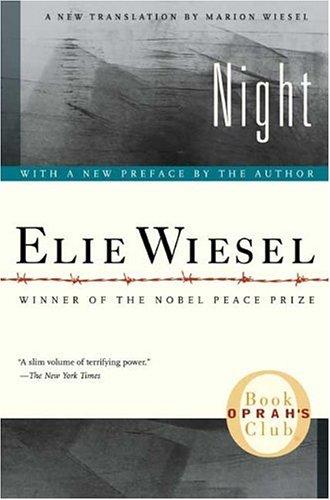
Night is a starker, more purely literary account of survival. The Choice includes more aftermath — the decades of recovery and the clinical work — and has an explicitly therapeutic framing. Both are essential; they do different things.
-
Is the book too graphic to read?
The Auschwitz sections are unflinching but not gratuitously detailed. Eger's focus is psychological rather than physical. The book is emotionally demanding rather than graphically disturbing.
-
Who should read The Choice?
Anyone interested in resilience, trauma, and recovery. It is particularly useful for therapists, coaches, and people working with others who have experienced trauma. The clinical insights are accessible without being reductive.
-
What is the most important idea in The Choice?
That freedom is ultimately an inside job. The choice Eger names — to remain in psychological imprisonment or to release it — is available even to people whose circumstances offer no outer freedom. She also stresses that making that choice is not a single moment but a lifelong practice.