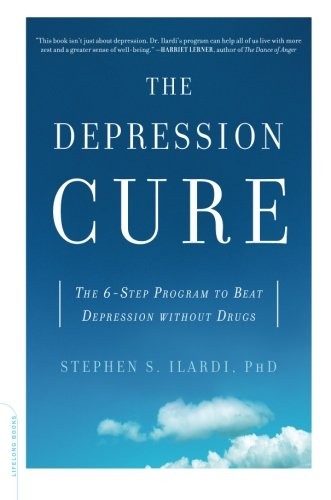
The Depression Cure by Stephen Ilardi is a 2009 health book about depression, lifestyle medicine, mental health. Depression is partly a mismatch disease: the modern sedentary, isolated, indoor lifestyle deprives the brain of the inputs — exercise, social engagement, sunlight, varied activity — it evolved to require for mood regulation.
Summary
The Depression Cure is Stephen Ilardi's account of Therapeutic Lifestyle Change (TLC), a structured program he developed at the University of Kansas for treating depression without primary reliance on antidepressants. Ilardi is a clinical psychologist who began asking why depression was so rare in traditional hunter-gatherer societies and so prevalent in modern industrialized populations, and built a treatment program from the answers. The program combines six elements: aerobic exercise, omega-3 fatty acids, social engagement, meaningful activity, sunlight exposure, and improved sleep — all supported by clinical trial data.
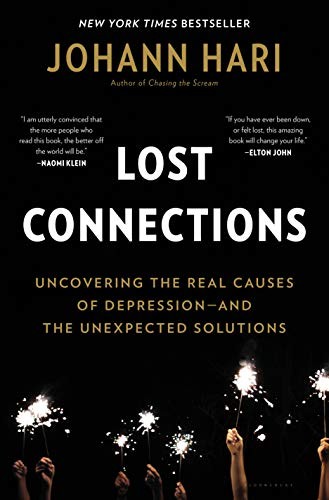
The book's theoretical foundation is similar to Lost Connections: depression is, in substantial part, a mismatch disease. Human brains were shaped by evolution to function in environments that provided regular physical activity, social belonging, varied engagement, and abundant natural light. Modern sedentary, isolated, indoor lives deprive the brain of inputs it requires to regulate mood effectively. Antidepressants address the neurochemical symptoms of that mismatch without addressing the mismatch itself.
The six TLC elements are presented with specific protocols rather than vague recommendations. Exercise means aerobic activity at least three times a week for thirty or more minutes per session at sufficient intensity. Omega-3 supplementation targets EPA (eicosapentaenoic acid) specifically, at doses higher than standard fish oil recommendations. Social engagement means meaningful interaction with others, not online substitutes. Anti-rumination strategies are specific and behavioral: rumination — the repetitive, negative thought spirals common in depression — is interrupted by engaging in absorbing activities rather than attempting to think through the problem.
The TLC program has been tested in randomized controlled trials showing results comparable to antidepressant medication, with better durability. Ilardi is not anti-medication — he acknowledges that antidepressants help some people and that the TLC program works alongside medication for severe cases. His argument is that lifestyle factors have been so systematically underemphasized in depression treatment that the clinical default of medication-first has crowded out approaches that work at least as well and often better for moderate depression. The book is practical, accessible, and better grounded in clinical evidence than most popular mental health books.
Talk to The Depression Cure like its author wrote you back.
Get the ideas that fit your life — not generic summaries.
- Chat with the book
- Audiobook-style main ideas
- Adapts to your life and goals
- Helps you take action
Key takeaways
- 1.
Depression is partly a mismatch disease: the modern sedentary, isolated, indoor lifestyle deprives the brain of the inputs — exercise, social engagement, sunlight, varied activity — it evolved to require for mood regulation.
- 2.
The six elements of Therapeutic Lifestyle Change (exercise, omega-3s, anti-rumination, social engagement, light exposure, sleep) each have independent evidence for antidepressant effects; combined, they produce results comparable to medication.
- 3.
Aerobic exercise has antidepressant effects equivalent to medication in multiple clinical trials, with better long-term outcomes — lower relapse rates — than pharmacological treatment alone.
- 4.
Omega-3 fatty acids, specifically EPA, have consistent antidepressant effects in clinical trials and may work by reducing neuroinflammation — a pathway increasingly implicated in depression.
- 5.
Rumination — repetitive negative thought cycles — is a primary cognitive mechanism maintaining depression, and the most effective interruption is behavioral engagement rather than cognitive challenge.
- 6.
Social isolation is both a cause and a consequence of depression; maintaining social engagement during a depressive episode, despite the strong pull toward withdrawal, is one of the most important counter-behavioral strategies.
- 7.
Light exposure, particularly morning sunlight, regulates circadian rhythms and serotonin synthesis in ways directly relevant to mood regulation — indoor living deprives most people of adequate light.
- 8.
Sleep disruption both causes and is caused by depression; addressing sleep (through behavioral sleep hygiene rather than sedatives) is a high-leverage intervention for the depressive cycle.
Discussion questions
Use these on your own, with a book club, or as chat starters in Superbook. Book club version, ready to copy or print →
- 1.
Ilardi's program treats lifestyle as medicine rather than as background noise while the real treatment (medication) happens. Does that reframing match your assumptions about depression treatment?
- 2.
The six TLC elements are individually supported by evidence. If you were to add one to your own life, which would it be, and what's the main obstacle?
- 3.
He argues that hunter-gatherer populations rarely experienced depression because their daily lives naturally provided the inputs modern brains need. What would it take to provide those inputs in a modern urban life?
- 4.
The book's evidence that exercise works as well as antidepressants for moderate depression is well-documented. Why do you think clinical practice hasn't shifted significantly in response to that evidence?
- 5.
Rumination is identified as a central mechanism maintaining depression. Do you recognize rumination as a pattern in yourself or others? What strategies have you found for interrupting it?
- 6.
Ilardi is a clinician who developed this program through practice and research. How does his clinical background affect your confidence in the approach compared to a journalist's synthesis?
- 7.
The TLC program requires consistent effort on multiple fronts simultaneously, which is particularly difficult when depressed. How should practitioners support adherence to lifestyle interventions in people who lack motivation by definition?
- 8.
He covers omega-3 supplementation with specific dose recommendations — higher than typical supplements. How do you evaluate nutritional supplement recommendations in the absence of a prescribing relationship?
- 9.
Light exposure is a treatment for seasonal depression but Ilardi argues for year-round light attention. How much light do you get in your daily life, and does the evidence make you want to change that?
- 10.
The book argues that medication-first default for depression has crowded out evidence-based lifestyle interventions. Is that a clinical failure or a pragmatic triage given how difficult lifestyle change is?
- 11.
Social engagement during depression runs counter to the withdrawal instinct that characterizes the condition. How do you balance respecting someone's need for space with encouraging the engagement the evidence supports?
- 12.
Ilardi notes that TLC works alongside medication for severe depression. Does framing lifestyle change as complementary rather than competitive with medication seem more or less useful clinically?
Themes
Frequently asked questions
-
Is The Depression Cure medically endorsed?
The Therapeutic Lifestyle Change program it describes has been evaluated in clinical trials and published in peer-reviewed journals. It is not a fringe approach — the evidence for each element is real. That said, it is not yet standard of care, and Ilardi himself emphasizes that severe depression should be treated with professional guidance.
-
Does The Depression Cure say antidepressants don't work?
No. Ilardi acknowledges that antidepressants help a subset of patients and that the TLC program works alongside medication for severe cases. His critique is of medication as a default first-line treatment for moderate depression when lifestyle interventions have comparable evidence and better relapse prevention.
-
What is the most important TLC element?
Ilardi identifies exercise as having the strongest individual evidence base among the six elements. But the program is designed as a combined intervention — each element addresses a different pathway, and the combination appears more effective than any single component.
-
Can The Depression Cure be used without professional support?
The book is designed for self-directed use and provides specific protocols for each element. Ilardi recommends professional guidance for severe depression and encourages consultation with a healthcare provider. The program can be implemented independently for mild to moderate symptoms, though a support structure improves adherence.
-
Who should read The Depression Cure?
People experiencing mild to moderate depression who want an evidence-based alternative or complement to medication. People whose depression has not responded fully to antidepressants. People who want to prevent relapse after successful treatment. Not appropriate as a standalone treatment for severe or treatment-resistant depression.