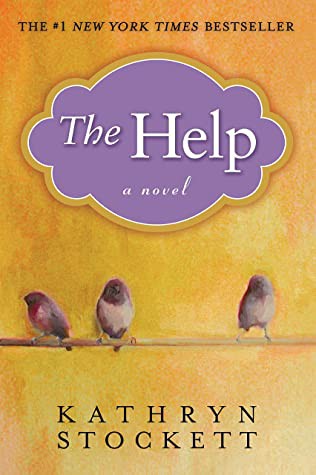
The Help by Kathryn Stockett is a 2009 contemporary fiction book about race and segregation, voice and silence, courage. Stockett gives Aibileen and Minny the most complex inner lives in the novel, but the organizing narrative still belongs to Skeeter — a choice that raises questions the book doesn't fully resolve.
Summary
Jackson, Mississippi, 1962. Skeeter Phelan is a white college graduate who wants to be a writer and finds herself disturbing a social order her peers are content to maintain. Aibileen Clark and Minny Jackson are Black maids who have spent their working lives inside white homes, raising white children, and navigating the daily humiliations of Jim Crow. The three of them, improbably, collaborate on a book: oral testimonies from the Black women who cook, clean, and raise the children of white Jackson.
The novel operates primarily as popular fiction — it's propulsive, character-driven, and intent on emotional satisfaction — but it's built on a real historical brutality. Stockett, a white woman writing from Black perspectives, made a choice that was controversial before the book was published and remains debated. The novel's greatest strength is that Aibileen and Minny are more fully realized than Skeeter; the structural problem is that the white woman's journey remains the organizing narrative. This tension is worth naming honestly: The Help is a book about Black women's stories that is ultimately told through the lens of white discovery and guilt.
The prose is competent and readable; the voice work in Aibileen's and Minny's chapters is warmer and more alive than Skeeter's. The plotting is commercial in the best sense — it moves, it pays off, and the villains are drawn with enough particularity to feel more than symbolic. Hilly Holbrook, the primary antagonist, is a recognizable type rather than a caricature: a woman who uses social rules as instruments of dominance.
The film adaptation (2011, directed by Tate Taylor) is one of those cases where the book's weaknesses are amplified on screen and the industry reception revealed anxieties the book itself only hinted at. Reading The Help now requires some calibration: it's a crowd-pleaser with a real subject, and it handles that subject with more care than many comparisons allow, while still leaving structural questions it can't fully answer.
Talk to The Help like its author wrote you back.
Get the ideas that fit your life — not generic summaries.
- Chat with the book
- Audiobook-style main ideas
- Adapts to your life and goals
- Helps you take action
Key takeaways
- 1.
Stockett gives Aibileen and Minny the most complex inner lives in the novel, but the organizing narrative still belongs to Skeeter — a choice that raises questions the book doesn't fully resolve.
- 2.
The testimonial project at the heart of the plot is about voice: who gets to tell stories, under what conditions, and at what cost.
- 3.
Minny's Terrible Awful is one of the most memorable comic-revenge sequences in popular fiction, but it works because it's rooted in years of legitimate grievance.
- 4.
The novel captures how social norms function: Hilly's bathroom segregation rule isn't personal cruelty, it's procedural bigotry, enforced through politeness and social sanction.
- 5.
Courage in the novel is specifically economic — the risk Aibileen and Minny take isn't abstract; they can lose their livelihoods and their safety, and they know it.
- 6.
Skeeter's transformation is less interesting than the novel needs it to be; the more honest story is what doesn't change for Aibileen and Minny when the book is done.
- 7.
The ending refuses total resolution — Aibileen's situation worsens as a direct result of the project, which complicates the feel-good arc the rest of the novel builds toward.
- 8.
The novel is most useful as a document of what white progressive audiences in 2009 wanted from a story about the civil rights era — the framing is historical, but the emotional needs it's meeting are contemporary.
Discussion questions
Use these on your own, with a book club, or as chat starters in Superbook. Book club version, ready to copy or print →
- 1.
Stockett, a white woman from Jackson, Mississippi, wrote two of the three narrative voices as Black women. Does the novel handle that choice well — and how would you know if it did or didn't?
- 2.
Aibileen and Minny take serious risks to participate in the project. Skeeter's risks are real but smaller. Does the novel acknowledge that disproportion honestly?
- 3.
Hilly Holbrook is the villain — but the novel shows her as someone enforcing a social consensus, not inventing one. How does that change our judgment of the white women around her who don't challenge her?
- 4.
The 'Terrible Awful' chapter is comic and cathartic. Is it earned — or does it let the audience off the hook by making the antagonist ridiculous?
- 5.
Skeeter's storyline is partly about wanting to be taken seriously as a writer. Does the novel validate that ambition, or does it implicitly privilege it over the Black women's actual lives?
- 6.
Aibileen raised seventeen white children. What does the novel say — directly and indirectly — about the labor of raising other people's children while your own are raised by someone else?
- 7.
The ending is deliberately mixed: the book is published, but Aibileen loses her job. How do you read that ending — hopeful, honest, or both?
- 8.
The Help was a phenomenon — massive bestseller, major film. What does the cultural appetite for this particular story, told this way, reveal about American audiences in 2009-2011?
- 9.
Minny's relationship with Celia Foote complicates the white/Black moral schema the novel sometimes sets up. How does Celia function in the novel's argument?
- 10.
The novel takes segregation-era Jackson as its historical setting. Are there ways in which the setting allows contemporary readers to feel comfortable with discomforts that might be harder to face if the setting were today?
- 11.
Skeeter's mother's illness and her relationship with the family maid Constantine form a secondary arc. How does that history reshape Skeeter's motivations?
- 12.
Is this a novel about courage or about white guilt? Can it be both?
Themes
Frequently asked questions
-
Is The Help problematic?
It raises genuine questions about who should tell which stories. Stockett, a white woman, writes two of three narrative voices as Black women, and the novel structures a story about Black women's lives around a white woman's awakening. These are real critiques. The novel also has real virtues — the characters are well-drawn, the historical setting is rendered with care. Holding both is the honest position.
-
Is the book or the movie better?
Most readers prefer the book. It gives Aibileen and Minny more interior space, and Skeeter's voice benefits from being written rather than performed. The film amplifies the sentimentality that the book keeps more in check.
-
Is this good for a book club?
Excellent, precisely because it generates real disagreement. The questions it raises about voice, appropriation, and historical representation are substantive, and the emotional investment most readers feel creates a foundation for harder conversations.
-
How long is The Help?
About 450 pages, roughly ten hours at average reading pace. It moves quickly for its length — Stockett's chapter structure and voice work make it more propulsive than the page count suggests.
-
Who shouldn't read this?
Readers who will find the white-savior dynamics too structurally central to set aside, or those who want literary fiction rather than popular commercial storytelling. The prose is workmanlike rather than distinguished, which is fine for what the book is doing.
Similar books
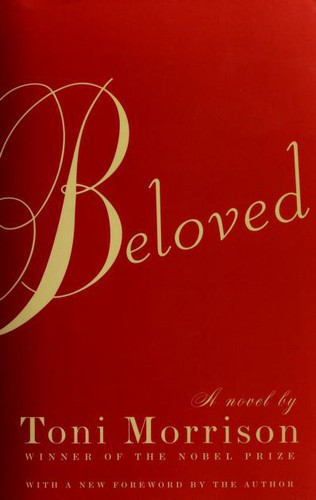
Beloved
Toni Morrison
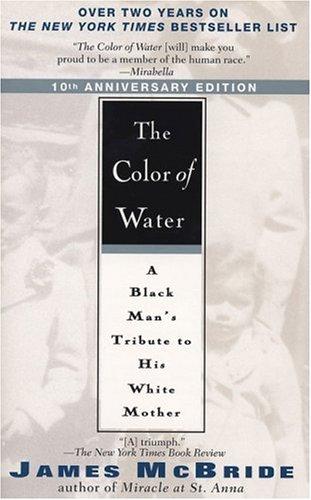
The Color of Water: A Black Man's Tribute to His White Mother
James McBride
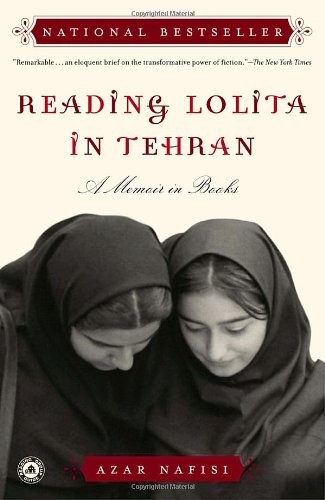
Reading Lolita in Tehran: A Memoir in Books
Azar Nafisi
The Things They Carried
Tim O'Brien
